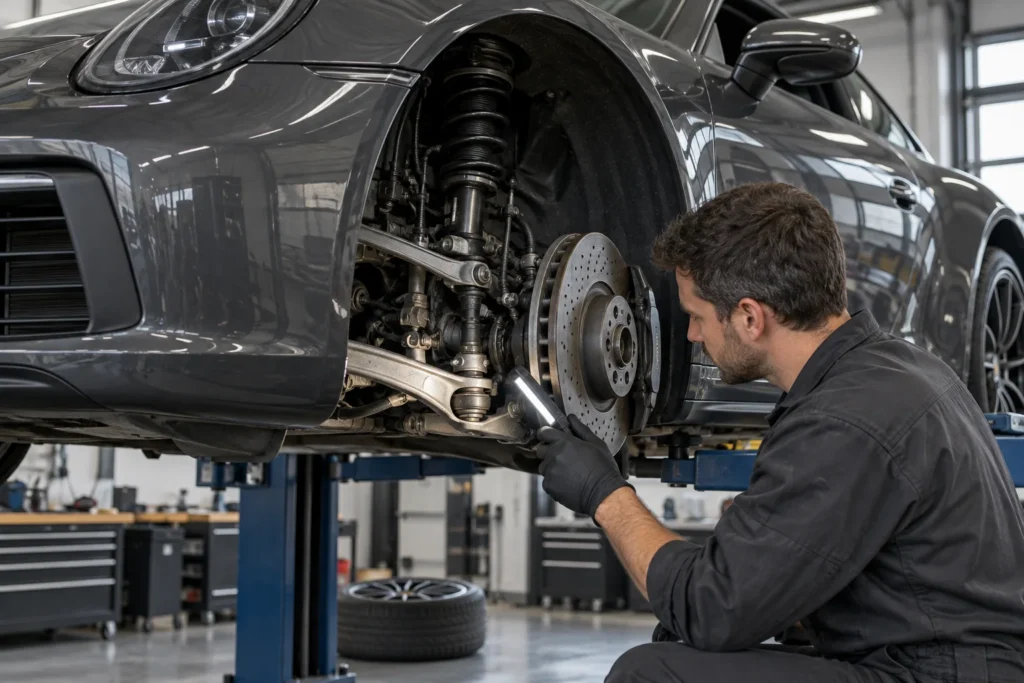

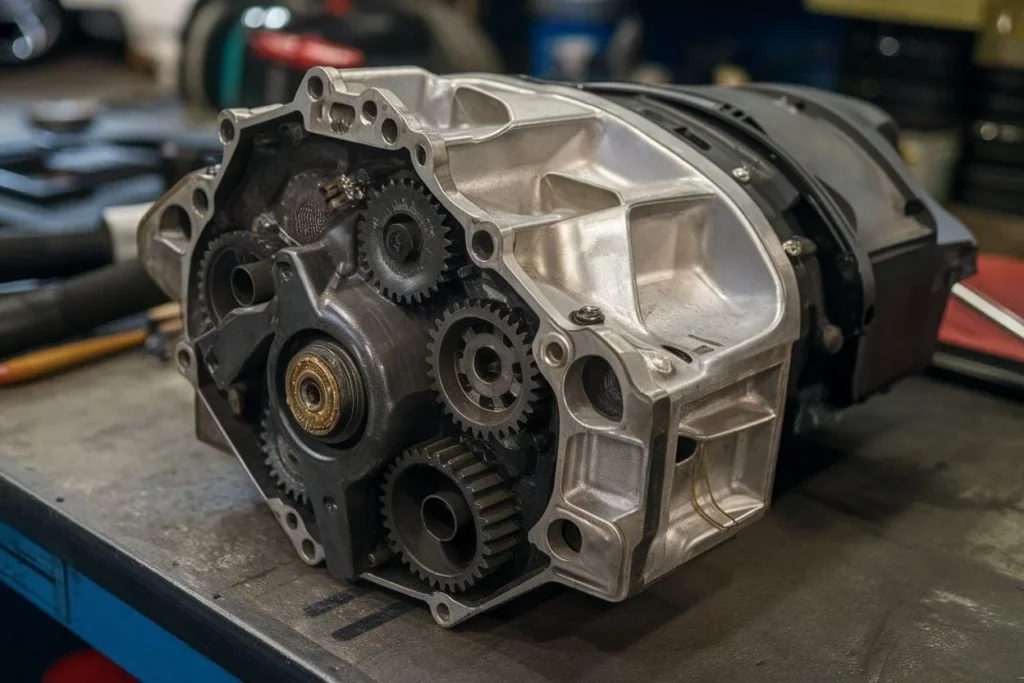
A Porsche transmission problem rarely starts with a clear label such as “mechatronic failure” or “clutch pack wear.” Owners usually notice a symptom first, such as a delay selecting Drive or Reverse, a hard shift, a shudder at low speed, a warning message, a leak, or a car that suddenly refuses a gear. The useful next step is to match the symptom to the fitted transmission and decide whether the car is safe to drive before approving parts.
This guide explains how PDK, Tiptronic and manual gearbox symptoms differ, when a warning needs recovery, and what evidence should support repair, rebuild or replacement. The fitted gearbox and model year matter more than the Porsche badge alone.
Quick answers
| Question | Direct answer |
|---|---|
| What are common Porsche transmission warning signs? | Delayed or harsh shifts, low-speed shudder, slipping, a transmission warning, loss of a gear, or visible fluid leakage. |
| Can a PDK be repaired without replacing the whole unit? | Sometimes. It depends on the identified PDK, confirmed fault, parts and procedures available for that application, and the condition of the rest of the gearbox. |
| When should you stop driving? | Stop and arrange assistance if the car loses Drive or Reverse, slips severely, leaks heavily, smells burnt, bangs into gear, or shows a stop-driving instruction. |
What the symptom usually tells you
A symptom narrows the search, but it does not prove the failed part. The same hesitation can come from a control issue, clutch wear, pressure loss, fluid condition, a sensor problem, a leak, a mount, or internal mechanical wear. Treat the symptom as the start of the decision, not the diagnosis itself.
| What you notice | What it can point toward | What changes the urgency |
|---|---|---|
| Delay selecting Drive or Reverse | Hydraulic pressure, clutch engagement, valve body, mechatronic control, fluid level or internal wear | A long delay, repeated flare, warning message or loss of drive needs prompt attention |
| Harsh or jerky shifts | Adaptation, clutch wear, solenoid or valve-body control, mounts, fluid condition or mechanical wear | Repeated violent engagement, limp mode or worsening heat-related behaviour raises the risk |
| Shudder at low speed | Clutch behaviour, mounts, driveline components, software adaptation or another vibration source | Shudder with slipping, burning smell or warning messages should not be ignored |
| Transmission warning on the dash | Stored fault data from the gearbox, control unit, sensors, pressure system or related electronics | Reduced gears, no reverse, no drive or a stop-driving message may require recovery |
| Fluid under the vehicle | Pan, seal, cooler line, housing, connector or another nearby source | A fast leak or dropping fluid level can turn a contained repair into major damage |
| Engine revs rise but speed does not | Clutch slip, internal clutch wear or another loss of torque transfer | Persistent slipping under light load is a strong reason to stop driving and arrange inspection |
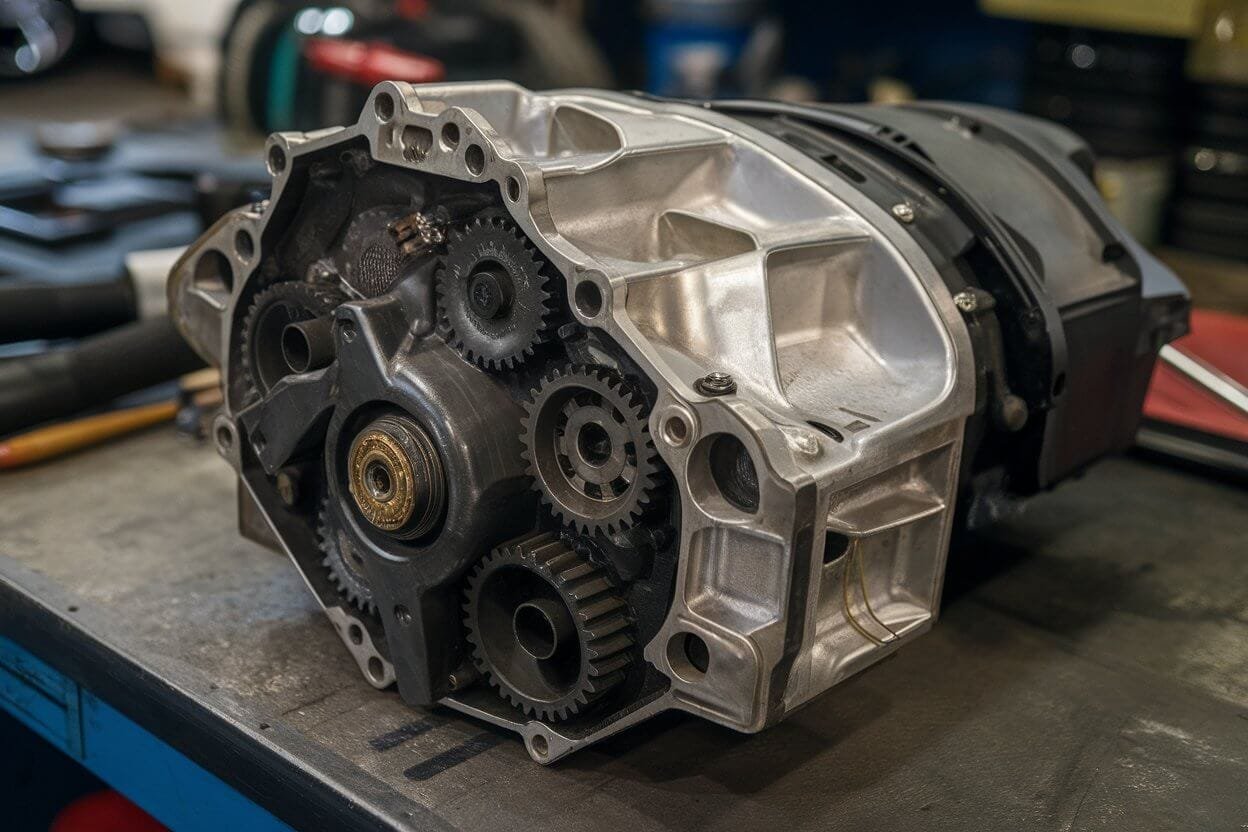
PDK, Tiptronic and manual gearboxes
PDK dual-clutch transmission
PDK distributes its gears between two clutches, allowing the next gear to be prepared before a shift. A symptom can involve hydraulic control, sensing, clutch operation, fluid loss or internal wear, but the exact diagnosis needs fault data and mechanical checks. A warning does not by itself establish that the entire unit must be replaced, or that every internal component can be repaired separately.
Tiptronic automatic
Tiptronic S is a different automatic gearbox family from PDK. Porsche specifies an eight-speed Tiptronic S for the revised combustion Cayenne, while applications vary across older models. Shudder, delayed engagement, harsh changes and slipping can involve the converter, hydraulic controls, fluid circuit or internal wear. The diagnosis and available repair procedures depend on the exact unit.
Manual transmission
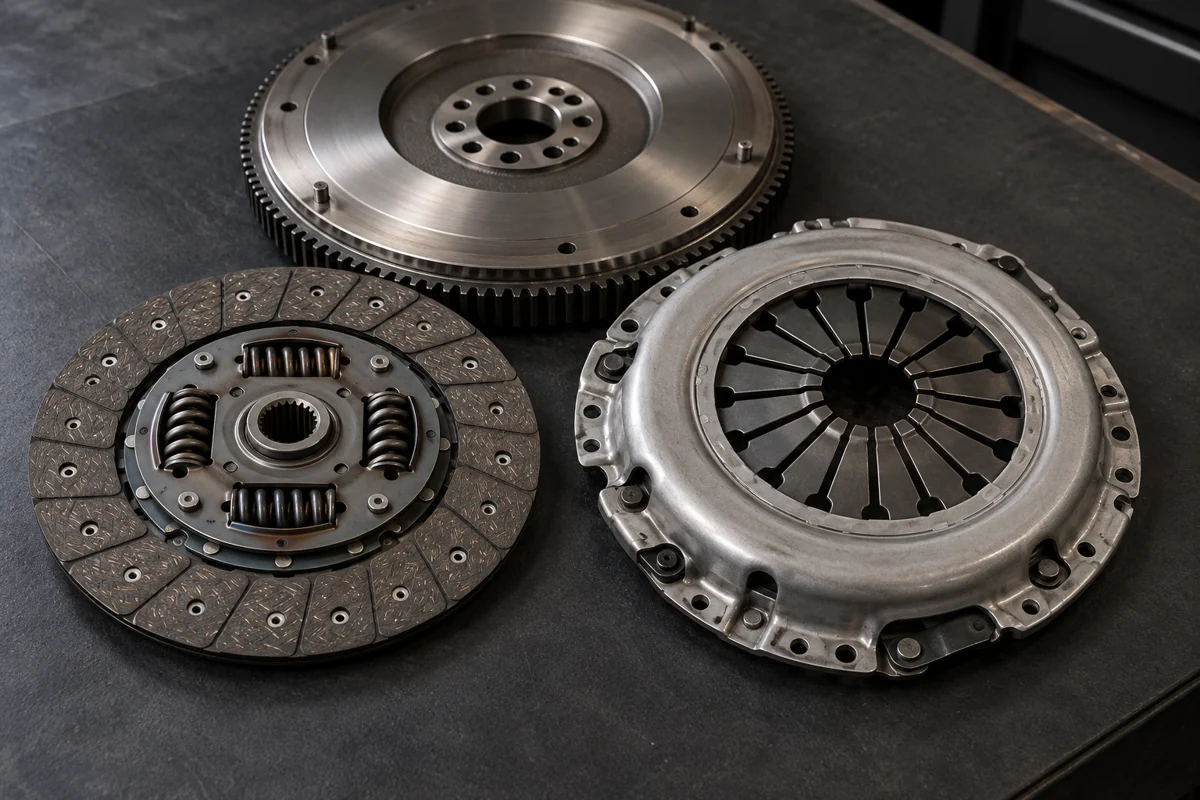
Manual cars add a clutch, release system, flywheel and driver-controlled gear selection to the decision. A slipping clutch is not the same repair as a worn synchro or internal gear problem. If the gearbox must be removed, it can be sensible to inspect related wear items at the same time, but replacement should still be based on condition rather than bundled automatically.
Service schedules are gearbox-specific
Porsche’s 2018 model-year inspection schedule for the 911 Carrera, 911 Turbo and 718 Boxster/Cayman lists manual transmission oil, PDK transmission oil and PDK clutch fluid as distinct tasks. It applies to the stated models and market classification. It is not a universal interval for every PDK, Tiptronic or UAE car. Use the maintenance plan for the vehicle’s VIN, model year, market and transmission before specifying the fluid, circuit, parts or due date.
What affects the repair cost?
A diagnostic assessment, fluid service, contained repair and complete gearbox replacement cover very different work. The total depends on the fitted transmission, the confirmed fault, parts availability, labour, fluid circuits and any coding or adaptation needed. A fluid change is maintenance. It will not cure a failed component simply because the car shifts harshly.
Before comparing quotations, ask for the same detail in each, including the exact gearbox and fault, parts and labour, fluid and filter work, testing, installation or programming, exclusions, and the total with its 5% VAT treatment stated. A diagnostic assessment may lead to a separate repair quote if deeper testing or dismantling is needed.
If you use the transmission repair price ranges to plan a budget, compare the work included in each range with your diagnosis. Ask for a written total that clearly states its 5% VAT treatment before approving work. If the car has lost drive, is slipping severely or is leaking heavily, ask about recovery before driving it in.
Three repair paths
1. Contained leak or control fault
If the transmission itself remains mechanically sound and the problem is traced to a leak, connector, sensor, solenoid, mount, cooling issue or another contained fault, the most sensible job can be targeted repair rather than gearbox replacement. This is where clear fault identification saves money because replacing an entire assembly would solve far more than the car actually needs.
2. Mechatronic or clutch work
When pressure control, clutch adaptation, hydraulic operation or a mechatronic component is the issue, the job becomes more involved. The workshop may need removal, specialist bench work, new fluids, coding and adaptations before the road test. At this level, ask exactly which component is being repaired or replaced, which consumables are included and what must be relearned after installation.
3. Major internal damage
If there is widespread internal wear, hard-part damage or a repair estimate that approaches the cost of a better replacement option, the decision shifts to rebuild, verified used unit or new unit. Compare the total installed cost rather than the bare gearbox price. A cheap used transmission can become expensive if the correct accessories, fluid, programming, transport, labour or warranty are missing.

When you should stop driving
You do not need to recover every Porsche with a slightly unusual shift. You should, however, stop and arrange assistance when continuing to drive can reasonably make the damage worse or leave the car without drive.
- The car will not engage Drive, Reverse or a required gear.
- The gearbox repeatedly drops into neutral or loses drive under light throttle.
- There is severe slipping, a burning smell or obvious overheating.
- A major fluid leak is visible beneath the car.
- The transmission warning is accompanied by reduced gears, severe banging or a stop-driving instruction.
- The car has just suffered a strong impact underneath and transmission fluid is leaking.
If the car still moves normally and the symptom is mild, avoid hard acceleration, launch control and unnecessary distance until it is checked. If you are unsure whether it is safe to continue, describe the warning message and behaviour to the workshop before driving it in.
What the workshop should confirm
The goal is not to run every possible test. It is to establish enough to make the repair decision reliable. A useful assessment typically combines the owner’s symptom description with fault memory, fluid or leak checks where relevant, a controlled road test when safe, and targeted checks for the fitted transmission.
- Exact transmission identity PDK, Tiptronic or manual, including the model and drivetrain application.
- When the problem happens cold, hot, low speed, full throttle, after a battery event, after previous work, or all the time.
- Fault data stored and current faults, plus live or adaptation data where that information can answer the complaint.
- Fluid and leak condition whether the specified fluid circuit is at the correct level and whether a leak source is visible.
- Mechanical behaviour slip, noise, vibration, engagement delay or other evidence that supports opening or removing the unit.
- Repair choice why a contained repair, rebuild, used unit or new unit is being recommended for this car.
A scan by itself is not a complete transmission diagnosis. At the same time, removing and dismantling a gearbox without enough evidence can create unnecessary cost. The inspection should be proportional to the symptom and the decision that needs to be made.
Repair, rebuild, used or new
| Option | When it can make sense | What to confirm before approval |
|---|---|---|
| Targeted repair | The failed component is identified and the rest of the transmission remains serviceable | Failed part, related consumables, post-repair checks and warranty terms |
| Rebuild | The original unit is suitable for internal repair and the required hard parts are available | Which internal parts are replaced, which are reused, machining or specialist work, commissioning and warranty |
| Verified used unit | A compatible donor is available with acceptable identification and evidence | Part number, donor information if available, included accessories, installation, programming and warranty |
| New unit | Availability, ownership plan and total cost justify the highest-cost option | Exact assembly supplied, what is included, installation, fluid, coding and warranty |
There is no universal best choice. A rebuild can preserve the original housing and replace worn internal parts, but the quality depends on what is actually renewed and how the unit is commissioned. A used unit can be quicker, but it comes with another vehicle’s wear history. A new assembly gives the clearest parts history, yet the cost can be hard to justify on an older car. The right choice is the one that fits the fault, evidence, car condition and ownership plan.
How Dubai driving changes diagnosis
Dubai heat, traffic, repeated low-speed manoeuvring and long periods of idling can increase thermal load on a drivetrain, but climate should not be used as a shortcut diagnosis. A harsh shift on a hot day does not prove that the fluid is “burnt,” and a transmission that behaves normally when cold still needs the same evidence-based assessment before major parts are ordered.
What is useful is context. Tell the workshop whether the symptom appears only after a long traffic crawl, after highway driving, during parking manoeuvres, when towing, after a battery replacement, or after previous gearbox work. That pattern can help the technician reproduce the issue and avoid replacing parts because of a vague “Dubai heat” explanation.
What to ask before approving work
- What transmission is fitted? The quote should identify PDK, Tiptronic or manual and the relevant application.
- What evidence supports the repair? Ask what symptom, fault data, leak, pressure issue, wear or internal finding led to the recommendation.
- What is included in the AED figure? Parts, labour, fluids, filters, seals, coding, adaptations, road test and applicable VAT should be clear.
- What is excluded? Deeper dismantling, hard parts discovered later, transport, donor accessories or unrelated driveline work should not appear as surprises.
- What happens if the first repair does not solve the complaint? The workshop should explain the next decision rather than simply continue replacing parts.
- What warranty applies? Ask for the written terms that cover the approved parts and labour, including any exclusions for a used or rebuilt unit.
Frequently asked questions
Can a PDK be repaired?
Sometimes. A confirmed external leak or control fault may permit a contained repair, but procedures, parts availability and internal condition vary with the identified PDK. Internal damage or an uneconomical repair may instead justify a rebuild or replacement. A code alone cannot decide which applies.
Can fluid fix harsh shifting?
Sometimes poor fluid condition or an incorrect level contributes to shift quality, but a fluid service is not a guaranteed cure for harsh shifting. If the cause is clutch wear, mechatronic control, a sensor fault, internal wear or another driveline issue, fresh fluid will not repair the failed component.
How long does repair take?
A same-day fluid service is possible when parts are available. Contained repairs often take one to three working days, mechatronic work commonly takes several days, and a rebuild can take about a working week or longer. These are planning estimates, not fixed promises, because parts supply and internal findings can change the schedule.
Should I buy a used transmission?
A used unit can be a sensible value option when it is the correct compatible transmission and the available condition evidence, included parts, installation work and warranty are acceptable. Compare the complete fitted cost with a rebuild and new unit rather than comparing only the donor gearbox price.
Drive with a transmission warning?
That depends on the warning and how the car behaves. If drive or reverse is lost, the gearbox slips badly, fluid is leaking heavily, the car bangs into gear, or the display tells you to stop, arrange recovery. A mild warning with normal operation may allow a short cautious trip after speaking to the workshop, but do not assume every warning is harmless.
Choose the repair before the parts
Transmission repair becomes expensive when the part choice is made before the problem is properly defined. Start with the symptom, confirm the fitted transmission, establish enough evidence to choose the repair path, and compare the total installed cost of the realistic options. That gives you a better chance of fixing the fault once instead of paying for a sequence of guesses.
If it has lost drive, slips severely, leaks heavily or displays a stop-driving instruction, arrange recovery. For less urgent symptoms, document when they occur and have the exact transmission assessed before choosing parts.