

Porsche engine repair in Dubai
We diagnose and repair Porsche engines at our Al Quoz 4 workshop in Dubai, from oil leaks and timing faults to internal engine repairs. Get a written estimate for the work your car needs.
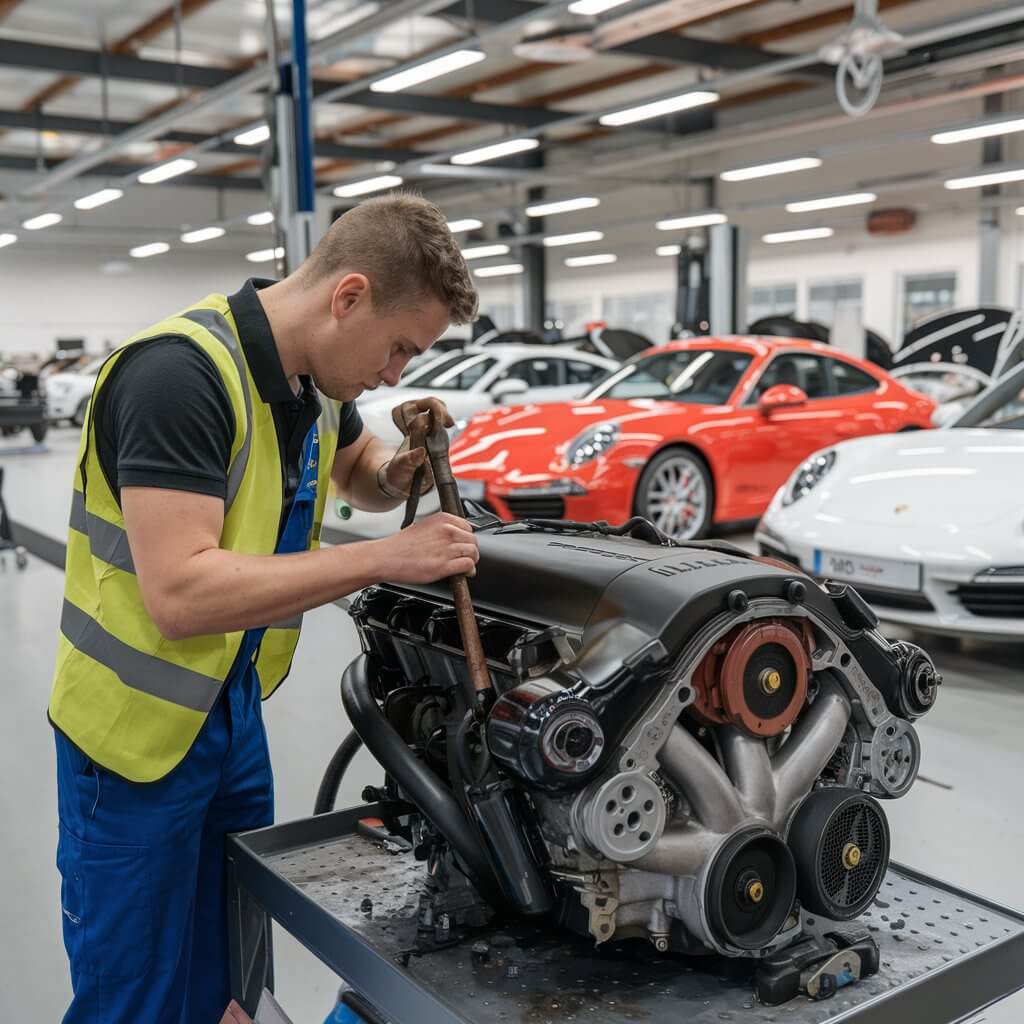
Start with the symptoms
A warning light or noise is a starting point, not a diagnosis. Note when it happens, whether the engine is hot or cold, and any recent work or fluid top-ups. The same symptom can come from an electronic control issue, a fluid leak or mechanical wear. If the car still runs, avoid clearing fault codes before the inspection because stored details help us reproduce and trace the problem. If a fluid level is low, follow the vehicle warning and handbook guidance or contact the workshop before driving. Bring photographs of warnings or drips if the symptom is intermittent.

Engine diagnosis before repair
We combine the complaint, stored data and mechanical tests. The exact sequence changes with the engine code, fault and access requirements. We start with the least invasive checks that can answer a useful question. An engine does not need compression testing, borescope inspection or dismantling simply because the check-engine light is on. Those steps become useful when the earlier evidence points toward mechanical condition, cylinder sealing or an internal noise.
Fault codes are read with freeze-frame and live values. A code identifies the monitored system; it does not automatically identify the failed part. See our Porsche computer diagnostics page for the electronic side of the process.
When justified, compression shows how evenly cylinders build pressure, while leak-down testing helps locate where a cylinder loses sealing. Compression testing compares the pressure each cylinder builds; leak-down testing helps identify where sealing is lost.
Oil and coolant condition, external leakage, plugs, borescope findings and oil-filter debris can add evidence without assuming every engine needs a teardown.
Results are compared before we recommend a targeted repair, further access or a broader engine decision.
Estimated Porsche engine repair prices
These ranges help estimate the likely cost. The written quotation depends on the exact model, engine, parts choice, access time and confirmed damage. A repair at the lower end normally has a well-defined cause and straightforward access. Costs rise when multiple components are involved, seized fixings add labour, contamination must be cleaned from connected systems or internal damage is broader than the first inspection could show. We separate diagnosis from repair so an early estimate is not presented as a guaranteed rebuild price.
Get a quote for your Porsche
Send the model, year and symptom. Add the VIN if you have it; it helps us identify the exact engine specification but is not required to enquire.
Porsche engine repair options
The best option is the one supported by test results, parts availability, the engine’s condition and the owner’s plans for the car. A targeted repair preserves serviceable assemblies and can reduce downtime when the fault is genuinely contained. A rebuild requires a disciplined measurement plan, while a replacement depends on compatibility and what is known about the donor unit. We explain the trade-offs rather than treating the most extensive option as the automatic answer.
| Option | When it may fit | What must be clear |
|---|---|---|
| Targeted repair | The fault is confined to a seal, ignition or fuel component, timing part, cooling component, turbo-related item or another defined area. | The diagnosed cause, connected wear items, labour access and the consequence of leaving other findings untouched. |
| Engine rebuild | Internal wear or damage is confirmed and the engine is a sensible candidate for measured disassembly and reconditioning. | Which measurements are required, what machining is conditional, which parts are included and how discoveries after strip-down are approved. |
| Replacement engine | Damage, previous repairs, availability or total economics make another suitable engine a stronger option. | Engine identity and compatibility, known history where available, included ancillaries, installation items and testing after fitment. |
For model-specific replacement cost factors, see our Boxster, Cayman and Cayenne guides.
Repairs for the confirmed fault
Oil and coolant leaks
We identify the highest point and actual source before quoting gaskets, seals, housings or connected cooling parts. Residue from an older spill can otherwise make a clean diagnosis difficult. Access may overlap with sensible one-time-use seals or fluids, but each additional item belongs on the quotation rather than being assumed.
Timing and valve-train work
Noise, timing deviation and fault data guide inspection. A chain, tensioner, guide or actuator is recommended only when the evidence and engine specification support it. Timing work must also account for the exact setting procedure and the components disturbed during access, which can differ significantly between engine families.
Ignition and fuelling faults
Plugs, coils, injectors, fuel pressure, air leaks and control inputs can create similar misfire symptoms. Swapping parts without isolating the fault can add cost while leaving the cause in place. Cylinder-specific data, plug condition and controlled component checks help separate a local fault from one that affects the entire bank or engine.
Turbo and boost faults
Boost leaks, controls, oil supply and return, charge-air plumbing and the turbo unit itself are assessed as one system. A low-boost complaint does not by itself prove the turbo needs overhaul. Smoke or oil around the intake also needs context because crankcase ventilation and upstream leakage can change what appears at the turbo.
Internal engine repair
Cylinder sealing, piston or bore damage, bearings and cylinder-head condition require measurements and an agreed access plan. Machining or resurfacing is used only when inspection calls for it. Once internal work is approved, parts are inspected methodically so the estimate can distinguish reusable components, replacement items and operations that depend on measured tolerances.
Cooling and overheating
Pressure loss, flow, fans, radiators, pumps, thermostatic control and signs of internal leakage are checked. Continued driving with a high-temperature warning can turn a cooling fault into engine damage. After repair, the system must be filled and bled correctly, checked for stable temperature and reinspected for pressure or fluid loss.
Your engine specification matters
Two 911, Cayenne, Macan, Panamera, Boxster or Cayman vehicles can require different tests, parts and labour because their generation, engine and equipment differ. Engine position changes access, while turbocharging, intake layout, cooling circuits and hybrid equipment can change the diagnostic checks. Service history, modifications and previous overheating also affect the evidence and the risks around the next repair.
Identify the car
VIN, model year, engine code and previous repair information help select the correct procedures and compatible parts.
Confirm the layout
Rear, mid and front-engine packaging changes access. Turbocharging and hybrid equipment also change the diagnostic process.
Test the actual complaint
We do not assign a blanket defect to every model. Symptoms and measurements decide whether a known failure mode is relevant.
Electric Porsche models
The Taycan has no combustion engine. Taycan powertrain concerns belong with EV-specific diagnosis and service, not this engine-repair work.
Your engine repair quotation
- The reported concern and the evidence found so far
- The proposed repair and parts basis
- Labour and access included in the quoted work
- Fluids, seals and one-time-use items included or excluded
- Further work that depends on dismantling or measurement
- How additional findings will be documented and approved
- VAT treatment and any outsourced machining confirmed in writing
A controlled engine-repair process
Record
We capture the symptom, warning messages, recent work and the conditions in which the problem appears.
Test
Electronic and mechanical checks narrow the cause. Results determine whether more access is justified.
Approve
You receive the recommended work and estimate. Any conditional work is separated before parts are ordered or dismantling expands.
Repair and verify
The agreed work is completed, fluid levels and relevant adaptations are checked, and the original complaint is reassessed before handover.
Protect the repair after collection
The handover should match the work performed. Follow the written run-in, fluid-check or follow-up instructions supplied for your particular repair rather than a generic mileage rule. A reseal, timing repair, turbo overhaul and internal rebuild can have different checks after collection. Ask which fluid levels you should monitor, whether driving load should be limited and when a reinspection is due. If a new warning, noise, smoke or leak appears, record the conditions and contact the workshop promptly.
- Watch the instrument display and stop if a red oil-pressure or high-temperature warning appears.
- Check the parking area for fresh fluid and report a change promptly.
- Use the fuel, oil and coolant specification stated for the vehicle.
- Keep the invoice and diagnostic findings with the car’s service record.
- Return for an agreed recheck when the repair work calls for one.

Porsche engine repair questions
Can you quote an engine repair from a fault code?
A fault code usually identifies the system that detected a problem, not the failed component. We use the code with live data and suitable mechanical checks before quoting the repair.
How long will Porsche engine repair take?
Diagnosis may be completed sooner than a major repair, but timing depends on access, parts and whether internal measurements or outside machining are needed. We give a timeline after the work is known and update it if additional approved work changes it.
Does every low-compression result mean a rebuild?
No. The result should be confirmed and interpreted with leak-down findings, bore inspection where appropriate, valve timing and the wider symptom. The correct option can range from a targeted repair to internal work or replacement.
Are the listed prices final?
No. They are estimated prices for common work options. Your written quotation confirms the exact model and engine, parts, labour, exclusions and VAT treatment before approval.
What affects Porsche engine rebuild cost?
Rebuild cost depends on the extent of damage, the measurements taken after dismantling, any machining that proves necessary, the parts required and their availability. We separate confirmed work from conditional work and provide a written estimate for approval before the work expands.
Should I drive with an engine warning?
A steady warning still needs timely diagnosis. If the warning flashes, the engine loses oil pressure, temperature rises sharply, smoke becomes heavy or the car runs severely rough, stop safely and arrange advice or recovery rather than continuing to drive.
Book your Porsche engine repair
Tell us the model, year, mileage and symptom, and ask for a repair quote. If available, include the VIN so we can identify the engine.