A Porsche injector should be repaired or replaced only after the fault has been located. Jerking, a rough idle, a misfire code or poor fuel economy can start the investigation, but none proves that an injector is bad. The answer depends on the exact engine and injection system, whether fuel is leaking, and what the electrical, fuel-pressure, ignition and mechanical checks show.
Raw-fuel smell or visible leak stop in a safe place, switch off the engine, keep people away from the vehicle and ignition sources, and arrange recovery. Do not restart it to find the leak or drive it to a workshop. If there is a severe misfire, a flashing engine warning, or power loss that makes driving unsafe, pull over and arrange recovery too. Porsche dealer guidance specifically advises against driving a car that is leaking petrol.
Record the symptom first
Note whether the problem occurs on the first start, at idle, during acceleration, after refuelling, or when the engine is hot. Record any warning message, whether it flashes, the fuel level, recent repairs and the conditions in which the fault repeats. If safe, a short video of the instrument display can help a technician. Avoid repeated hard acceleration to reproduce a severe misfire.
These observations help separate a cylinder-specific misfire from a whole-engine fuel-supply or air-management problem. A fuel smell might come from a line, pump connection, rail, seal, evaporative system or injector. A hesitation can also involve ignition, intake air, boost, compression or drivetrain faults. Dubai traffic and heat may change when a symptom appears. They do not establish a local injector failure rate or a replacement mileage.
Port and direct injection differ
Port injection delivers petrol into the intake port before the inlet valve. Direct fuel injection (DFI) places a high-pressure injector at the combustion chamber. The pressure, injector design, seals and removal procedure differ. Bosch explains the port-injection path and the direct-injection path. Porsche describes the centrally positioned piezo DFI injector on the eighth-generation 911 Carrera in its 992 engine account.
“911”, “Cayenne” or “Macan” is not enough to select a test or part. Identify the model year, engine code and fuel system from the VIN and applicable Porsche information. A procedure for a port-injected older car cannot be copied to a high-pressure DFI engine. Fully electric Porsche models have no petrol injectors.
What the checks establish
Codes and live data
Read the exact fault code, freeze-frame conditions and per-cylinder misfire counts before clearing anything. A P030x code identifies a misfiring cylinder, not the failed part. An injector-circuit code points toward the circuit for investigation. It can involve the injector, connector, harness or control unit. A returning code still needs the same distinction. Porsche’s 2020–2023 992 technical information is a concrete example. Under its narrowly defined pair-of-injectors fault pattern, Porsche directs software work and then harness and DME checks, not automatic injector replacement. That bulletin must not be applied to other patterns or model years.
Command and wiring
A technician can check whether the control unit is requesting injection under the test conditions and inspect the power supply, connector and wiring using the specified procedure. No command is not proof of a failed injector the control unit may withhold injection because of another fault or operating strategy, and an open circuit or controller fault can interrupt the signal. A valid command does not prove that fuel flowed or that the spray pattern is correct. Electrical measurements must suit the exact injector type. A simple resistance figure cannot be assumed for every Porsche piezo or solenoid injector.
Pressure and combustion
Compare low- and high-pressure readings with the model’s specified values and the symptom timing. Low supply pressure can implicate the pump, supply, control or sensor. A pressure fall after shutdown may have several leak paths. Neither result alone identifies one injector. A pressure or leak test must follow the system’s pressure-release and safety instructions, particularly on DFI.
Check plugs and coils, and use an appropriate cylinder-specific ignition comparison when Porsche’s procedure calls for it. Compression or leak-down findings can reveal a mechanical cause that injector replacement would not fix. For example, Porsche’s 2018-onward Cayenne 9YA/9YB bulletin starts with misfire logging during the complaint and then separates ignition components before directing injector replacement in that defined case. The absence of a stored code in that bulletin is not a universal rule.
A borescope can document visible chamber conditions, but a deposit or wet-looking area cannot by itself identify the injector as the cause. Bench flow or leakage testing may help when the injector type and a validated test method permit it. Ask which test isolated the fault and what its limits are.
Repair, clean or replace?
Repair of a connection or external seal may be enough when the injector itself passes the relevant checks and the manufacturer permits servicing that seal or connection. A confirmed harness fault should be repaired in the harness, not billed as an injector. A verified ignition or mechanical fault calls for its own repair.
Cleaning is a conditional option for a demonstrably restricted, serviceable injector if the exact design and an approved method allow cleaning and verification. A fuel-tank additive, an automatic ultrasonic bath, or a “spray-pattern” claim cannot be promised as a cure for all high-pressure injectors. Compare a repeatable before-and-after result where testing is possible. If a method cannot be validated for the part, do not use it merely to postpone a necessary replacement.
Replacement becomes reasonable when suitable tests isolate an internal leak, an electrical failure within the injector, physical damage, or uncorrectable delivery fault, and the rest of the circuit and engine checks support that conclusion. Persistent misfire after a cleaning attempt or a code returning after a reset is not enough on its own. Replacing an entire set without a model-specific reason also needs an explanation.
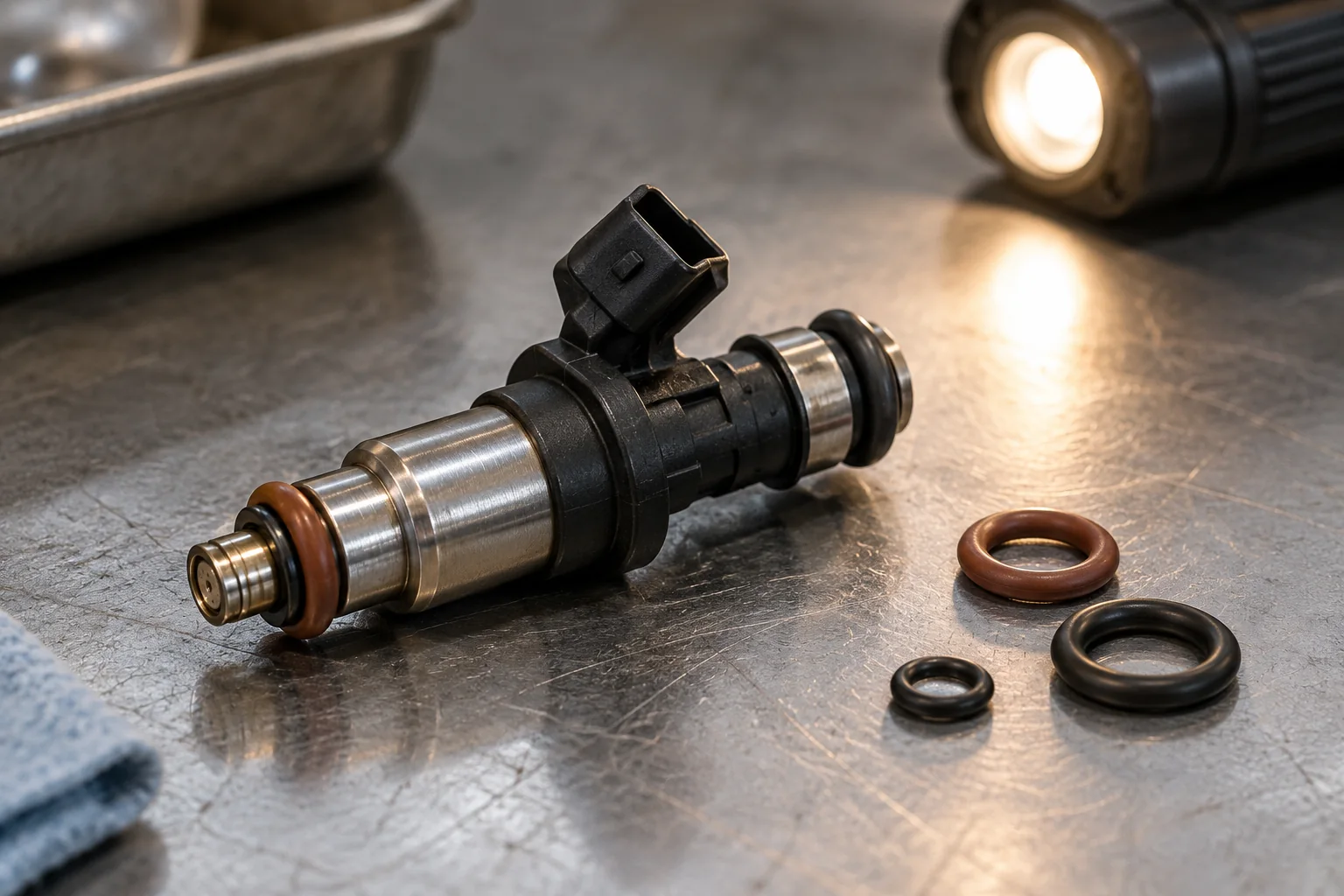
Before ordering, confirm the exact Porsche-compatible injector specification and revision against the VIN and engine, not only the brand on the box. The quote should state the required seals, any one-time-use fasteners or lines, the approved pressure-release and installation method, and whether that particular engine requires adaptation or coding. It is not an automatic step for every injector. Bosch’s high-pressure injector service guidance likewise calls for the correct tools and combustion-chamber seals. After work, a technician should check for leaks safely, repeat the relevant measurements and symptom conditions, and document what changed.
Ask for a diagnosis
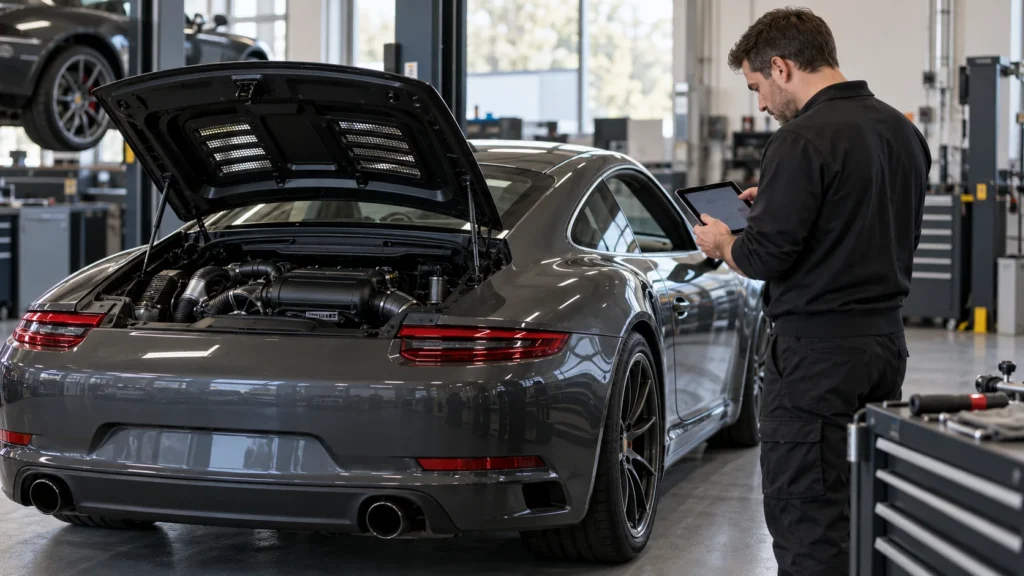
Send PorscheGarage the model, year, engine or VIN, exact warning and symptom record, and mention any raw-fuel smell before arranging transport. A computer diagnostic check can guide the next tests, but ask for the evidence and a written parts recommendation before approving injector cleaning or replacement. If fuel is leaking or the engine runs unsafely, arrange recovery rather than driving in.