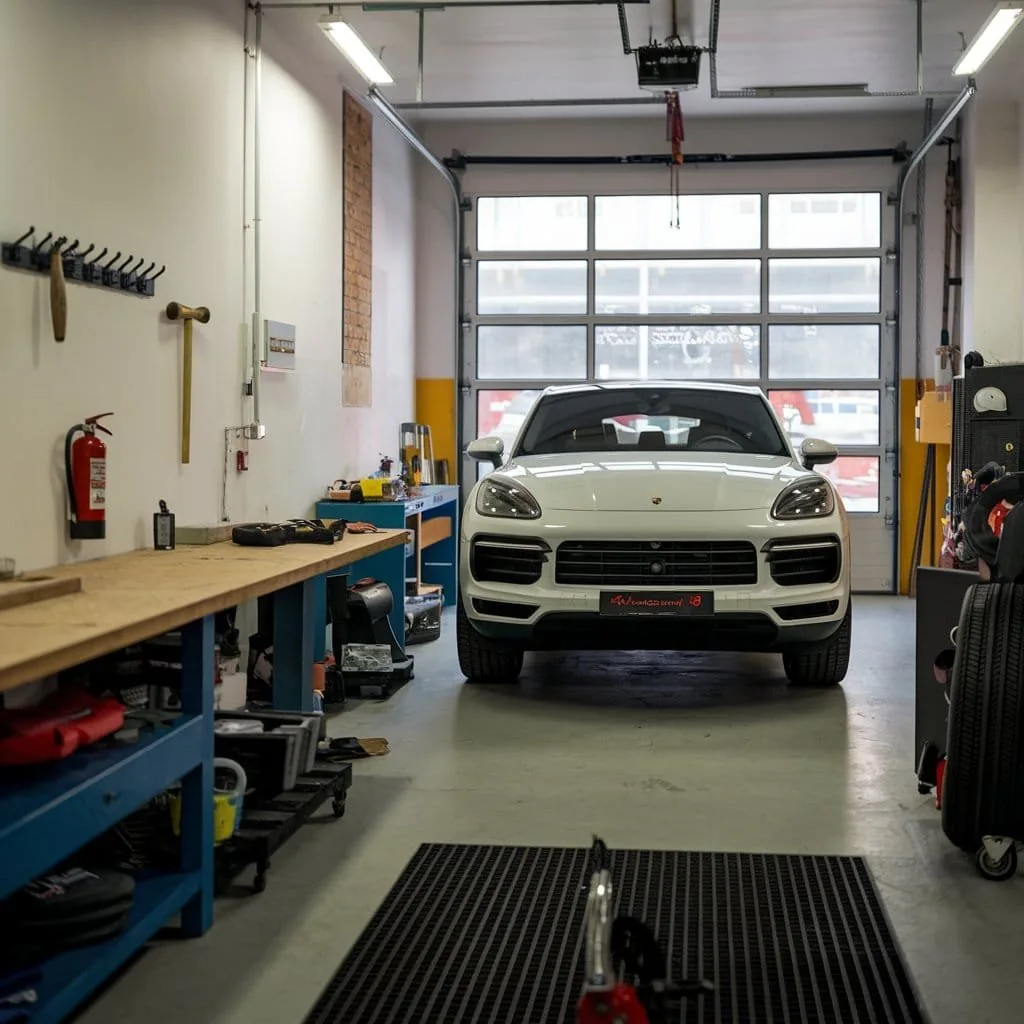


Found a wet carpet in your Cayenne after rain or a car wash? A Porsche Cayenne water leak into the cabin needs a check of the water-entry path, not an automatic sunroof replacement. Roof drainage and seals, drainage below the windscreen, and glass or body sealing are areas to investigate. Finding the entry point, drying the hidden carpet padding and assessing anything electrical that became wet are separate parts of the job.
The timing matters. Water appearing after air-conditioning use on a dry day raises a different question from a footwell that becomes wet during rain. A damp passenger carpet also does not, by itself, identify which drain or seal is responsible.
What to do first
For a small damp patch without electrical warnings, prevent further rain or washing if it is safe to move the car. If there is standing water around electrical equipment, a new starting problem or abnormal brake or steering behaviour, switch off and arrange assistance. Do not repeatedly start the car to see whether the warnings disappear. Follow any instruction to stop shown by the vehicle. Impaired windscreen visibility is also a reason not to continue driving.
If smoke, fire or a strong burning smell develops, stop safely, leave the vehicle, keep clear and contact emergency services. A small damp patch with no warnings is not the same as a submerged car, but it still needs prompt investigation. The visible carpet surface cannot tell you whether the padding or equipment beneath it is wet.
For a Cayenne Hybrid or E-Hybrid exposed to flooding, or with suspected high-voltage damage, do not restart it or, on a plug-in model, connect a charger as a test. Leave high-voltage components and orange cables alone and obtain qualified assistance. Do not move a vehicle with suspected lithium-battery damage into a garage. Keep clear and ask emergency services or the manufacturer about safe recovery and storage away from buildings, other vehicles and combustible materials. NHTSA’s electric and hybrid vehicle safety guidance explains the shock and fire risks associated with flood-damaged systems. Ordinary damp carpet alone is not proof of traction-battery damage.
Identify the liquid first
Before asking for a particular repair, describe when the moisture appears and whether any fluid level is falling. These clues help choose the first test. They are not a diagnosis.
| What you notice | What to investigate |
|---|---|
| Wet carpet after rain or washing | Rainwater entry through a drainage, glazing or body-sealing problem. |
| Water inside after using the AC in dry weather | The air-conditioning condensate outlet and other sources of cabin moisture. Condensate is water collected from humid air, not refrigerant. |
| Moisture with a sweet smell, residue or falling coolant level | A possible heater-circuit or other coolant leak, which needs separate cooling-system diagnosis. |
Clear water dripping outside after AC use can be normal condensate. Water soaking the interior is a different finding. Do not taste an unknown liquid, rely on colour alone or open a hot coolant reservoir. A coolant or temperature warning should be handled according to the vehicle’s instructions, not treated as a blocked rainwater drain.
Check the roof actually fitted
Start with the vehicle identification number, model year, roof type and repair history. An opening panoramic roof, another sunroof design and a fixed roof do not provide the same inspection points. The S, GTS or Turbo badge alone does not establish the fitted roof or drain arrangement.
The Porsche documents discussed below have defined applications. The roof bulletin lists Cayenne types 92A and 9YA, while the cowl-drain bulletin specifically concerns type 92A. They are useful technical background, not a universal dismantling guide for every generation, body style or market. A technician should use the current procedure for the actual vehicle.
Where rainwater can enter
Panoramic roof and drains
The outer seal, collecting channels and front and rear drains work together. A restriction, damaged connection or sealing problem can therefore require more than clearing one outlet.
Porsche’s revised September 2019 roof-water bulletin describes an investigation in which water overflowing at frame corners was not evidence of a failed corner seal. Its guidance puts frame alignment, glass adjustment, the outer seal and drainage ahead of frame replacement. Seeing a wet corner is not enough to condemn the complete roof assembly.
Ask what was found and which checks support the proposed work. The bulletin is informational, not a recall or confirmation that your repair will be covered under warranty.
Drainage below the windscreen
The cowl is the area below the windscreen around the wipers. When front-floor wetness follows rain, ask whether this area drains correctly and whether water can reach the cabin through an adjacent opening or sealing fault. Debris and the condition of the drain itself both deserve attention.
Porsche’s 2015 Cayenne 92A cowl-drain bulletin warns that removal can weaken the drain’s plastic retaining cage. It calls for replacement when the drain can no longer fasten correctly and says the assembly must not simply be omitted, because it also provides noise isolation. Leaving that drain out is not an approved permanent fix.
Glass, doors and body openings
Do not stop the investigation at the sunroof when the observed trail points elsewhere. Depending on where the first moisture appears, checks may need to include a windscreen bond, door weatherstrip or inner sealing arrangement, body seam, tailgate seal or another opening. These are inspection possibilities, not a list of faults every Cayenne develops.
Tell the technician about recent windscreen replacement, collision work, door repairs, roof work or interior trim removal. A leak that began immediately afterwards deserves a check of the area disturbed. It still needs a controlled test before the work is blamed.
Follow the first wet trace
The wettest patch shows where water has collected, which is not necessarily where it entered. Water can follow trim, seams and the carpet underlay before becoming visible. A wet rear footwell therefore does not automatically identify a rear roof drain.
Note whether the first sign is a damp headlining, moisture beside a windscreen pillar, water near a door sill, front-footwell wetness or a damp luggage compartment. If only one side is affected, identify the physical side as well as saying driver or passenger side. Imported vehicles and online repair examples may have a different steering layout.
Staining or a musty smell helps establish where to look, but neither identifies the failed component. A photograph of the first fresh wet trace during a controlled test is more useful than a photograph of an already saturated carpet.
Safe checks before the visit
You can gather useful information without dismantling the car.
- Record the trigger. Note rain, washing, AC use, washer use and whether the vehicle was parked or moving. Include whether it was on level ground or a slope.
- Check removable items. In a safely parked vehicle without an electrical hazard, lift the loose floor mat and photograph the carpet. Check for a spilled bottle or wet belongings before assuming a vehicle leak.
- Keep the evidence. Save warning photographs and relevant repair invoices. Do not clear fault codes before a technician has recorded them.
- Prevent further soaking. Follow the safety advice above before moving the car, and arrange inspection. Wiping the surface is temporary housekeeping, not confirmation that the leak has stopped.
Do not push metal wire into a drain, blast a hose with compressed air or pour household drain cleaner into the roof. Avoid pulling pillar trim or seats to reach hidden tubing. Airbags and electrical connections can be involved. Do not use a pressure washer or deliberately flood a roof tray to reproduce the problem. Drain access and cleaning should follow the appropriate workshop procedure.
How leak tracing should work
Map the wet area
The first job is to establish how far the moisture extends and whether testing can proceed safely. Accessible carpets, padding, nearby connectors and relevant trim need assessment. The technician should record existing wet areas before adding test water, otherwise old moisture can be mistaken for a new leak.
Access may require careful trim removal. Agree that work first, including how clips, seals and disturbed components will be refitted. More dismantling is not automatically better. The aim is enough access to observe the relevant path.
Test one area at a time
A controlled, low-pressure water test should isolate sections instead of soaking the entire car at once. The useful evidence is where water first crosses into the interior, how it travels and whether the intended outlet discharges outside.
Water leaving one drain proves flow through that tested path at that moment. It does not prove every other drain is clear or exclude a separate leak elsewhere. Similarly, water appearing beside a seal does not prove the rubber itself is defective if it has travelled there from above.
Check electrical consequences separately
Where moisture has reached wiring or electronic equipment, electrical diagnosis should accompany the leak investigation. A suitable whole-vehicle scan, once safe to perform, can preserve current and stored faults. Physical inspection and circuit tests then help distinguish wet or corroded connections from a damaged component.
A scan cannot locate a body-water entry point. Equally, finding a blocked drain does not establish that every warning came from water damage. Ask which findings support each proposed repair rather than accepting a list of replacement modules based only on warning messages.
Dry the carpet underneath
A carpet can feel dry on top while its absorbent backing or the padding beneath it remains wet. Removing the loose mat and vacuuming the visible surface may leave the main moisture reservoir untouched.
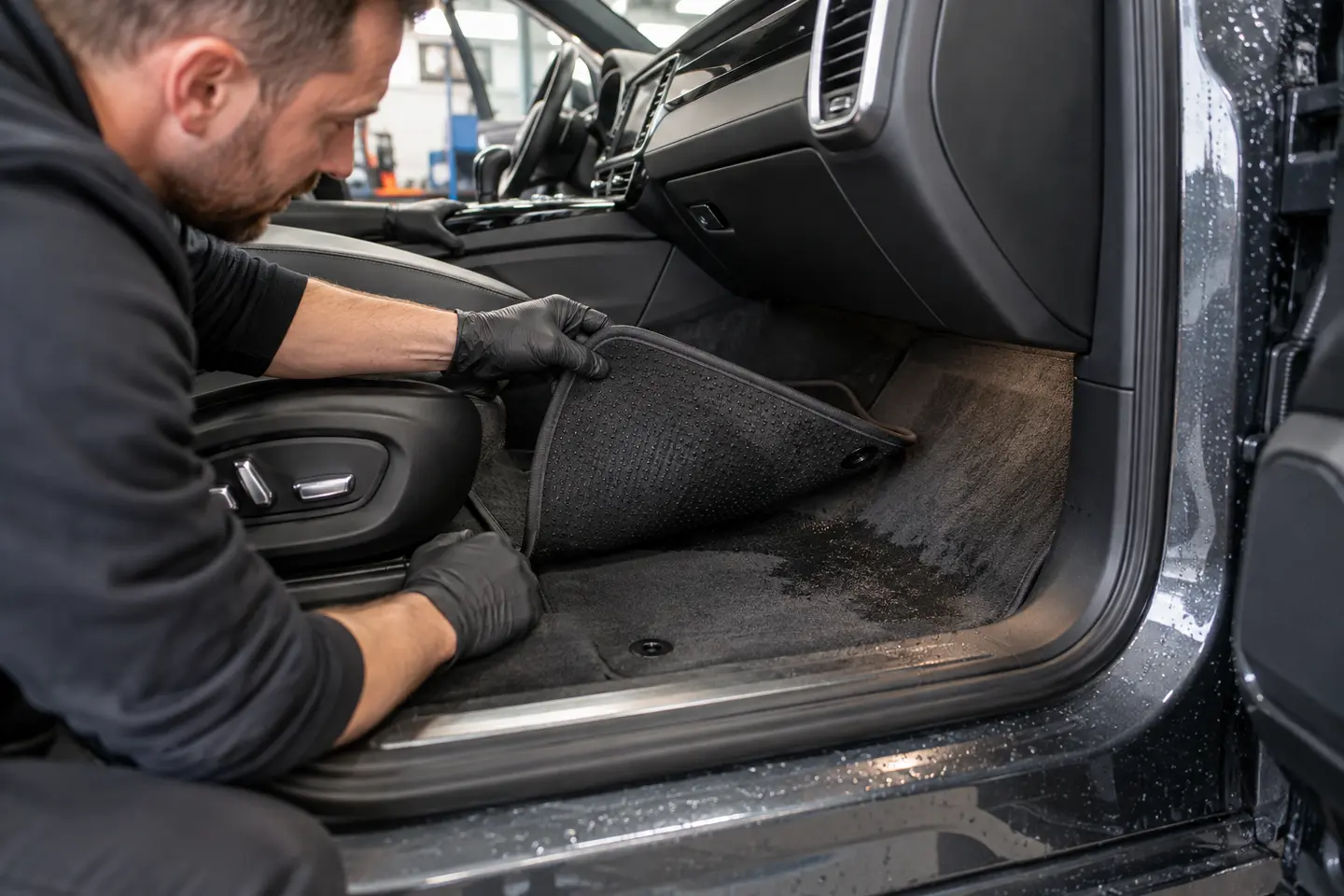
Ask how the hidden layers will be accessed, extracted and dried, and how dryness will be checked before the interior is reassembled. The condition of the materials determines whether drying is sufficient or replacement is necessary. Persistent contamination, deterioration or damage should be assessed rather than covered with fragrance.
Do not assume a hot day in Dubai will dry foam trapped beneath a fitted carpet. Drying time depends on the amount of retained water, access and the materials involved. No fixed overnight or same-day promise is reliable without first examining the interior.
Match the repair to the finding
A confirmed obstruction calls for appropriate cleaning and a repeat flow test. A leaking or detached hose needs its connection or damaged section addressed. A proven glass, seal or body-bond leak needs the correct repair for that location. Those are different jobs, even when all three can leave a similar wet carpet.
Sealant applied around a guessed entry point can obscure the original fault and interfere with the intended water path. Ask for the identified failure and the proposed repair before authorising a complete roof assembly or repeated sealing attempts.
Keep the water-entry repair, interior drying and electrical work identifiable in the quotation. An electronic unit should not be replaced solely because it was near damp carpet. Nor should a visibly damaged connector be ignored because its warning has temporarily disappeared. The decision should follow inspection and testing of the actual components.
What a completed repair should show
Before collection, ask for an explanation of the entry point, the work completed and the result of repeating the relevant water test. The hidden carpet layers should have been checked, and any electrical concerns should have a documented assessment and suitable post-repair checks.
A dry dashboard, a cleared warning or water now leaving a drain is only one piece of that picture. The aim is a cabin that stays dry under the relevant test conditions, with retained moisture and consequential faults addressed. Where something remains inaccessible or needs monitoring, the limitation should be stated plainly.
Reduce the chance of recurrence
Remove loose, easily accessible debris from around the windscreen and roof openings without pushing it into a drain. Have inaccessible drainage and seal checks included when the vehicle’s maintenance instructions or its condition call for them. Avoid treating an internet cleaning interval as the schedule for every Cayenne.
After the first rain or normal wash following a repair, check the previously affected area while the car is parked. Report any fresh dampness, smell or warning promptly. This is a sensible follow-up observation, not a substitute for the workshop’s leak test and drying checks.
Help with a Cayenne leak
If wet carpets keep returning or cabin electronics have started behaving differently, discuss the symptoms with our independent Al Quoz 4 workshop. Cayenne repair and diagnosis can begin by tracing the water entry and checking affected systems, with the next work explained after inspection.
Send the model year, roof type, wet area and what happened before you noticed it. Mention any warnings or recent glass and body repairs. Confirm the agreed leak testing, trim access, drying arrangements and any specialist high-voltage assessment before booking. These are not all the same service.
Other Cayenne water-leak questions
Does wet carpet prove previous flood damage?
No. A local rainwater leak, a spill and a vehicle exposed to flooding can all leave moisture, but they have different histories and inspection needs. When buying a used Cayenne, assess the repair records and the extent of water-related findings together. A single damp patch cannot establish the complete history, and a recently cleaned interior cannot rule out earlier damage.
Why does it leak only on a slope?
Parking angle can change where water gathers and which path it follows. Record the direction of the slope and the first place that becomes wet. That helps plan a controlled inspection, but it does not identify a particular drain or justify removing one. Do not reproduce the problem by deliberately soaking the car on a steep incline.