
In Dubai, Porsche AC care starts with airflow and the way the system actually cools. Check the cabin filter against your car’s maintenance schedule and its condition, look for debris blocking the front heat exchangers, and pay attention to a change in vent temperature, airflow, smell or noise. A warm cabin does not by itself prove a refrigerant leak or a failed compressor. The correct check depends on the Porsche model, model year, fitted climate system and symptom.
There is no universal recharge or cabin-filter interval for every Porsche. Use the maintenance information for the exact vehicle and arrange an earlier condition check when dusty use or a new symptom warrants it. Porsche explains how to find the model-specific owner’s manual. Service history and the vehicle’s applicable market schedule should be considered together.
What to check first
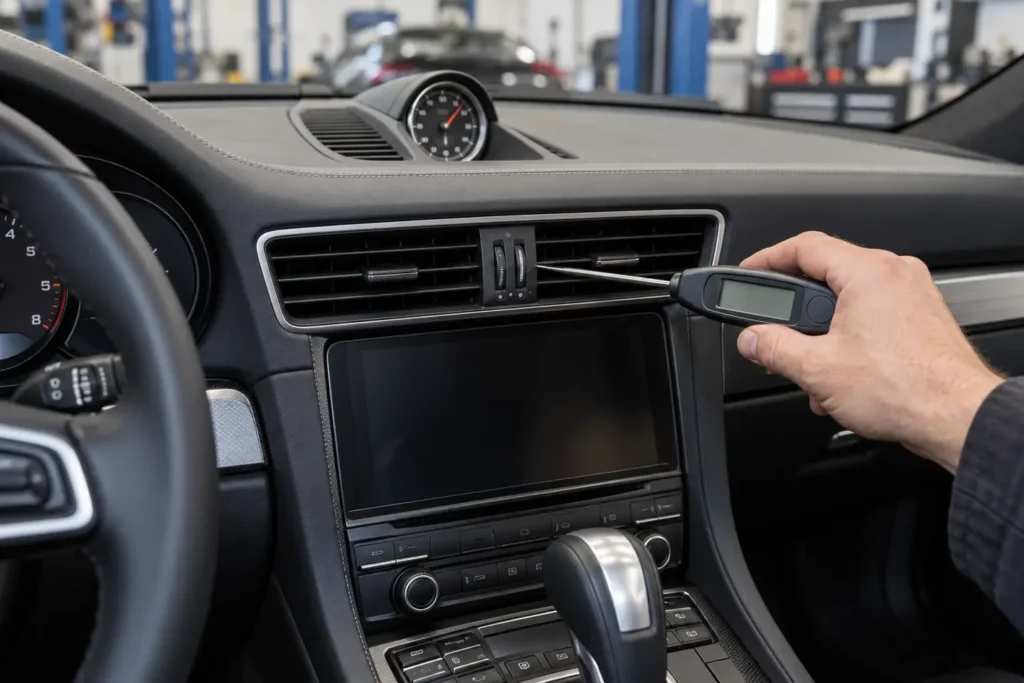
Weak airflow from all vents is different from strong airflow that is no longer cold. A cabin filter loaded with dust, a blower fault or a closed or obstructed vent may limit airflow. Warm air with normal flow calls for a different assessment of controls, fans, heat exchange and the refrigerant circuit. Uneven left and right temperatures can also involve climate settings or an air-mixing fault. Record whether the change occurs only at idle, after the car sits in sun, or throughout the drive.
Start with the controls set consistently on both sides, the fan speed, recirculation setting and a visual check of accessible exterior air inlets. On a hot day the cabin may take longer to cool after parking in direct sun. That alone does not establish a defect. If cooling is plainly weaker than it used to be under similar conditions, or there is a new noise or warning, arrange diagnosis rather than asking for an automatic recharge.
Filters and dusty conditions
The cabin filter is part of the ventilation path. A blocked or poorly seated filter can reduce air delivered to the occupants, but changing it will not seal a refrigerant leak, repair a weak compressor or correct every odour. A musty smell calls for checking the filter, moisture drainage and the source of the smell. A deodorising treatment should not replace that assessment.
Check the correct filter item and due date for the particular car, then inspect condition if the vehicle spends much of its time on dusty roads or has noticeably weaker airflow. Porsche maintenance material for some models calls for closer attention to the engine air filter in dusty use. Cabin-filter timing still needs the correct model schedule and a condition check. The engine-filter note is not a universal cabin-filter interval. The engine and cabin air-filter guide explains why the two filters should be listed separately on a service quote.
Debris across the accessible front heat exchangers may also restrict airflow through them, especially after dusty driving. Inspect visible openings without forcing tools into the fins, and leave close cleaning or dismantling to a technician. A dirty front surface is a possible contributor, not proof that the sealed refrigerant circuit needs oil or gas.
What a workshop diagnosis can establish
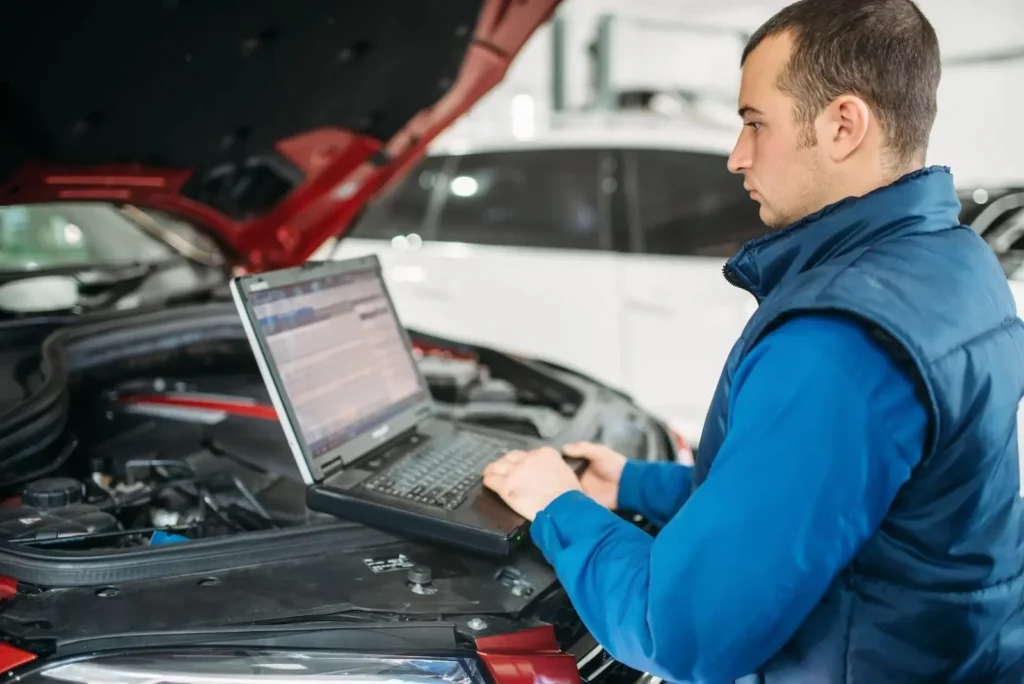
A technician should first confirm the complaint and the car’s fitted system. Vent and ambient temperatures, fan operation, visible condition, relevant fault information and refrigerant-side measurements can narrow the possibilities. Pressure readings depend on ambient conditions and operating state. A single reading cannot identify a leak location or prove that a compressor must be replaced.
If the charge is suspected to be wrong, the workshop should identify the specified refrigerant and quantity for the exact vehicle, recover it with appropriate equipment, investigate an identified loss and recharge to the prescribed amount where justified. Refrigerant is part of a sealed system. Repeated top-ups can conceal a leak. The US EPA describes recovery and recharge as distinct service steps, and its vehicle AC guidance explains that added refrigerant replaces an amount that has escaped. This is technical context, not a claim that US servicing rules govern a Dubai workshop.
Compressor oil is different from refrigerant. Its specified type and quantity depend on the compressor and system. Oil may need to be accounted for when components are replaced or the system is opened. It is not a routine consumable to top up by calendar. Adding an arbitrary amount, a seal-conditioner product or an unverified refrigerant substitute can create new problems. Sensor adaptation or calibration is likewise a repair-specific step when the manufacturer’s procedure calls for it, not an automatic AC service.
Petrol, hybrid and electric systems
Many combustion-engine cars use an engine-driven AC compressor, so its operating load can affect engine fuel use. The size of that effect varies. A filter change or refrigerant service cannot promise a particular reduction in engine load or restoration of cooling performance.
A Taycan is a different application because its electric compressor and thermal management interact with high-voltage systems and battery conditioning. Porsche describes the newer Taycan’s heat-pump and battery cooling functions, and its technical material notes a higher-voltage compressor on the updated car. These details should not be copied to every Taycan year or every hybrid. On a Cayenne or Panamera E-Hybrid, identify the exact system by model and year before describing the compressor and service method.
Owners can check controls, note symptoms and inspect accessible filters. Refrigerant recovery, compressor wiring and any high-voltage-related work belong with technicians following the applicable vehicle procedure. A weak cabin AC complaint does not automatically mean the traction battery is overheating. A battery or charging warning needs its own diagnosis.
When odour needs attention
A persistent musty smell may arise from a wet filter, standing condensate, contamination around the evaporator or another moisture source. Check for a blocked drain or wet carpet and correct the source before considering cleaning. A claim that routine ozone treatment sterilises the vents or prevents corrosion is not supported. The US EPA’s assessment of ozone generators notes limited effectiveness at concentrations that meet health standards and a risk of respiratory irritation. This article does not recommend ozone as routine AC maintenance.
Ask what was found and what a proposed cleaning method reaches. A cabin filter replacement may improve airflow and filtration but cannot remove a leak or contamination beyond the filter. If water is entering the cabin from rain rather than AC condensate, the source and drying plan are separate from an AC recharge.
Simple habits and next steps
Shade and a windscreen sunshade can reduce the initial cabin heat load. Venting very hot cabin air briefly before setting a comfortable temperature is a practical comfort step, but it does not guarantee compressor life or measurable fuel savings. Keep the exterior air paths clear and mention dusty use, service history and any change in cooling at the next visit.
Book a check sooner when cooling fails, the compressor area makes a new noise, the system displays a fault, or the cabin filter is visibly damaged or poorly seated. Describe the model, year, symptom and when it occurs. A written diagnosis should separate filter maintenance, a refrigerant-circuit repair and an electrical fault, and should state what each recommended item is expected to address.
Ask about an AC check
PorscheGarage in Al Quoz 4 can advise on the next check for a persistent cooling or airflow change. Share the model, year and what happens at idle and while moving. A Porsche AC inspection should identify the cause before a repair is proposed. Confirm the proposed checks, price and VAT treatment in the written estimate.