
A brake warning, persistent grinding, vibration under braking, a soft pedal, or pulling when you slow down is a reason to check the car. None of these signs identifies a failed part by itself. Start with how braking feels and the exact warning, then let an inspection separate ordinary wear from a hydraulic, caliper, electronic or other fault before parts are ordered.
If the pedal suddenly sinks, braking effort drops sharply, fluid is leaking, a wheel is locking, or the car will not stop normally, do not keep driving to “see if it clears.” Park safely and arrange assistance. For less severe changes, note exactly what you feel or hear and when it happens. That information helps the workshop choose the right first check without guessing at parts.
When a Porsche brake problem is urgent
Not every squeak means the car must be recovered, but loss of normal braking is different from ordinary wear. Treat a sudden change in pedal travel, braking force, hydraulic-fluid loss, a locked wheel, or an instruction to stop as a safety issue. Do not rely on a dashboard reset or a short test drive to make a serious symptom disappear.
An amber pad-wear message with otherwise normal braking calls for prompt inspection. A red brake-system warning, an instruction to stop, or impaired braking calls for a safe stop and assistance. Follow the exact message displayed and the Porsche owner’s manual for your model. Color alone does not establish whether driving is safe. Photograph the message and share it when you contact the workshop.
Five signs your Porsche needs brake repair
1. A brake warning or pad-wear message stays on
Many Porsche brake systems use wear monitoring, while ABS, parking-brake and hydraulic warnings can point to different parts of the braking system. Do not assume every brake symbol means “replace the pads.” A worn pad, damaged sensor lead, low fluid, wheel-speed sensor issue, parking-brake fault or another system condition can require a different repair.
Record the exact warning text or symbol and whether it appeared after recent brake, wheel, tyre or battery work. A scan can identify which control system reported the fault, but the physical brake condition still matters before a component is ordered.
2. Squealing becomes persistent, or you hear grinding
Brake noise can come from pad wear, friction-material characteristics, disc surface condition, hardware, debris or another contact point. A short noise after washing or after the car has been parked is not the same as a persistent sound that changes every time the pedal is pressed.
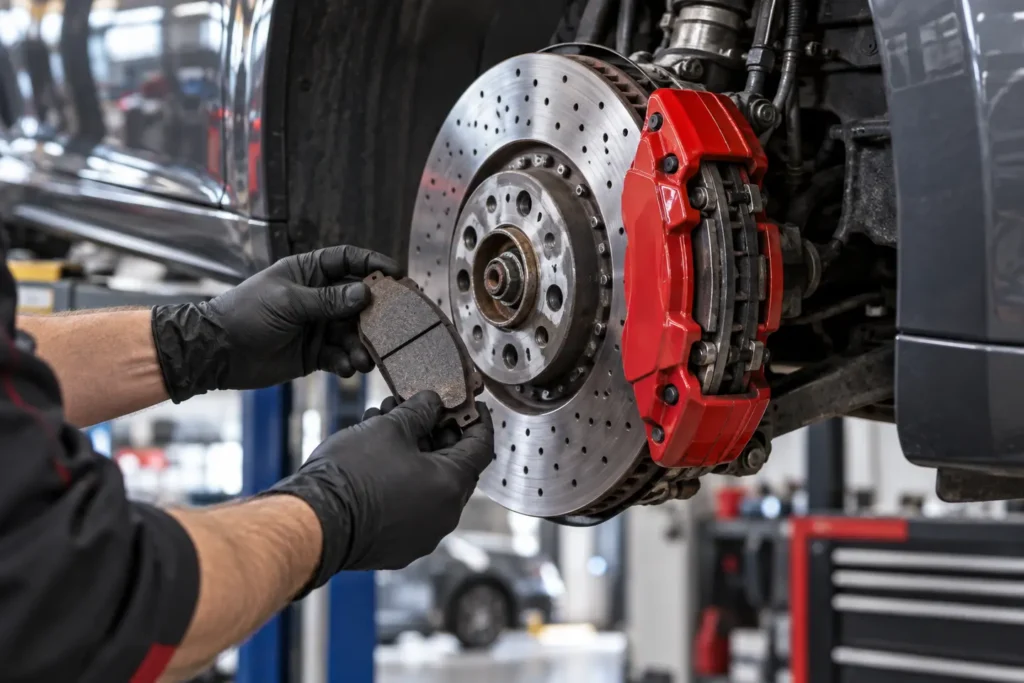
Grinding or heavy scraping deserves prompt inspection because the friction surfaces may already be damaged or making abnormal contact. Continuing to drive can turn a pad-only job into a more expensive disc, hardware or caliper repair.
3. The pedal or steering wheel vibrates under braking
A brake-related vibration can be associated with disc thickness variation, surface deposits, heat damage or another condition at the wheel. It can also be confused with hub, wheel, tyre or suspension problems. The useful question is not “Are my rotors warped?” but “What changes when I brake, and at what speed?”
Tell the workshop whether the vibration is felt mainly through the steering wheel, seat or pedal and whether it appears only during braking. That helps separate an axle-specific brake concern from a vibration that is present while cruising as well.
4. The brake pedal feels soft, long or unusually hard
A noticeable change in pedal travel needs more than a pad estimate. Air in the hydraulic system, fluid condition, a leak, hose behaviour, a master-cylinder concern or another pressure-related fault may need checking. New pads alone do not correct a hydraulic problem.
If the pedal suddenly sinks, becomes unusually hard to press, or the car does not slow normally, stop safely and arrange assistance. A hard pedal with poor braking can involve brake assistance, but the feel alone cannot identify a failed booster or another part. A milder repeatable change still needs inspection, even without a warning light.
5. The car pulls, one wheel runs hot, or stopping takes longer
Uneven pad movement, a sticking caliper, a hose restriction, disc condition, tyre grip or a non-brake chassis issue can produce similar symptoms. A hot wheel after ordinary driving is especially useful information for the technician, but do not touch a hot brake assembly to compare temperatures yourself.
A longer stopping distance can have more than one cause, including tires and road conditions. What matters is a clear change from the car’s normal behavior. If the car pulls strongly, braking weakens, or you notice smoke, a burning smell or unusual heat from one wheel, stop in a safe place and arrange assistance. Do not touch the wheel or brake assembly. A mild but repeatable pull still needs prompt inspection to separate a brake fault from a tire or suspension issue.
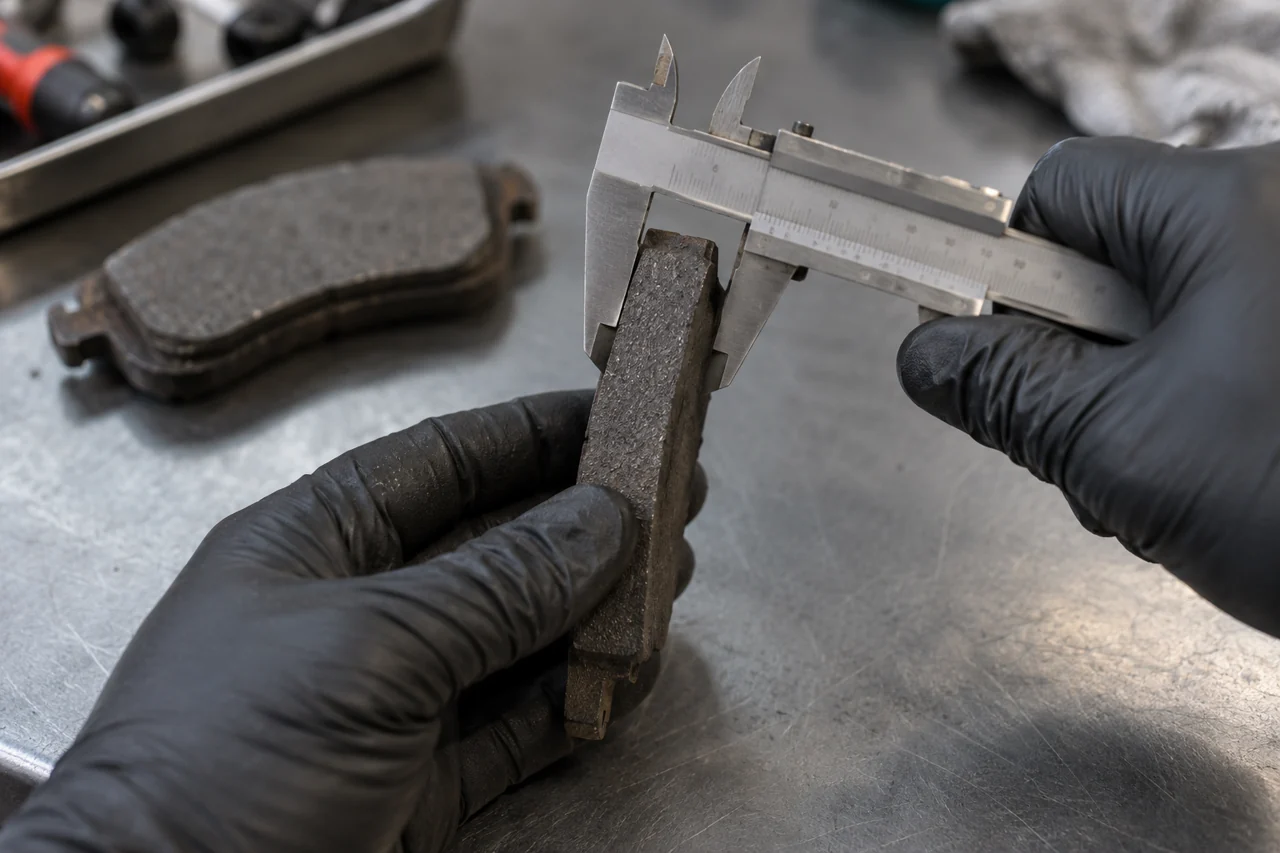
Porsche brake symptoms and the next step
Use the change in braking and the car’s exact warning to decide how urgently to act. This guide cannot confirm that the car is safe to drive.
| What you notice | Next step |
|---|---|
| Pad-wear or brake warning | Follow the displayed instruction. Arrange a prompt check for a wear message with normal braking. Stop safely and seek assistance if the car instructs you to stop or braking changes. |
| Persistent squeal or grinding | Arrange an inspection soon. If grinding comes with weak braking or a sudden change in pedal feel, stop and arrange assistance. |
| Vibration when braking | Note the speed and whether you feel it in the wheel, seat or pedal. Arrange a brake and wheel check. Stop if control or stopping ability is impaired. |
| Soft, long or unusually hard pedal | A sudden, worsening, sinking or unusually hard pedal, especially with poorer stopping, is a stop-driving concern. Park safely and arrange assistance rather than a routine pad visit. |
| Pulling or one wheel unusually hot | Stop and arrange assistance for a strong pull, smoke, burning smell or unusual heat. Arrange a prompt check for a milder repeatable change. |
If you cannot tell whether stopping ability is normal, arrange assistance rather than driving to the workshop for a diagnosis.
What the workshop should check before replacing parts
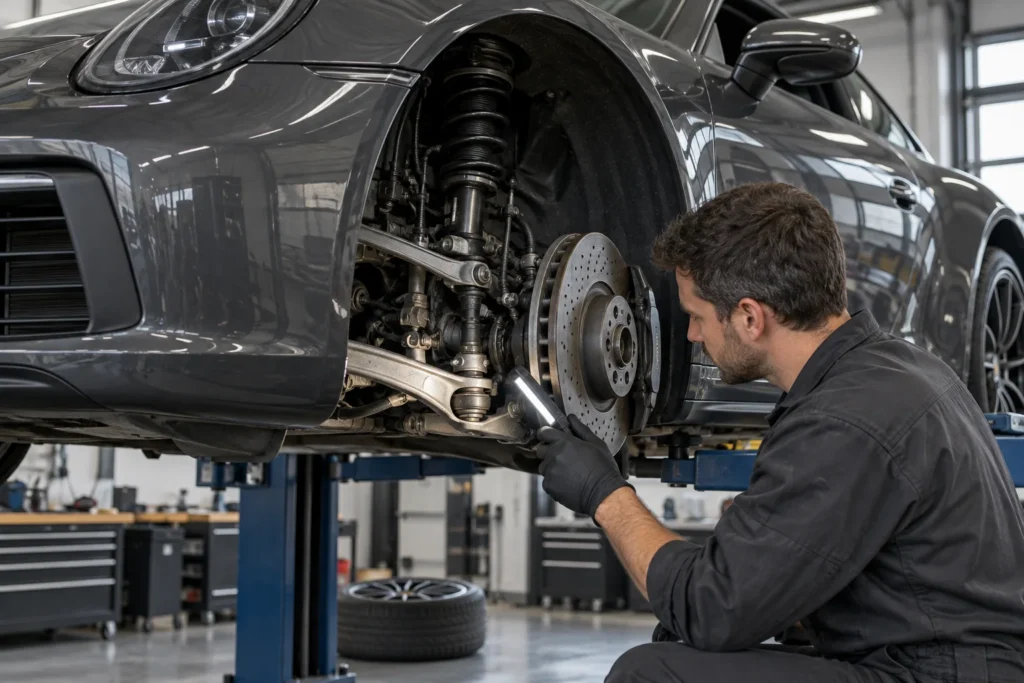
A sensible brake visit starts with your symptom and the fitted hardware, then moves quickly to the affected components. This helps distinguish worn friction parts from a hydraulic, caliper or electronic fault before deciding what to replace.
- Confirm the concern and brake specification. Note the warning, noise, pedal change or vibration and identify whether the car has standard steel brakes, PSCB, PCCB or modified components.
- Inspect and measure what matters. Record inner and outer pad condition and relevant disc measurements against the specification for the fitted brakes. Where vibration points to the disc, check the appropriate surface and runout conditions. Inspect caliper movement, hoses, visible hydraulic connections, sensors and fluid as the complaint requires. Show which finding supports each recommended replacement.
- Separate required work from optional work. Pads can remain a pad job when the discs and calipers are serviceable. Damaged discs, a sticking caliper or an electronic fault should be itemised rather than hidden inside a generic “brake package.”
- Confirm the price before work expands. The quote should state the axle, parts choice, labour, sensors or hardware, VAT treatment and any extra diagnosis or coding.
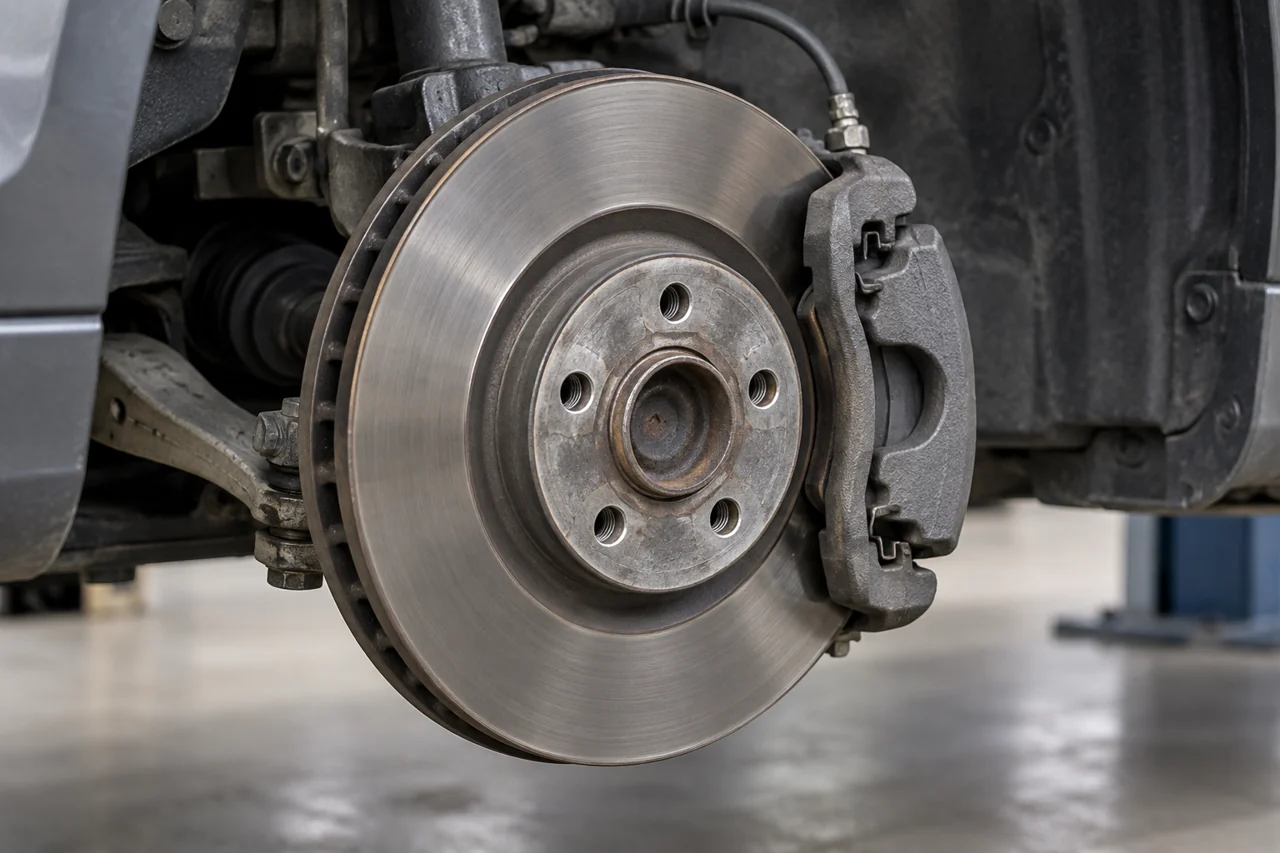
Steel, PSCB and PCCB change the repair plan
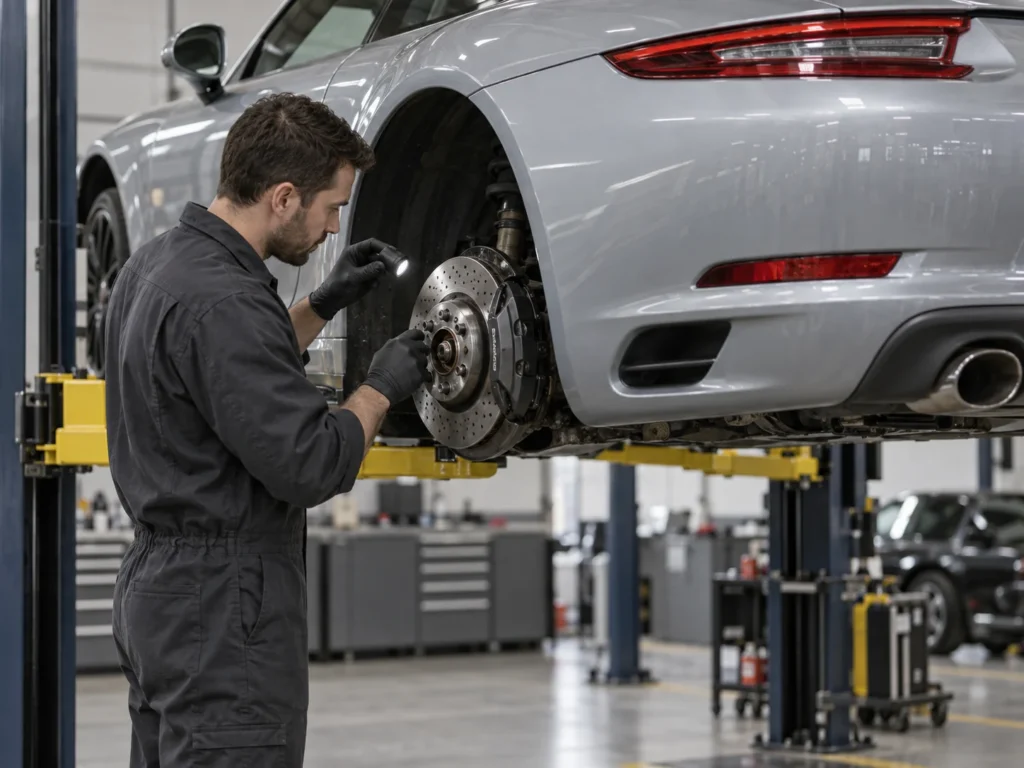
Porsche brake specifications vary by model, generation and equipment. A standard steel-brake price should not be copied onto a Porsche Surface Coated Brake or Porsche Ceramic Composite Brake job. The disc, pad, caliper, wear arrangement and handling requirements can all change the parts and labour.
For standard steel brakes, a workshop can often quote common pad and disc ranges once the exact model and axle are known. PSCB and PCCB require closer identification and a vehicle-specific quotation. Porsche’s PCCB overview explains why ceramic composite hardware is a distinct system. If the car has been modified, share a photograph of the caliper and disc plus any previous invoice so the workshop does not order from the badge or model name alone.
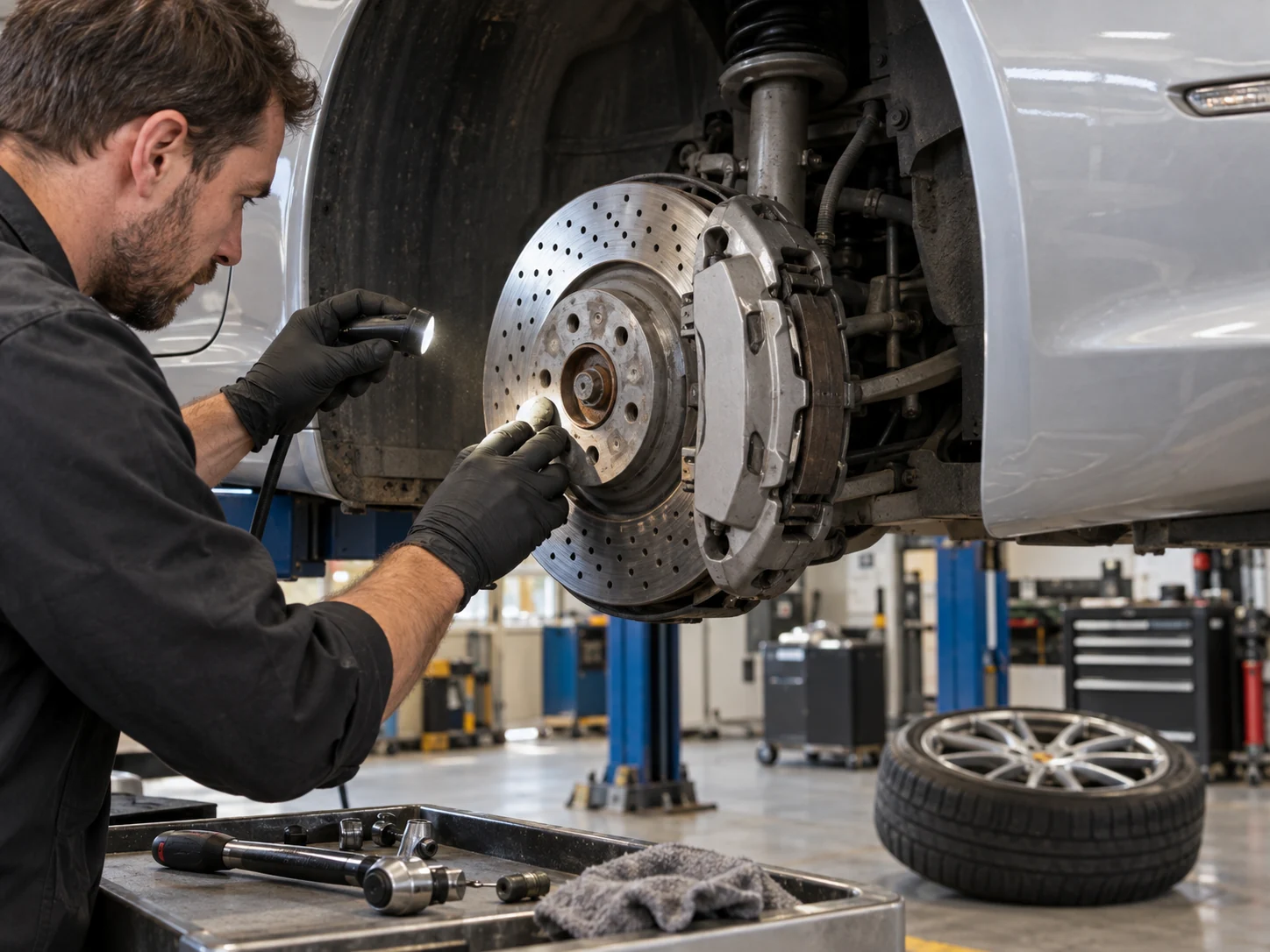
How long Porsche brake repair can take
A straightforward pad replacement may fit within a same-day visit when the correct parts and workshop capacity are available. Disc, caliper, parking-brake, hydraulic or warning-related work can take longer because the fault, parts availability and any bleeding, coding or additional checks need to be confirmed.
Ask for the expected workshop time when the job is agreed, not before the car and required parts are identified. If you depend on the car daily, mention that at booking so parts can be checked before you travel to Al Quoz 4.
Porsche brake repair questions
Can I drive with a Porsche brake warning?
It depends on the warning and how the car is braking. Do not continue driving with a sinking pedal, sudden loss of braking force, visible fluid leakage, a locked wheel or a car that will not stop normally. For a wear message with normal pedal feel, arrange a prompt inspection and follow the vehicle’s warning instructions.
Do new brake pads always need new discs?
No. Pads can be replaced as a matched axle set when the existing discs remain suitable and the calipers and hydraulic system are operating correctly. Disc wear, damage or another confirmed condition can make a pad-and-disc repair the better option.
Are Porsche brake pads replaced on both wheels?
Brake pads are normally replaced as a matched set across the affected axle rather than one wheel at a time. The other axle should be inspected, but it does not automatically need replacement at the same visit.
Can an inspection find that no brake parts need replacing?
Yes. A short noise after washing or parking can settle, and a vibration may come from a wheel or suspension issue rather than the brakes. A measured inspection can rule out a brake replacement. Persistent noise, a warning or a change in stopping ability still deserves attention even if the symptom later fades.
Do Taycan and hybrid Porsche models still need brake inspection?
Yes. Porsche explains that Taycan recuperation and friction braking work together. Its 2023 explanation also describes a programmed use of the hydraulic brakes to help keep Taycan discs clean when recuperation leaves them less used. That function is no substitute for checking the pads, discs, hydraulic system and warning shown on a particular car. It is not an instruction to make hard stops yourself. Hybrid models also need checks when a brake warning or symptom appears, but their exact braking arrangement depends on the model and year.
What should a written Porsche brake quote include?
Ask for the affected axle or component, the measured or confirmed reason for the work, the parts brand and specification, labor, sensors or hardware, any additional diagnosis, and whether 5% VAT is already included. The workshop should explain optional work separately before you approve it.
When to arrange a brake check
If the brakes behave normally but a wear message or repeatable noise has appeared, arrange an inspection soon. If the pedal sinks, braking is weak, fluid leaks or a wheel locks, stop safely and arrange assistance instead of driving to the workshop. Tell PorscheGarage the model and year, the exact warning, what you hear or feel, and whether it happens only under braking. A dashboard photo and the fitted brake option can help the team prepare.
For a useful price reference, the workshop’s published pad replacement estimate for suitable supplier-branded pads on one axle is AED 1,890–3,150, including fitting and 5% VAT. Sensors, hardware, discs and special brake systems are assessed separately. Ask for a vehicle-specific written quote before approving a repair.