
If Launch Control does not become available, it does not by itself identify a failed part. The feature may not be fitted to that exact car, a condition in its owner’s manual may not be met, or a vehicle fault may be limiting operation. Stop trying if a warning appears or the car behaves abnormally. Record the exact message and arrange diagnosis before anyone clears faults, resets control units or programs the car.
First separate three situations
| What you notice | What it may mean | Next step |
|---|---|---|
| No Launch Control function is listed for the car | Equipment and transmission differ by model, year, market and option selection. | Check the VIN-specific equipment and the correct owner’s manual. Do not assume a hidden function can be enabled by coding. |
| The feature is fitted, but readiness is not shown | A model-specific drive mode, operating condition or temporary protection may be involved. Absence alone does not prove a fault. | Compare the actual display and conditions with that car’s manual. If it persists, have the relevant systems checked. |
| A warning appears, or the car hesitates, shudders or otherwise behaves abnormally | A fault or a temporary limit applied to protect a system needs investigation. The warning does not name the failed component. | End launch attempts, keep the exact message and fault information, and request a workshop assessment. |
These are decision categories, not a substitute for the instructions in the car. Porsche provides a manual lookup by model year or VIN. Equipment and guidance can differ by country and year.
Requirements differ by Porsche
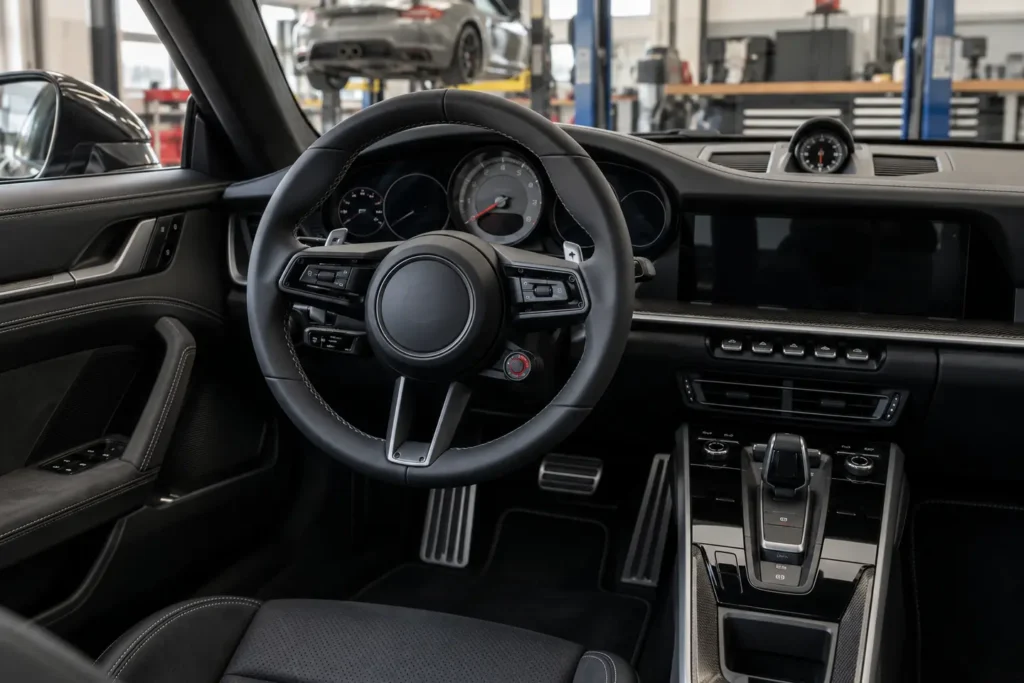
Older PDK 911 example The Porsche 911 Turbo owner’s manual, edition 8/09, page 176 says its Launch Control should be used with the engine at operating temperature and Sport Plus selected. It identifies the display wording “Launch Control active” for that car. The same manual says prolonged stationary use while active can overload the transmission, after which power is reduced and the process cancelled. Those are instructions for that older 911 Turbo, not universal temperature or reset rules for later Porsches.
Current 911 equipment example Porsche’s 2024 911 equipment information describes the Sport Chrono package, including Launch Control, as optional on certain versions and standard on the Carrera GTS. Check the individual vehicle rather than assuming every 911, 718, Macan, Cayenne or Panamera has the same feature or menu.
Taycan example Porsche says Launch Control is standard on the Taycan generation it describes, and its battery explanation links traction-battery conditioning to charge level and the selected driving programme. A Taycan has no engine warm-up or PDK-clutch requirement. Its precise readiness display and any limits must be checked in the manual for that model year. Do not copy a 911 procedure or invent a single battery-temperature threshold.
What to record before diagnosis
Note the model, model year, transmission or electric-drive variant, and any Sport Chrono or performance equipment shown in the vehicle build information. Photograph the exact cluster or PCM wording, including colour, and note when it appeared, the selected drive mode, approximate engine or battery state, and whether another warning was present. Describe any hesitation, vibration, unusual sound or change in normal driving. These details can distinguish a missing option, an unmet condition and a repeatable fault without repeated full-throttle attempts.
If there is a transmission, drivetrain, engine, brake, stability-control or high-voltage warning, or an abnormal response, do not continue testing Launch Control. Follow the warning instructions for that car, and arrange transport if it is unsafe to drive. There is no useful “three-to-five-minute reset” that can be promised across Porsche models. A key cycle may change what is displayed, but it does not establish that the underlying cause has been repaired and may make an intermittent complaint harder to document.
How a workshop should investigate
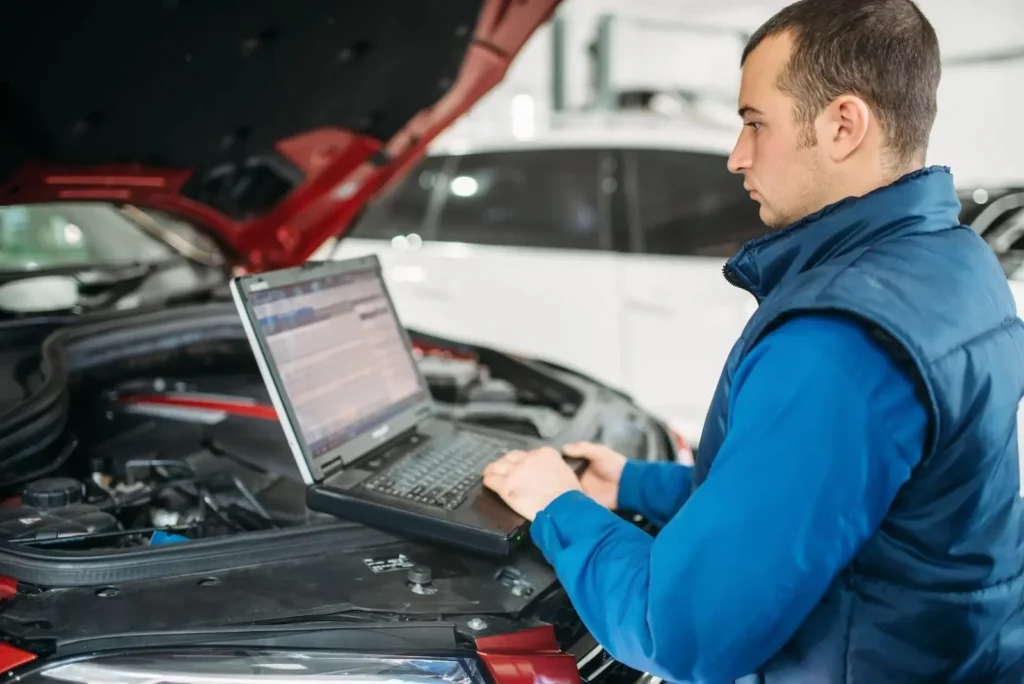
A technician should first confirm the VIN-specific equipment and read the vehicle-specific operating instructions. The next checks depend on the warning and stored data, including relevant control-unit faults and freeze-frame information (saved conditions from when a fault was logged), supply voltage, brake and drive-mode inputs, transmission or drive-system status, and any temperature or protection information the car actually reports. A code points to a test path, not automatically to a sensor, clutch or control unit replacement.
Preserve the original fault record before clearing anything. Repair, adaptation (relearning a setting), calibration or software programming should follow only if the diagnosis and the Porsche procedure for that exact car call for it. A scan with no current fault is not proof that Launch Control is available, and a cleared message is not proof of a successful repair. After work, confirm normal operation by the permitted vehicle-specific checks. Any performance use belongs on a permitted closed course under the venue’s rules, not a public road.
Arrange a focused check
If Launch Control remains unavailable or a related warning appears, record the model, year, fitted equipment and the exact message. A computer diagnostic check can establish which condition or fault needs further testing. Ask for any paid testing to be explained before work begins.