
A louder turbo-like whine is a reason to check the car, not proof that the turbo is about to fail. A changed sound may come from an intake or boost leak, loose pipework, an exhaust leak, an accessory drive or the turbo itself. First decide whether the car is safe to run. If the noise is severe or metallic, or you also have smoke, an oil-pressure warning or major power loss, stop safely, switch off and arrange recovery. Do not accelerate hard to reproduce the sound.
This advice concerns Porsche models with a turbocharged combustion engine. A naturally aspirated engine has no turbocharger, and an electric Taycan or Macan Electric needs a different noise diagnosis. The exact engine, turbo unit and control system must be identified before applying a test or repair procedure.
Normal sound or new noise?
Some turbocharged engines make a soft rising sound as the turbo builds pressure. The useful comparison is with your car’s usual sound under similar conditions, not with another Porsche. Note when the change began and whether it followed servicing, an intake repair or a warning message.
- More likely to monitor a familiar, steady sound with normal performance, no warning lights, smoke or fluid loss. A video can help document it, but avoid trying to make the sound louder.
- Needs inspection a new whistle, hiss, rattle or whine that repeats during ordinary use, especially with reduced performance or after work around the air intake.
- Stop and recover a sudden harsh mechanical sound, heavy smoke, an oil-pressure warning or marked power loss. Porsche warns against driving with an oil-pressure alert. The safe response is to stop and seek assistance.
Pitch alone cannot locate the failed part or predict how soon anything might fail. Garrett’s turbo diagnostic guide starts with pipework, supports and intercooler leaks before considering deeper turbo faults. Porsche’s oil-warning guidance supports stopping safely for an oil-pressure alert.
Checks before any road test
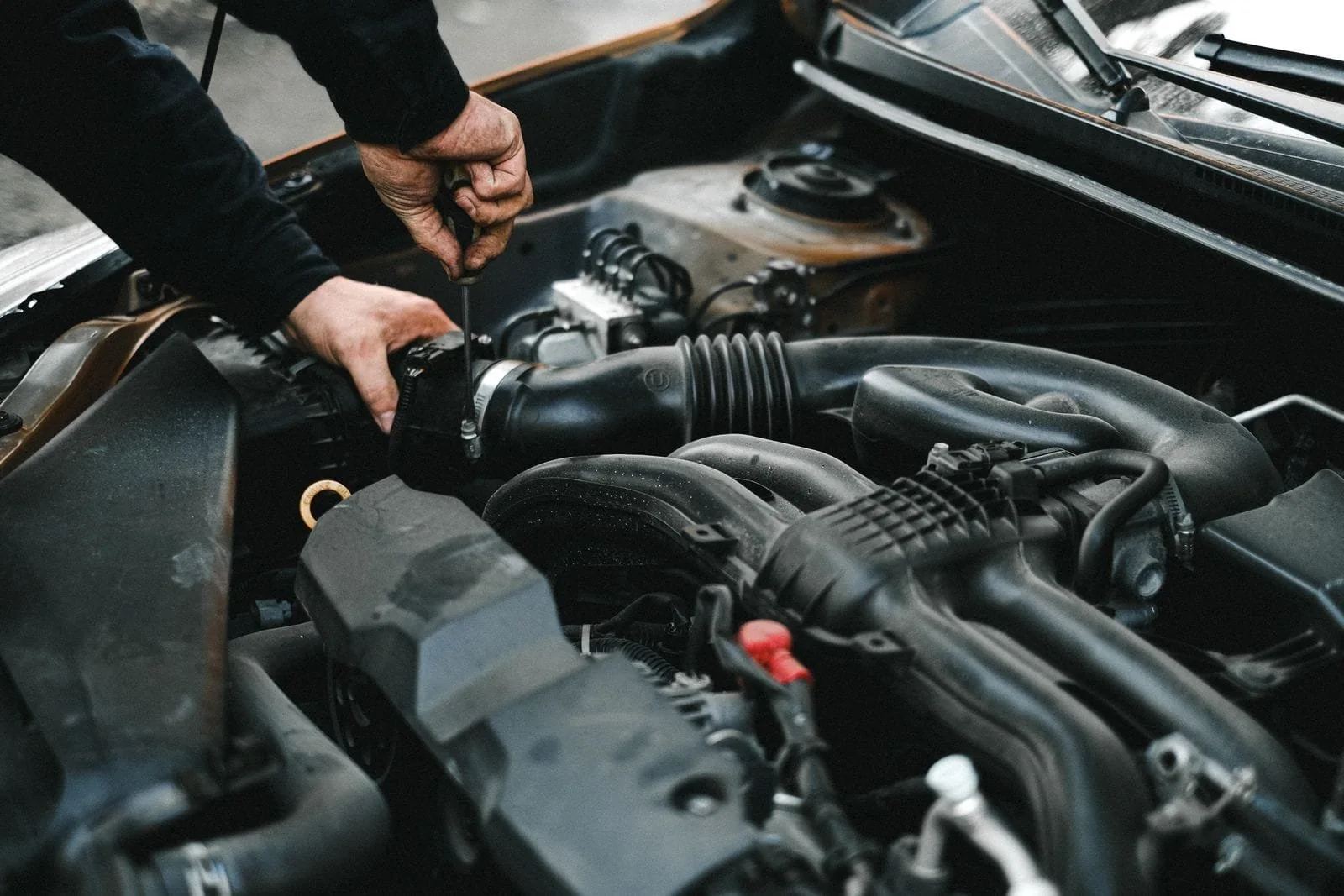
An owner can record the symptom, dashboard messages, recent service work and whether smoke or fluid loss is present. With the engine off and cool, look only for an obviously displaced intake hose or loose cover that is safely accessible. Do not reach near belts, a hot turbo or moving fans, and do not tighten a pressurised joint by guesswork. If a stop condition is present, no stationary revving or road test is appropriate.
A workshop should first identify the fitted engine and inspect where the noise originates. The accessory belt and driven components, intake path, pressurised pipes between the turbo and engine, intercooler connections, heat shields and exhaust joints can all produce sounds that resemble a turbo whine. A whistle near the intake does not prove a boost leak. Visual inspection, stored fault information, measured data and a controlled leak test help separate the possibilities. A fault code can guide the search but does not name a part to replace.
After a recent service
If the sound began just after an air-filter, hose or engine service, report exactly what was disturbed. A refitted hose, clamp, intake cover or sensor connection may deserve an early check. The timing is useful evidence, not proof the service caused the noise. Inspect and test the connection before suggesting a turbo rebuild.
When the turbo needs closer inspection
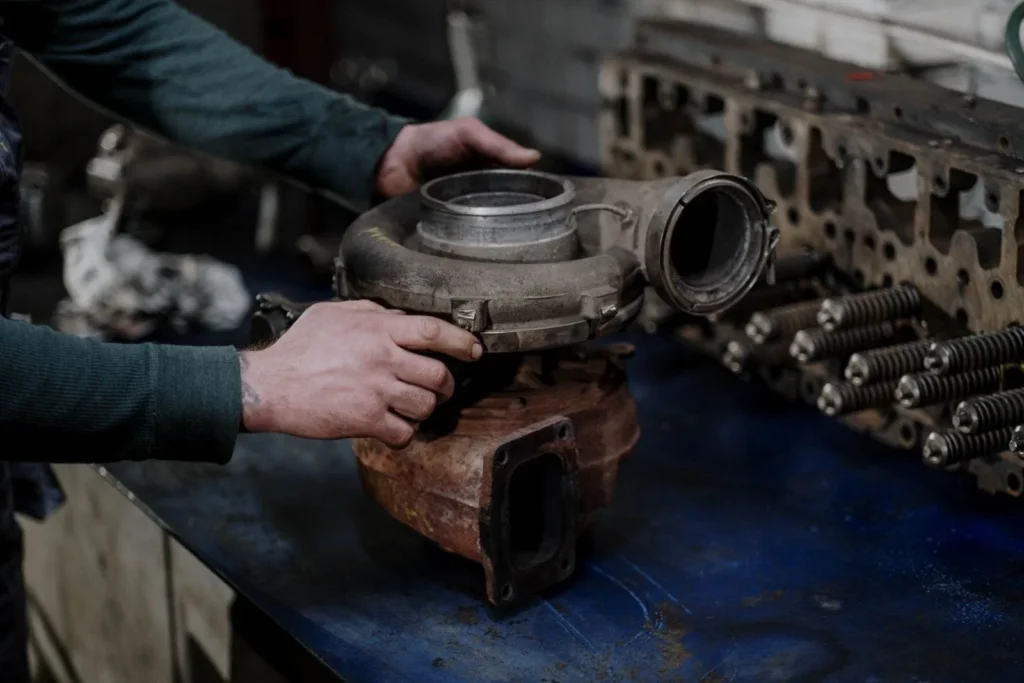
If external noises and leaks do not explain the change, a qualified technician can inspect the turbo for damaged wheel edges, housing contact, oil or exhaust leaks, and evidence of lubrication trouble. Shaft movement must be measured by the method and limits for the exact turbocharger. A finger-feel rule cannot establish bearing failure across different turbo designs. A noise pattern alone cannot establish oil starvation, overspeed or bearing scoring.
BorgWarner’s turbocharger troubleshooting guide lists air-path faults, exhaust leaks, oil-supply problems, wheel damage and bearing damage as separate possibilities behind acoustic noise. That is why replacing the turbo before checking the surrounding systems can miss the cause.
Wastegate and actuator checks
A rattle or irregular boost response may call for checking the wastegate, its linkage and whether the actuator follows the control request on the fitted unit. Adjustment is appropriate only if the manufacturer’s approved procedure for that exact turbo and engine allows it, with the required settings and verification. Garrett warns that changing calibration without the correct procedure can damage a turbo or engine. See Garrett’s installation guidance.
What a confirmed finding changes
A leaking hose or intercooler joint may need a connection or component repair, followed by a leak check. An accessory or heat-shield fault needs its own repair. A damaged turbo needs an assessment of the wheel, housing, oil feed and drain, and the engine fault that may have contributed. Rebuild or replacement depends on the exact unit and inspection findings. The choice should follow a written diagnosis rather than a promise based on sound.
Ask about a changed turbo sound
If the noise is new or worsening, send PorscheGarage in Al Quoz 4 the model, year, engine, symptoms and any warning message. The workshop can discuss an engine diagnosis and explain findings before quoting work. For severe noise or warning signs, arrange recovery instead of driving in.