
The best second hand Porsche is the one that fits your normal driving and has a history and condition you can verify. Start with a Macan for everyday SUV use, a Cayenne when passenger and luggage space matter more, or a Cayman or Boxster when two seats are enough. Consider a 911 for its particular driving experience, a Panamera for four-door touring, and a Taycan or Macan Electric when charging fits your routine. These are starting points, not a reliability ranking.
For a used Porsche in the UAE, choose the model family first, then compare the exact generation, engine, equipment and individual car. A better-documented example of a less powerful version can be a more sensible purchase than a higher-spec car with unexplained faults. Do not let the badge decide before the evidence does.
Choose around your everyday use
Write down your non-negotiables before opening adverts, including regular passengers, luggage, parking space, daily distance and access to charging. Check the actual seats and equipment rather than assuming every example matches the brochure.
| Model family | A useful starting point for | Check before shortlisting |
|---|---|---|
| Macan petrol | Everyday driving with SUV access and occasional family use. | Check rear-seat and boot space with your own passengers and luggage. Keep petrol and electric examples in separate shortlists. |
| Cayenne | Family use or trips where you need more room than a compact SUV offers. | Compare the exact body style, rear seating and fitted suspension. Do not assume a Cayenne is a seven-seater. |
| Panamera | Four-door touring when you prefer a lower driving position to an SUV. | Check the fitted rear-seat arrangement, passenger headroom and loading access. Equipment and body styles differ. |
| Cayman or Boxster | A two-seat sports car, either as your only car or for leisure driving. | Cayman has a fixed roof. Boxster has an opening roof. Neither supplies the 911’s occasional rear-seat solution. |
| 911 | A sports-car purchase where the 911 itself is the reason for buying. | Many Carrera examples have small rear seats, but not every 911 configuration does. Test the actual seating and parking access. |
| Taycan or Macan Electric | Electric driving with a workable charging plan. | Check battery and charging information for that car. Taycan is not a compact SUV, and electric ownership is not maintenance-free. |
These recommendations are about fit, not which Porsche is objectively “best”. Porsche’s petrol Macan description and 718 Boxster specifications illustrate the basic SUV-versus-two-seat distinction. Current product pages do not establish the equipment fitted to an older UAE car.
Make the comparison specific
Macan or Cayenne
Choose between these SUVs by testing the space you actually use. Put the driver’s seat in your normal position, then sit behind it. Try the child seat, stroller or travel bags you normally carry. Check entry, visibility and whether the car fits comfortably in your usual parking space. Choose the Cayenne when its extra room solves a real need. Keep the Macan on the list when it already meets that need.
All-wheel drive is not a promise of easy dune driving. Ground clearance, tyres, equipment, vehicle condition and driver preparation matter. Ordinary road use and recreational off-road use are different buying decisions.
Cayman, Boxster or 911
Start with seating and the roof, not horsepower. A Cayman suits someone who wants a fixed-roof, two-seat sports car. A Boxster makes sense when open-top driving matters enough to inspect and maintain the roof mechanism, seals and drainage. A 911 is worth comparing when you specifically want its rear-engine character or the occasional rear seating of an appropriately configured example.
Try getting in and out, loading your regular bags and crossing your normal parking ramp. Choose the car that works on an ordinary weekday, not only during a brief, exciting test drive. A GT badge or a firmer chassis is not automatically an upgrade for commuting.
Petrol, hybrid or electric
Petrol Macan and Macan Electric are different vehicles, not the same car with an interchangeable engine choice. For an electric Porsche, confirm where you will charge, whether you have permission to use that space, which connection the car supports and what happens when your usual charger is unavailable. Porsche explains the distinction between AC and DC charging. The correct owner’s manual remains the reference for the actual vehicle.
A plug-in hybrid also needs a charging plan if you expect to use its electric capability regularly. Do not assume every older Porsche carrying a Hybrid badge is a plug-in model. An E-Hybrid inspection should consider both the combustion and high-voltage systems. A Taycan still needs attention to tyres, brakes, suspension, fluids where specified and other service items, even though it has no engine oil change.
Generation matters more than badges
A model name alone is not enough to choose a used Porsche. Record the VIN, model year, generation, engine, gearbox and factory equipment for each candidate. Registration year and model year are not necessarily the same. Ask for the build information and the maintenance schedule that apply to that car.
Sports-car engine choices
For the 718, do not treat every engine as the same. Porsche identifies the standard and S versions described on its 718 Cayman model page as turbocharged four-cylinder cars, while the GTS 4.0 has a naturally aspirated six-cylinder engine. “Naturally aspirated” means the engine does not use a turbocharger to force in more air. The full version name matters when comparing driving feel, servicing and an asking price.
On older Cayman, Boxster and 911 listings, establish the engine and generation before applying an online fault checklist. Do not transfer an engine concern to every car wearing the same badge. A manual, PDK dual-clutch transmission and Tiptronic automatic also require different checks and service records. “automatic Porsche” is not a precise enough description.
Panamera and SUV generations
A facelift and a new generation are not interchangeable terms. For example, Porsche’s second-generation Panamera announcement in 2016 describes a substantially redeveloped car with new engines, cockpit technology and an eight-speed PDK. Comparing it with an earlier Panamera only by mileage overlooks important differences.
Apply the same discipline to Cayenne and Macan candidates. Confirm the engine fitted to that model year, the gearbox, any hybrid equipment and whether the car actually has air suspension. Then inspect those systems. Do not assume a feature is standard because another car of the same model had it, or label a newer generation “problem-free” without evidence.
Budget for the actual car
Separate the purchase price from the money needed to put the car into the condition you expect. Request itemised figures for due servicing, tyres, brakes, identified repairs and optional-equipment faults. Obtain an insurance quotation for the exact vehicle and allow a reserve you can genuinely afford for unresolved ownership risk.
Compare like with like when reviewing adverts, including generation, engine, mileage units, origin, accident information, service history and warranty. An asking price is not a confirmed sale price. Use recent comparable UAE listings to judge the asking price, then account for the inspection findings. Leave room for the work the car needs rather than spending your whole budget on the purchase.
A lower specification is not automatically cheaper to maintain, but extra equipment creates extra items to assess. Check air suspension, powered roofs, adjustable seats, cameras and the fitted brake system rather than treating a long options list as free value.
Read the history before viewing
Ask for the service book and dated invoices before committing to a viewing. Match the VIN, recorded distances and vehicle details across the documents. Check whether distances are kilometres or miles, particularly for imported cars. A stamp marked “service” does not show that every time-based or mileage-based task was completed.
- Routine care. Identify what was done, when and at what distance, then compare it with the schedule for the exact vehicle. Avoid a universal interval copied from a different model or market.
- Previous faults. For engine, gearbox, cooling or suspension work, ask for the original complaint, diagnosis, parts fitted and follow-up findings. A replacement part alone does not explain whether the cause was resolved.
- Origin and condition. Ask for available import, ownership, accident and repair records. Verify any GCC-specification claim through the vehicle’s documentation, not a generic promise about stronger cooling or better reliability.
Missing records are uncertainty to resolve, not proof of a specific failure. Conversely, an apparently complete file does not remove the need to examine the car. Low mileage does not cancel time-based maintenance or demonstrate how the vehicle was stored.

Make the inspection decision-led
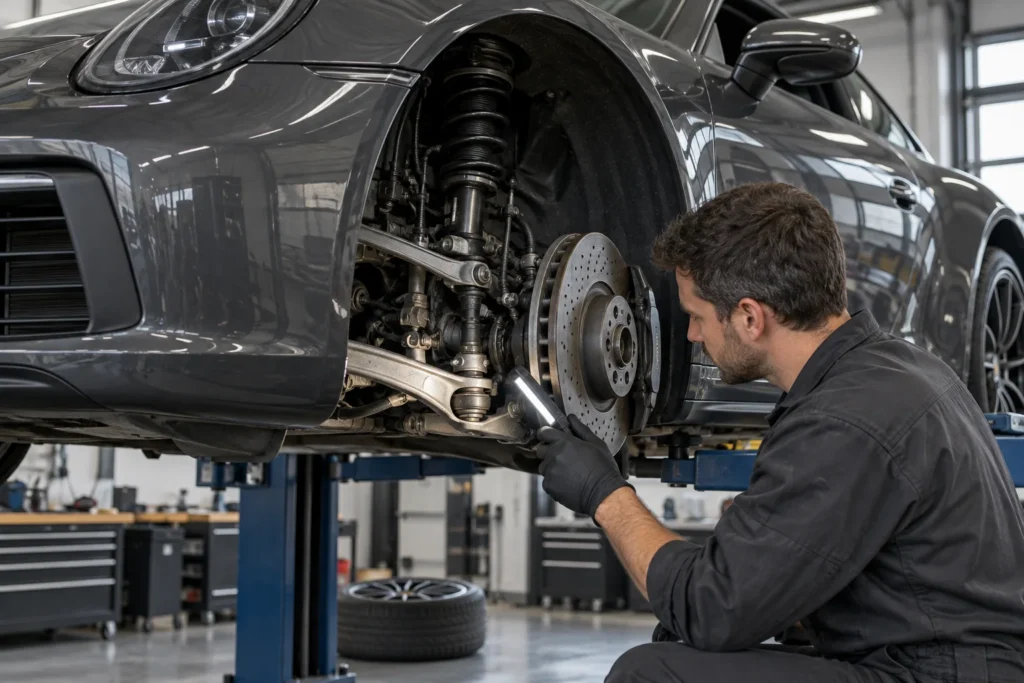
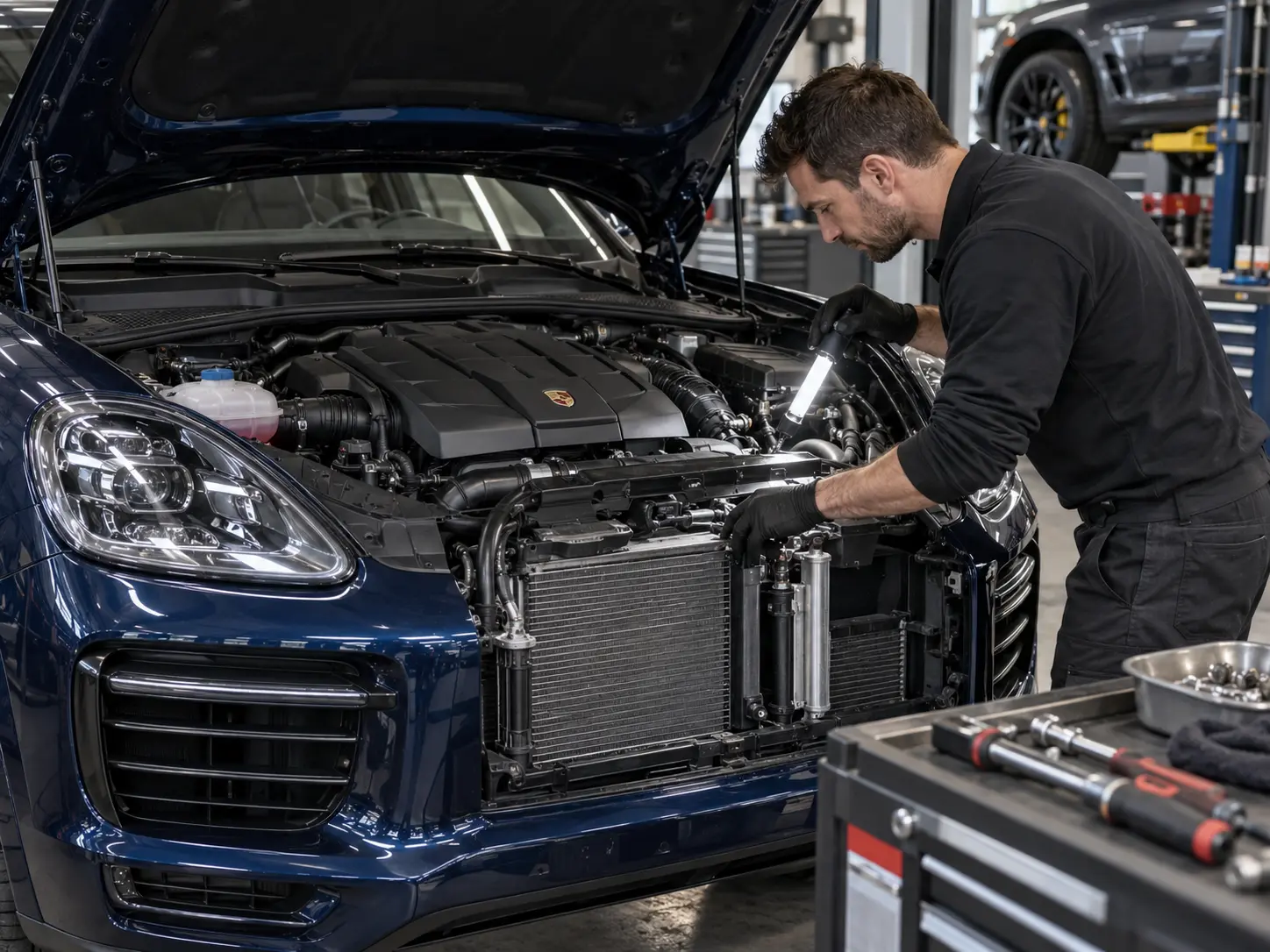
A useful pre-purchase inspection answers the questions that could change your decision. Agree access, a cold start where relevant, a permitted road test, the report format and any specialist checks before the appointment. It is a condition assessment, not a guarantee against every future fault.
Start with physical condition
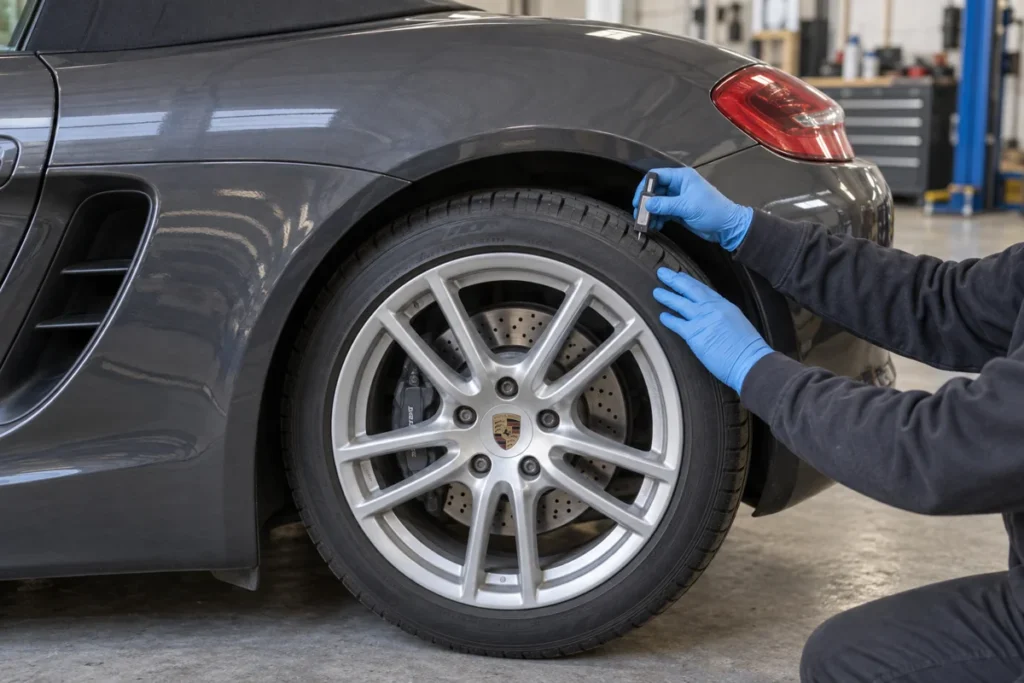
Have accessible oil and coolant leaks, cooling components, brakes, tyres, steering, suspension and underbody condition assessed. In the UAE, include air-conditioning performance and cabin controls in the practical test. Look at uneven tyre wear, ride-height differences and visible repair inconsistencies without treating any one observation as a diagnosis.
A paint measurement can identify an area worth investigating, but it does not by itself prove structural damage. A clean-looking interior cannot rule out previous water exposure. When damage history matters, combine physical findings with the available records and any further specialist assessment needed.
Preserve diagnostic evidence
Ask for a suitable whole-vehicle scan before faults are cleared. The report should distinguish current, stored and intermittent entries where that information is available. A fault code points to a system or test area. It is not a shopping list of failed parts. A recently cleared dashboard does not demonstrate that an intermittent problem is repaired.
On engines where cylinder condition is a justified concern, discuss a borescope inspection separately. This uses a small camera to examine accessible internal surfaces. It is not automatically included in a routine scan, and the quality and coverage of the images matter. The Porsche bore-scoring guide explains which engines need closer attention and what a borescope examination can and cannot establish.
Add the right electrified checks
For a Taycan, Macan Electric or plug-in hybrid, ask what the battery assessment actually measures. A dashboard range estimate, a diagnostic fault scan and a measured usable-capacity assessment answer different questions. None should be presented as interchangeable proof of battery health. Confirm charging operation, relevant repair history and any remaining battery cover for the VIN in writing. Do not open high-voltage components yourself.
Use an ordinary road test
Drive only where safe, permitted and appropriately insured. Check starting, low-speed engagement, normal gear changes, braking, steering, vibration and warning messages. Test the air conditioning, parking aids and roof while safely stationary and following the vehicle instructions. Do not use launches or aggressive cornering to try to provoke a fault.
Stop the test safely if braking or steering changes substantially, the car overheats, smoke appears or the vehicle instructs you to stop. A seller’s explanation that a warning is “just a sensor” needs supporting diagnosis, not a harder test drive.
Decide from the findings
Proceed when the car fits your needs, the history is credible and the significant checks support the purchase. Renegotiate or plan maintenance when the work is understood and properly priced. Pause or walk away when important access is refused, the records conflict or a serious fault remains unexplained. A discount does not turn an unknown repair into a known cost.
Your final shortlist should contain cars you would still choose after accounting for their condition, not just their advertised specification. The best second hand Porsche for you is the one that clears both tests. It suits your life, and you understand the car you are buying.
Independent help before you buy
Once you have a specific car shortlisted, our Porsche pre-purchase inspection in Dubai can assess its agreed mechanical, electrical and body-condition checks. PorscheGarage.ae is operated by AMF Auto Services LLC in Al Quoz 4. We are an independent workshop, not a Porsche Approved inspection centre.
Send the advert, model year, mileage and available history. Confirm seller access, the report you need and any separately quoted engine or high-voltage tests before booking. The inspection does not require you to authorise repairs.
Other used-Porsche buying questions
Is Porsche Approved the same as a dealer warranty?
Do not treat those descriptions as equivalent. Ask who provides the cover, which certificate belongs to the VIN, its start and end dates, exclusions and transfer conditions. Porsche’s own programme and an independent seller’s warranty may have different terms. Check current UAE eligibility directly rather than relying on a general overseas age or mileage limit.
Should I rule out a modified Porsche?
Not automatically. First establish what changed, who performed the work and whether supporting invoices, software information and original parts are available. Have the modifications assessed as part of the vehicle rather than assuming they add value. Confirm acceptability with your insurer and any warranty provider before committing.
Can I buy from a seller who will not permit inspection?
You can choose not to proceed. Without suitable access, you may be unable to resolve the very questions that determine the car’s condition and likely work. An existing report is worth reading, but check its date, VIN, author, testing limits and whether you can discuss the findings. Seller pressure is not a substitute for evidence.
Porsche’s 2021 explanation of the Approved programme describes its inspection approach and explicitly notes regional differences. It is background on the programme, not confirmation of today’s UAE warranty eligibility. For vehicle functions and maintenance instructions, use the correct manual through Ask Porsche.