
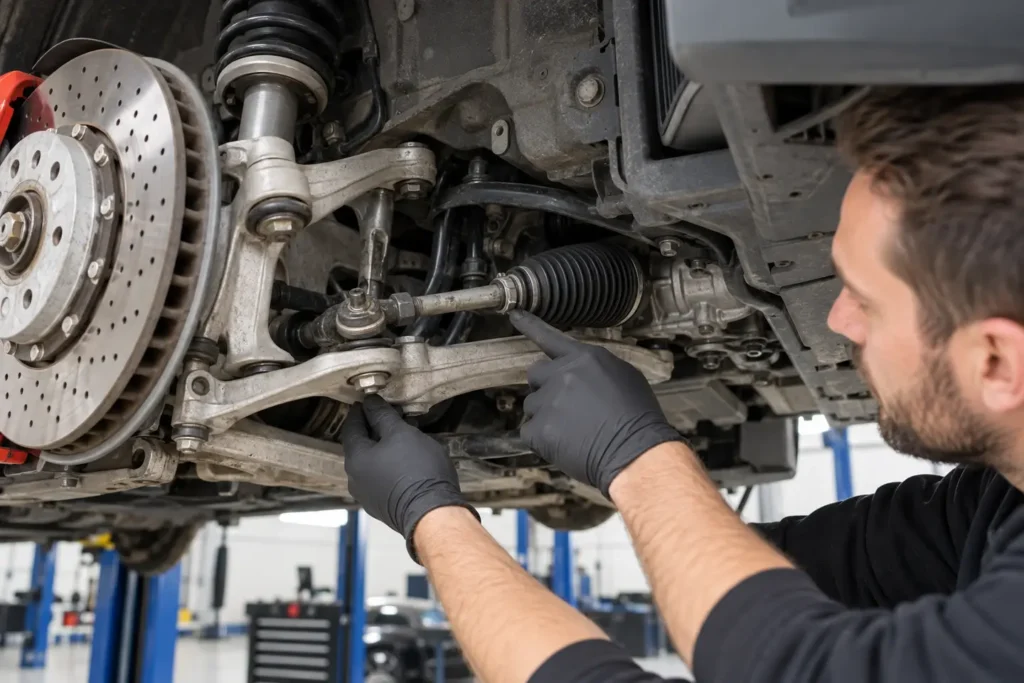
Steering play does not prove that a Porsche’s rack teeth are worn. Loose or delayed response can come from a tyre, tie rod, suspension joint, rack mount, steering column or assistance fault. If the steering skips, binds, loses predictable response or suddenly becomes very heavy, slow down, stop in a safe place and arrange recovery. Do not continue driving to see whether the fault clears. A model-specific inspection must locate the movement or lost assistance before a rack is condemned.
A small change in feel still deserves attention. Record when it happens, whether a warning appears and whether the steering behaves differently left and right. Do not attempt an at-home road test if control is uncertain. Porsche’s model-year or VIN manual lookup helps identify the exact warning and steering system fitted to the car.
Describe the change first
Tell the workshop whether there is movement at the steering wheel before the front wheels respond, a knock while reversing direction, a pull under braking, vibration, poor return to centre, binding at a particular angle or a dashboard steering warning. Note any kerb strike, pothole impact, recent tyre or suspension work and changes in tyre pressure. Those details guide an inspection. They are not a verdict on the rack.
- Free play or a knock the technician should trace movement from the steering wheel and column through the gear, mounts, inner and outer tie rods and wheel joints. The first loose part located may be outside the rack.
- Pulling or wandering tyre condition and pressure, wheel damage, braking, suspension joints and alignment are relevant before internal steering wear is assumed.
- Vibration or poor self-centring tyres, wheels, alignment, joints and binding all need consideration. A symptom at one speed or on one road surface does not identify a tooth gap.
- Heavy or intermittent assistance identify whether the car uses hydraulic or electric assist and investigate that system and its supply. Sudden loss of predictable response warrants recovery.
For a steering-system warning that instructs the driver to stop, follow the exact message in the vehicle manual. Porsche’s warning-light guidance distinguishes warnings that require stopping from those that permit a qualified check. Physical loss of control takes priority regardless of the lamp.
Hydraulic and electric assist differ
Older Porsche designs may have hydraulic power assistance with a pump, fluid reservoir, lines and hydraulic chambers in the gear. A fluid leak, incorrect level, drive problem or weak supply can change effort without proving rack-tooth damage. Pressure or leak testing, when applicable, must follow the specified workshop procedure and limits for that exact system. An abnormal pressure result can locate an assistance problem. It does not identify which internal gear teeth are worn.
Many later cars have electromechanical power steering (EPS). Porsche described the 991-generation 911 Carrera’s electromechanical steering, and its 2021 Macan description discusses an electric steering motor. An EPS diagnosis checks relevant warning and fault data, power and ground supply, connectors and the specified functional tests. EPS does not “hide tooth gaps” as a diagnostic rule. Motor data alone cannot prove internal mechanical wear.
Identify the VIN and generation rather than applying a hydraulic test to an EPS vehicle or assuming every model in a range uses the same arrangement. Rear-axle steering and other fitted features may add checks, but a rear steering fault is not automatically a front rack fault.
How a workshop isolates play
- Establish the symptom safely. Inspect tyres, pressure, visible damage and warning messages. If the car binds or skips, avoid a road test until the cause is assessed in a controlled setting.
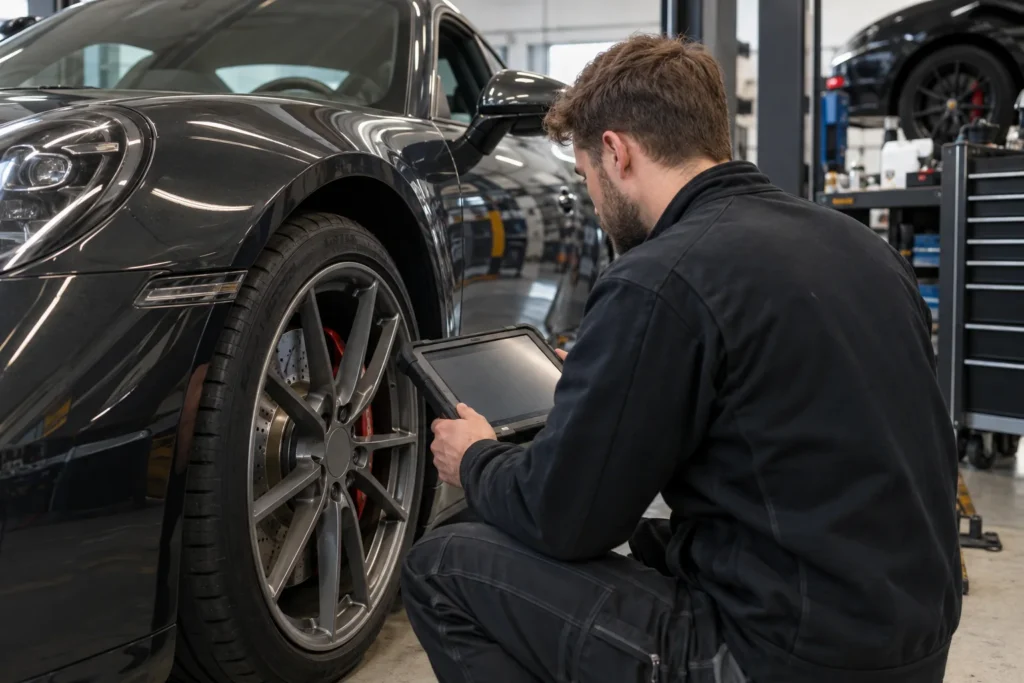
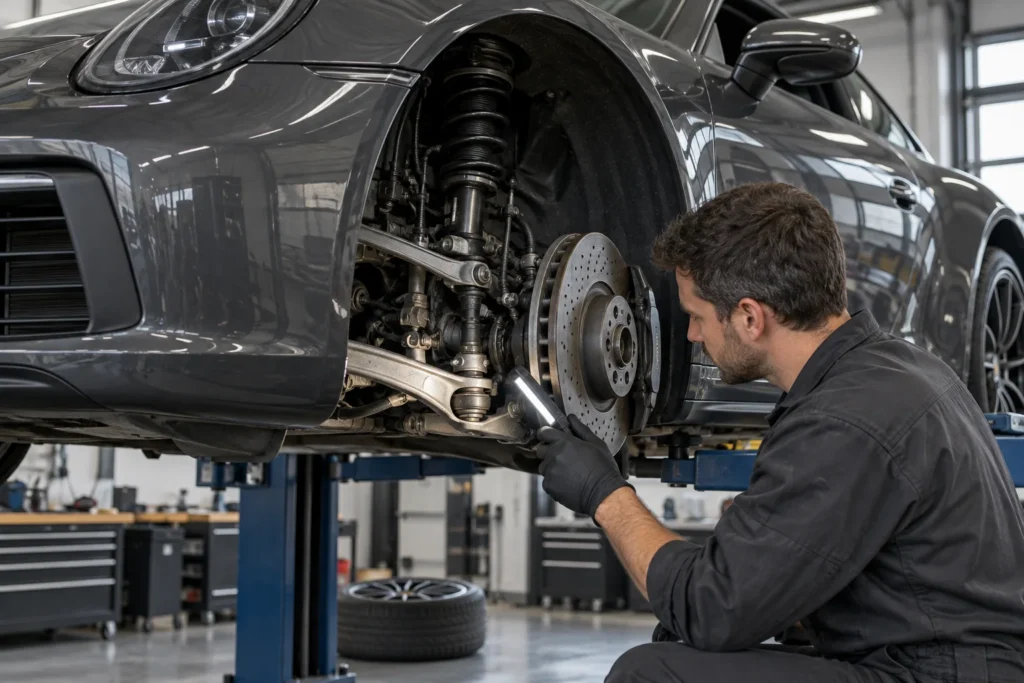
- Trace movement through the system. With the vehicle supported according to its procedure, compare steering-wheel input and movement at the column couplings, gear housing and mounts, inner and outer tie rods, knuckles and relevant suspension joints. A helper’s gentle steering input can reveal where play begins. Record the location rather than calling every knock “rack backlash.”
- Use the correct specification. Measure only where the applicable Porsche workshop information gives a method, permissible value and tool. Do not use a generic “pinion lash” number or adjust a gear simply because a subjective amount of movement seems large.
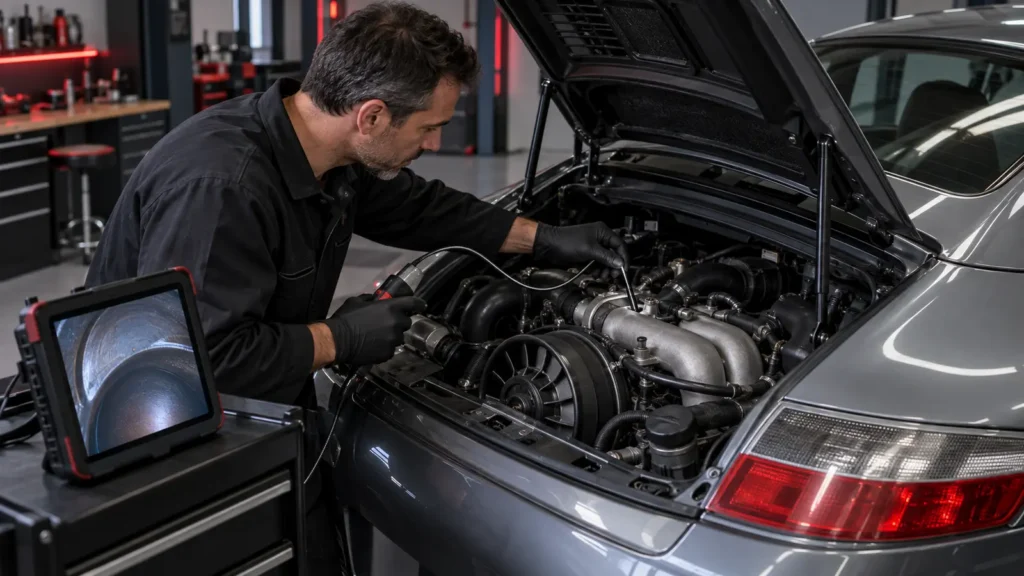
- Test assistance separately. On hydraulic systems, inspect fluid and external leaks and perform specified supply tests if indicated. On EPS, interpret fault codes with voltage, wiring, ground and functional data. A fault code or pressure reading guides the next test, not an automatic rack order.
- Confirm the repair and result. Compare the finding with the exact parts and service procedure, then verify the original symptom is gone after the eligible work. A test drive is appropriate only once the steering is safe.
For example, movement in an outer tie-rod joint while the rack housing stays secure supports repair at that joint, subject to the part and procedure. If external connections and mounts are sound but specified tests locate an internal gear fault, a complete gear assembly may be required. The distinction changes the estimate substantially.
Repair and replacement choices
A damaged tyre, loose tie rod, worn joint, failed mount, column coupling or assistance-supply fault needs its own repair. Do not replace a rack merely to cure a symptom that has not been traced to it. If internal gear damage is confirmed, identify the VIN-matched assembly and the manufacturer’s approved options for that part and generation. An exchange or complete replacement may be appropriate. The exact decision depends on inspection, parts availability and documented service instructions.
Do not assume rack teeth can be resurfaced or machined back to a safe profile, or that a pinion can be replaced alone. This guide does not recommend either method without an applicable manufacturer-approved procedure. A seal or boot issue is also a different problem from confirmed damage to the gear teeth.
After tie-rod, rack or other work that affects geometry, check and set alignment to the vehicle’s specified values. Carry out steering-angle, steering-lock or driver-assistance calibrations when the exact repair procedure and fitted equipment require them. A Porsche steering-gear replacement bulletin for certain 2022–23 Panamera (971) campaign vehicles includes suspension alignment, coding and teaching the new gear. Its parts and steps apply only to vehicles assigned to that campaign, not every Panamera or Porsche.
Steering questions
Does play mean the rack is worn?
No. Play is an observation. The movement needs to be located at a tyre, joint, connection, mount, column or inside the gear before a repair is selected.
Can EPS faults prove tooth damage?
No. Electrical data may reveal an assistance or supply concern. Mechanical gear wear requires a separate, vehicle-specific inspection.
Can alignment fix steering play?
Alignment can correct geometry once worn or loose parts are addressed, but it does not restore a damaged joint or internal gear. The workshop should repair the cause before setting final alignment.
When to contact the workshop
For a new knock, free play or uneven steering feel, share your model and year, the exact symptom, any warning message and recent impact or repair history. PorscheGarage’s steering diagnosis and repair service in Al Quoz 4 can inspect the cause and explain a vehicle-specific repair choice. If steering control is unsafe, request recovery rather than driving to the workshop. Ask for an itemised, VAT-clear written estimate once the fault and parts are identified.