
An ABS or PSM warning can be caused by a wheel-speed signal problem, but it does not identify a failed sensor by itself. A stored code or one missing live reading points to a circuit and wheel position to investigate. The cause may be the sensor, its connector or wiring, the encoder it reads, or another fault. Confirm the cause before ordering a part.
What to do when the warning appears
Check the exact warning text in your Porsche’s model- and year-specific owner’s manual. An ABS/PSM assistance fault is different from a failure of the hydraulic brakes. Some anti-lock or stability functions may be limited, while the brake pedal can still operate. The available assistance and the permitted driving response depend on the warning and model. Allow more room to stop, avoid abrupt manoeuvres and arrange prompt diagnosis if the car otherwise brakes normally and the manual permits cautious driving.
Stop in a safe place and do not continue driving if the brake pedal feels unusually soft or hard, stopping performance changes, the car pulls strongly when braking, fluid is leaking, or a red brake warning or “stop driving” message appears. Arrange recovery rather than assuming the fault is only a wheel-speed sensor. Porsche’s warning guidance distinguishes an ABS warning from brake fluid or brake distribution warnings that require an immediate stop.
Several warnings appearing together may share a cause and call for a wider check than one wheel-speed sensor. The PSM and multiple-warning guide explains how to assess that broader pattern and when driving should stop.
What the wheel-speed reading can tell you
A wheel-speed sensor supplies rotational data used by ABS and stability control. Sensor and encoder designs vary by model and generation. For example, Bosch describes active Hall-effect sensors that read a multipole magnetic encoder or a steel target. Do not assume every Porsche sensor can be tested with the same resistance value or a simple magnet check. Bosch explains the active wheel-speed sensor design.
| Observation | What it means | Next check |
|---|---|---|
| ABS/PSM warning or wheel-specific code | The control unit has detected a fault or implausible input. It has not proved which component failed. | Record the exact code, conditions and other related faults before clearing anything. |
| One wheel drops to zero or differs from the others | The signal path at that corner needs investigation. Sensor, harness and encoder remain possible. | Compare all four readings under a suitable, controlled workshop test and inspect that corner. |
| Damaged insulation, loose plug or corrosion | A connection or circuit issue may explain an intermittent or missing signal. | Follow the vehicle-specific wiring diagram and test supply, ground and signal as applicable. |
| Signal changes after wheel or bearing work | Routing, fitment or the encoder may be involved. | Check the installed part and the model-specific hub or bearing procedure. |
How a workshop narrows down the fault
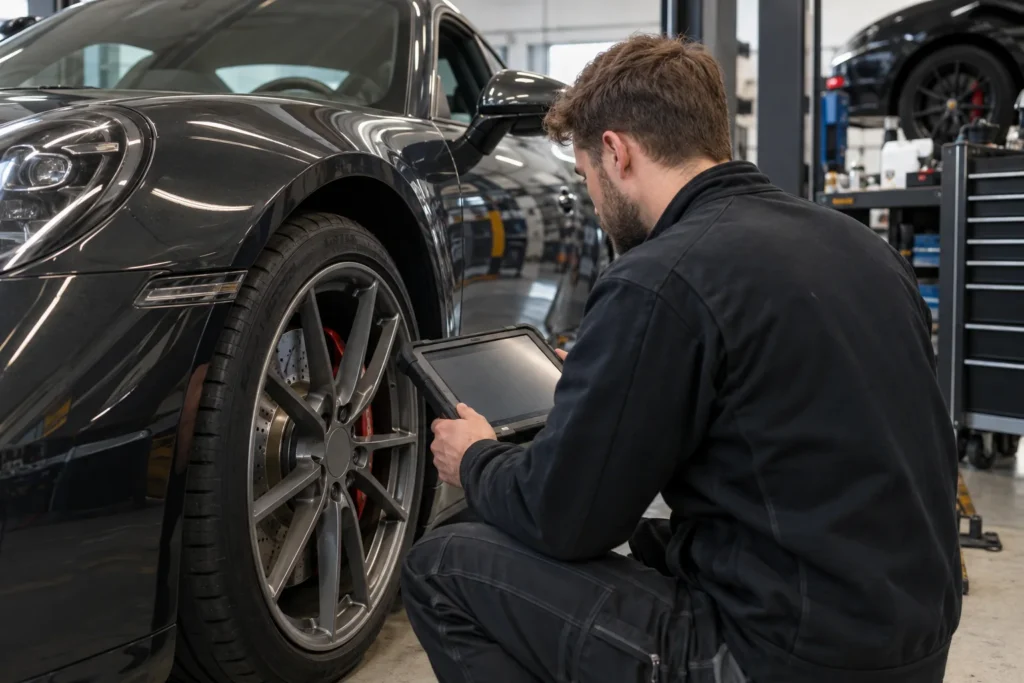
- Read the full fault record. Identify the control unit, exact wording, affected corner and stored operating conditions. A generic code description is a starting clue, not a replacement instruction. Check related voltage, brake-switch and communication faults where relevant.
- Compare four-wheel live data. At a safe, suitable speed or with a prescribed workshop method, compare the four readings and note when a dropout begins. A single zero reading narrows the search but cannot distinguish a failed sensor from wiring or the target it reads.
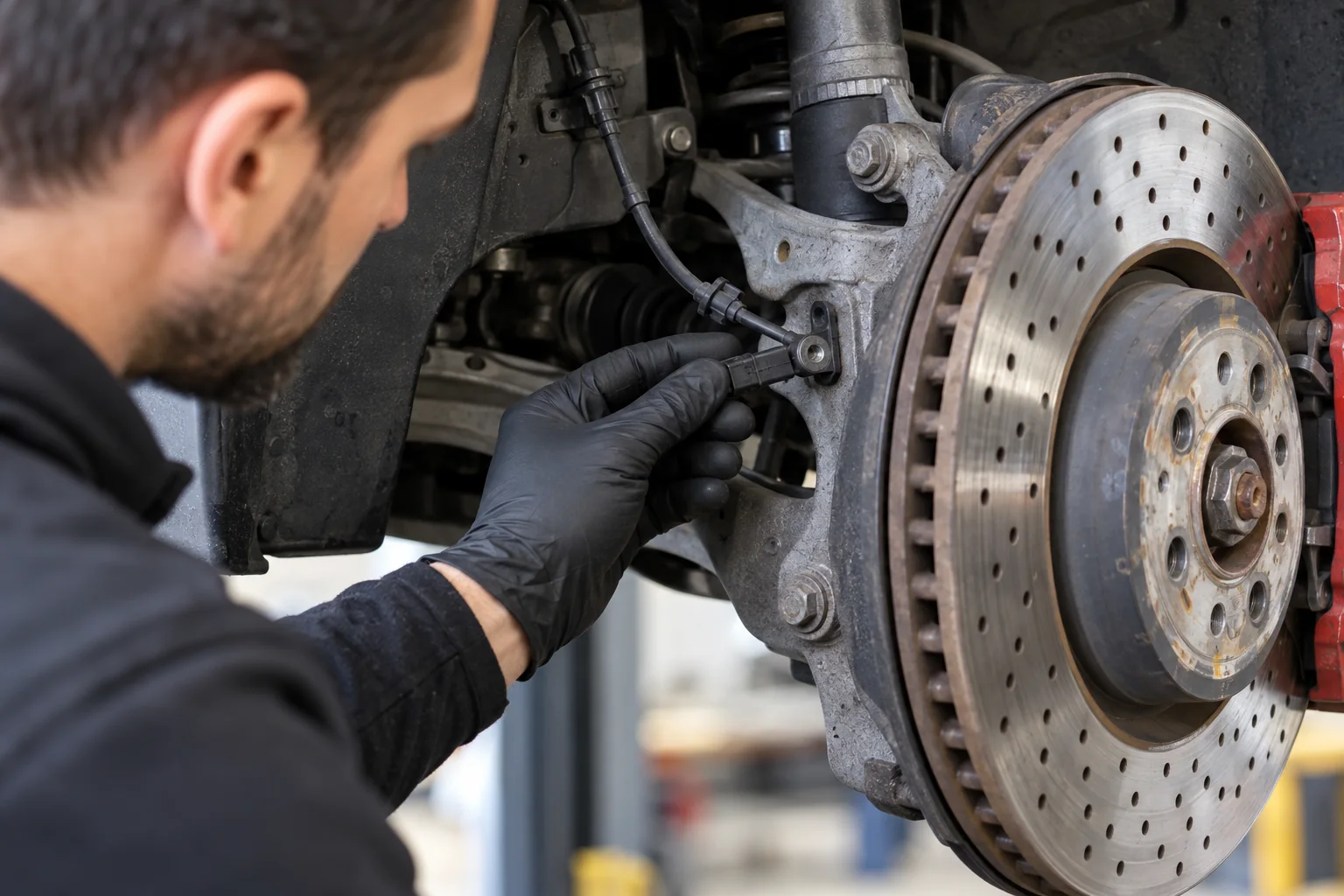
- Inspect the circuit. Examine the connector, cable routing and insulation around the hub, suspension travel and previous repair areas. Test the specified supply and signal using the correct wiring diagram and approved method for that sensor type. Avoid applying a generic resistance test to an active sensor.
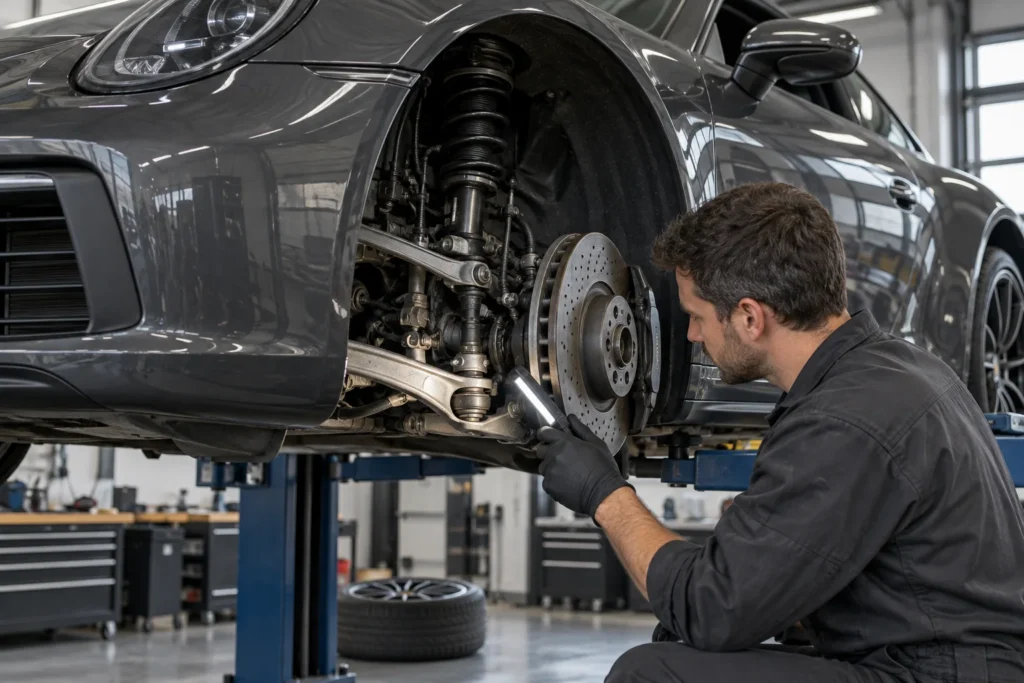
- Check the target and fitment. Depending on the design, inspect the tone wheel or magnetic encoder, bearing installation, sensor seating and required clearance. Use the applicable Porsche workshop procedure. Bearing removal is not a routine first test.
- Verify the repair. Retest the signals and fault memory, then perform the specified function check or road test only if braking is safe. Clearing a code is not proof that the underlying fault has been repaired.
One narrow Porsche example shows why fitment matters. Technical Information 117/21 concerns the Cayenne (92A), model years 2015–2018, with a particular ABS/PSM warning and detected speed-sensor defect. It identifies insufficient sensor sealing and directs technicians to the front and rear workshop procedures. That repair direction applies to the defined Cayenne fault, not every Porsche ABS warning.
When replacement is appropriate
Replace a sensor when model-appropriate testing supports a defect in that part. Repair a damaged harness or connector when that is the confirmed cause. Address an encoder or bearing fault when the sensor has no usable target. Order by VIN, axle and side, then follow the current Porsche procedure for access, fastener replacement, routing, seating, torque and any required test. Use the specified torque and verification procedure for that vehicle rather than a generic value or reset routine.
Genuine Porsche means supplied as a Porsche part. An OE supplier part is made by a supplier of original equipment, but the retail item must still be checked for the exact application and specification. Aftermarket describes other replacement supply. The label alone does not establish fit or durability. Ask for the maker and part number on the written estimate instead of assuming all “OEM” listings are identical.
Diagnosis and the estimate
The cost depends on the model, confirmed fault, selected part and access. Ask for a written estimate showing diagnostic work, parts, labour and VAT before approving replacement. A diagnostic check can identify the next test, but a scan alone does not prove a wheel-speed sensor needs replacing.
Arrange a wheel-speed fault check
Tell PorscheGarage the model, year, exact warning text and whether the pedal or stopping behaviour has changed. If braking has changed or a red brake warning is present, explain that the car needs recovery rather than a driving appointment.