A useful Porsche maintenance kit helps you observe the car, record changes and follow its instructions. It does not make every repair suitable for home. Start with the Porsche owner’s manual for your model year or VIN, then choose tools for a task the manual actually permits. Oil-level checks, tyre settings, fluids, battery procedures and lifting points can differ across 911, 718, Macan, Cayenne and Panamera versions. Hybrid and electric high-voltage components are outside the scope of owner maintenance.
What can an owner check safely?
Before buying specialist equipment, get consistent with a few checks that do not require dismantling the car.
- Read and record warnings. Photograph the exact dashboard message and note when it appeared. A red oil-pressure warning, a brake warning affecting braking, overheating, smoke or a major fluid leak calls for a safe stop and professional advice, not another test drive.
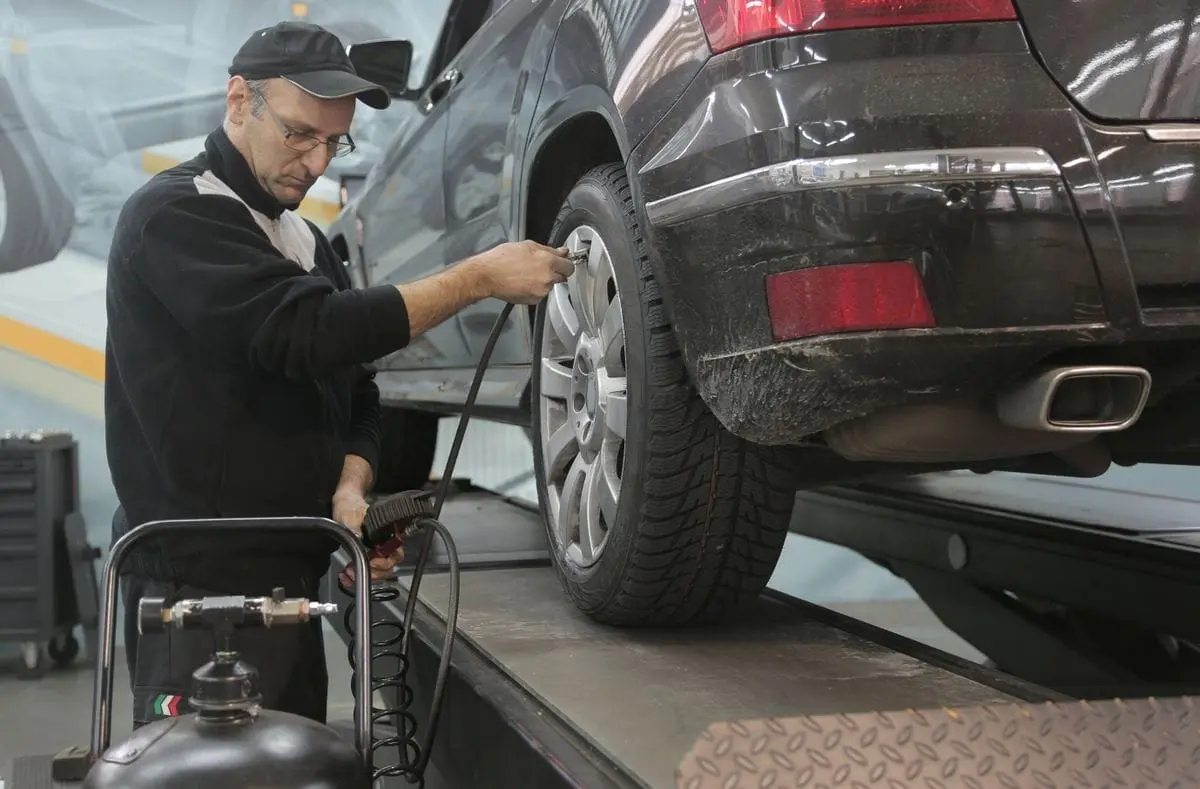
- Check tyres. Inspect for obvious damage and measure pressure under the conditions specified for the car. Use the pressure label and handbook for its wheel, tyre and load configuration. Do not add a blanket amount for Dubai heat.
- Check the oil level as instructed. Some models use an electronic reading and require a particular operating state or level surface. “Always check cold” is not a Porsche-wide rule. Follow the displayed steps or the handbook, and do not add oil until the reading and required specification are clear.
- Look for leaks from outside the vehicle. Note the location, colour and recurrence of a drip. Keep clear of hot or moving parts and do not open a hot coolant system. A visible stain does not identify the failed part on its own.
- Keep a record. Save dates, mileage, pressure readings, warnings, fluid specification and service invoices. A trend is more useful than an isolated reading when a workshop investigates a fault.
Choose tools by task, not by badge
A small owner kit can be more useful than a shelf of expensive equipment. Check the tool’s range, condition and vehicle coverage before relying on its result.
| Tool | Useful for | Limit |
|---|---|---|
| Tyre-pressure gauge and light | Repeatable pressure readings and visible inspection | Neither can establish an internal tyre or suspension fault. |
| Battery maintainer | Maintaining a compatible 12 V battery during parking | Battery chemistry, connection method and any high-voltage storage instructions must match the vehicle manual. |
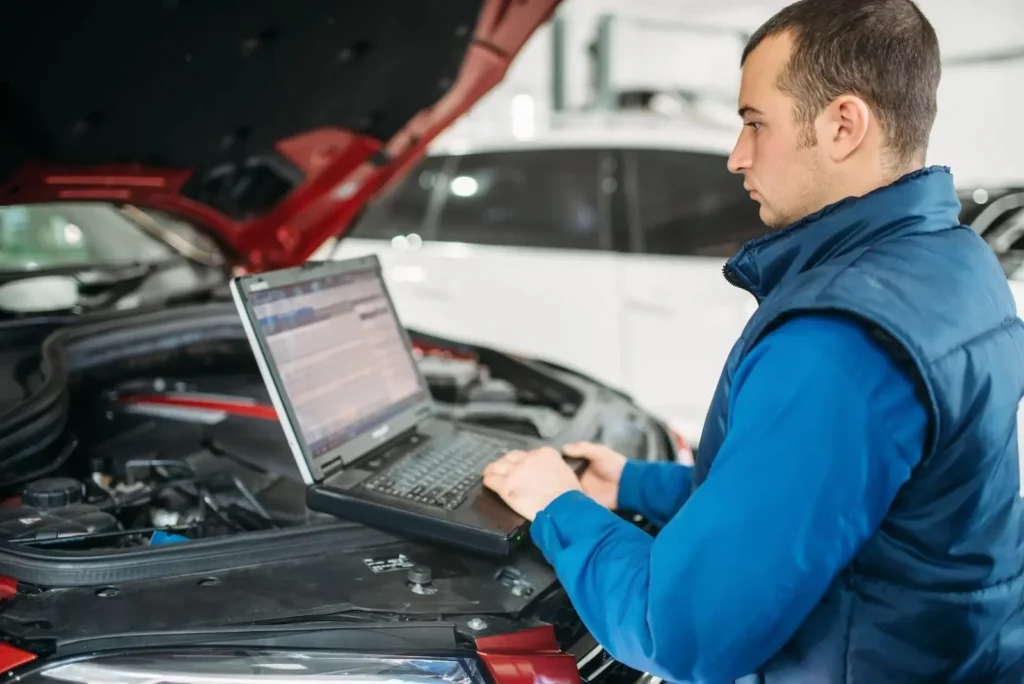
| OBD reader | Recording supported fault codes and basic data | A basic reader may not reach every Porsche control unit. A code is a clue, not a diagnosis. |
| Torque wrench | Tightening a fastener when the correct procedure and value are known | Torque sequence, replacement fasteners and loaded-position requirements are task-specific. Do not add an automatic “pre-torque” step. |
Where a home tool reaches its limit
Lifting and working underneath
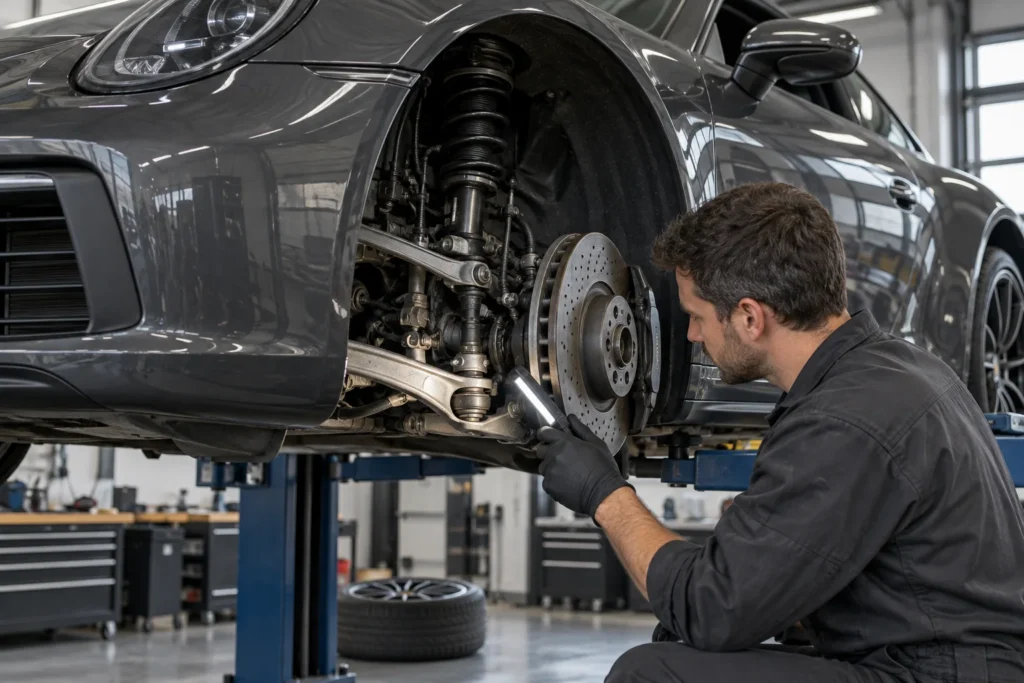
Find the correct lift and support points for the exact model before any lift. Use equipment rated for the car on firm, level ground and support it securely according to the approved procedure. Never work beneath a car held only by a jack. Air-suspension settings and lift procedures can add further steps. If the points, equipment or instructions are uncertain, leave the lift to a workshop.
Oil changes and extraction
An oil extractor is not a universal shortcut for Porsche engines. Use one only if the approved procedure for that engine allows it and the specified oil and filter service can be completed correctly. Otherwise follow the required drain procedure or book the work. Choose the oil, filter and other fluids by the applicable Porsche approval or part specification, not a claim that one box is automatically superior or inferior.
Scan tools, resets and batteries
Check a scan tool’s stated coverage for the exact model, year and function. Save codes and relevant data before clearing anything. Clearing a warning does not repair its cause. Service reminders, calibration and adaptations should be performed only when the applicable procedure calls for them. After a 12 V battery replacement, check whether that vehicle requires battery registration or adaptation. That is a separate question from a software update, which should be considered under an applicable service instruction or diagnosis. Do not treat either as an automatic reset.
Use the car’s schedule for fluids and service
There is no safe Porsche-wide rule that brake fluid must be changed every year or coolant every 12–18 months. The applicable handbook and service schedule set the timing and fluid specification for the vehicle. Work already recorded and any symptoms also matter. A falling brake-fluid or coolant level needs a cause found, rather than repeated top-ups. Dubai’s heat makes regular observation useful, but it does not create a new universal interval.
When to ask a workshop
Arrange a diagnosis when a warning persists, a fluid level falls, a tyre repeatedly loses pressure, a scan result is unclear or the job needs a lift, calibration or vehicle-specific software function. Bring the model year, warning photos, readings and service records. For an unresolved electronic warning, a diagnostic check can guide the next test. Other symptoms may call for a physical inspection.
Discuss a maintenance concern
Tell our Al Quoz 4 workshop which Porsche you have and what you observed. We can discuss an appropriate check before recommending work.