
Riveting is suitable for a Porsche body repair only where the current repair procedure for the exact vehicle and component specifies that joint. A rivet, an adhesive and a neat alignment reading cannot by themselves establish a safe structural repair. After a collision, the repairer must identify the damaged part, check the permitted repair or replacement method, and follow the specified materials, joining sequence and checks.
Porsche describes modern vehicle bodies as combinations of materials joined by bonding, welding, riveting and fasteners. The choice belongs to the current Porsche technical repair information for the relevant model, year and body configuration, not a general rule about aluminium, cost or visible damage. Porsche also explains why body repair needs trained people and appropriate equipment in its collision-repair guidance.
Identify the damaged component
“Chassis damage” can describe different things. An outer panel, a bumper cover, a body-shell member and a bolt-on suspension subframe have different functions and repair rules. A procedure allowing rivets in one body-panel joint does not authorize rivet bonding a bent Macan or Cayenne subframe. The repairer must establish exactly which component is damaged before discussing a joining method.
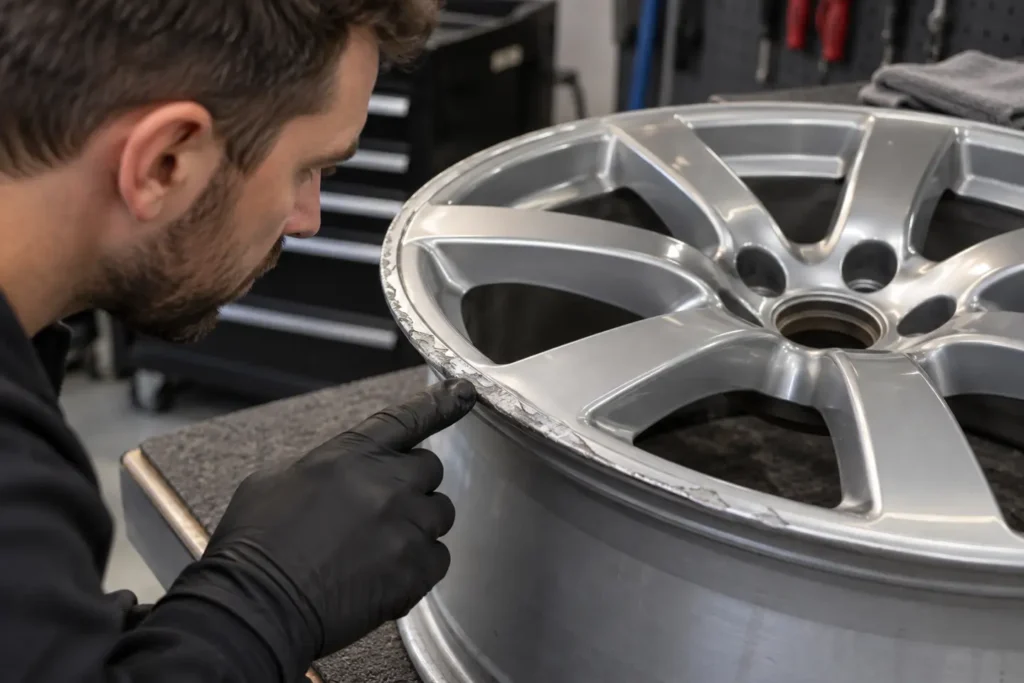
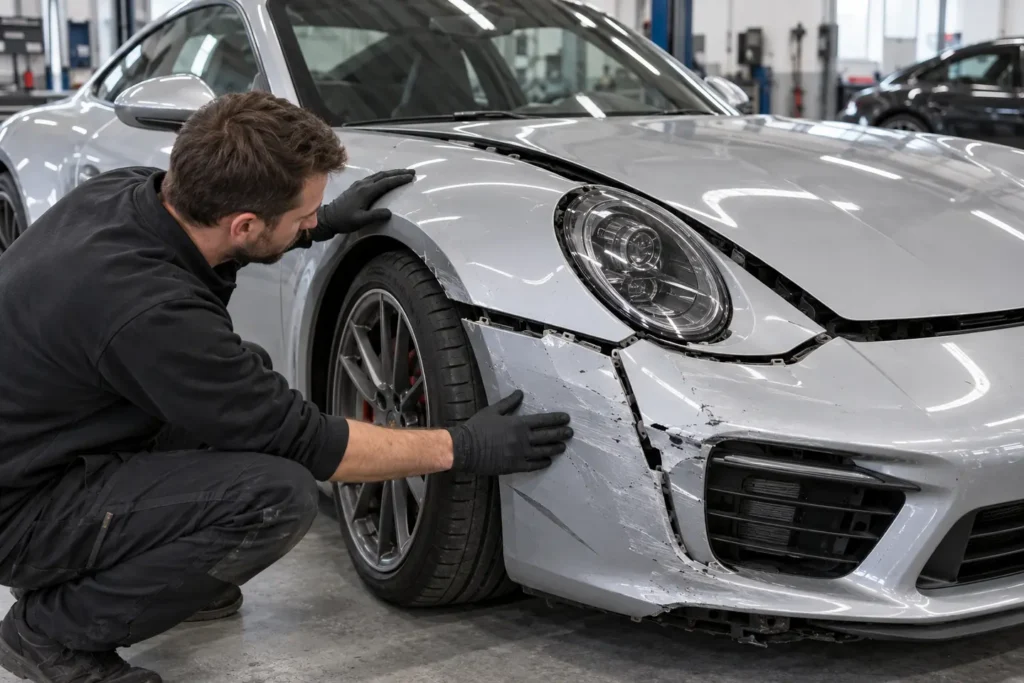
- Outer panel or closure the permitted repair may involve refinishing, a panel repair or replacement. Appearance alone does not reveal damage beneath it.
- Body-shell member or joint the model-specific body-repair document controls whether straightening, sectioning or replacement is allowed, where a cut may be made and how the new part is joined.
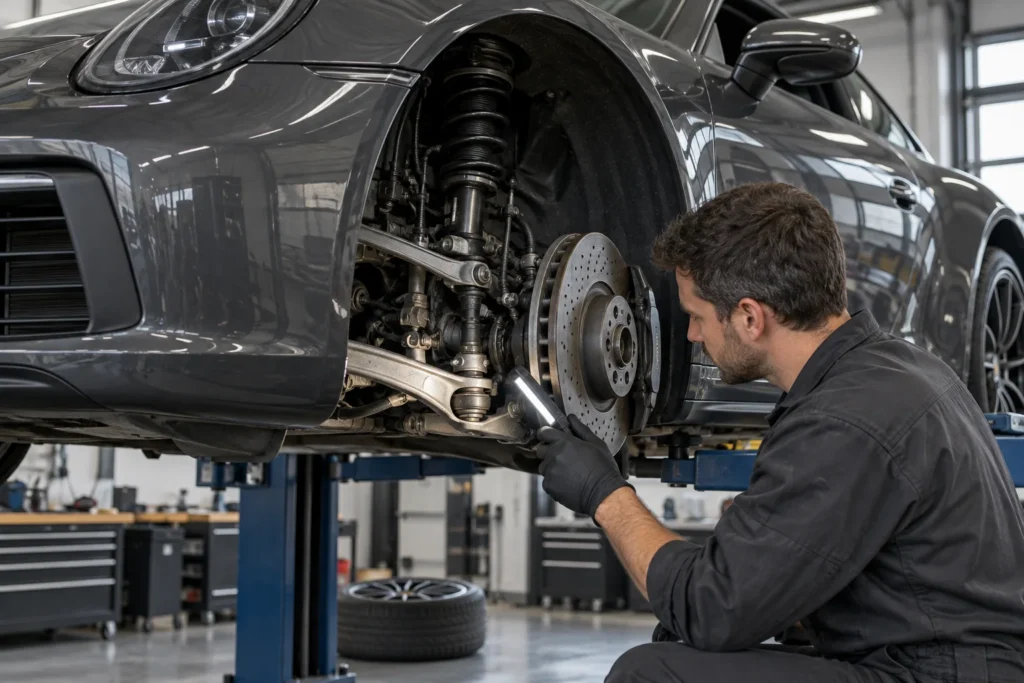
- Bolt-on suspension subframe this is a separate component. A body-panel rivet procedure must not be applied to it. The component procedure and damage assessment determine whether it can remain in service or needs replacement.
- Safety and high-voltage systems restraints, sensors and electric or hybrid vehicle systems may require additional isolation, replacement, checks or calibration under their own procedures.
What an approved joint specifies
A repair instruction must identify more than “rivet and bond.” For the particular joint, a qualified repairer needs to confirm the component material, permitted section or replacement part, joint location and overlap, preparation of the surfaces, specified rivet or fastener, adhesive if required, application sequence and curing conditions. Sealing, corrosion protection and any follow-on checks matter too. The type of rivet used elsewhere on the car cannot be substituted by appearance or nominal strength.
Some Porsche repairs use welding. Some use mechanical fasteners, adhesive, or a combination. None is automatically stronger or safer across every joint. Heat-sensitive materials, adhesive handling and access around the joint affect the work, but they do not replace the vehicle-specific instruction. If the prescribed parts, equipment, repair data or curing conditions are unavailable, the repair plan must change rather than improvising a joint.
Assessment before a repair decision
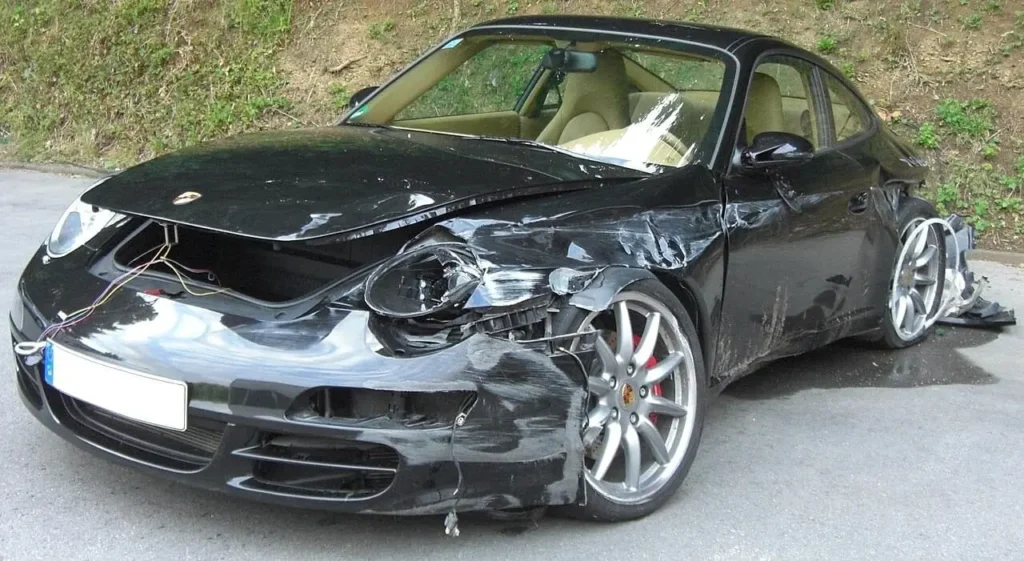
An impact can damage hidden supports even when the outer panel appears repairable. A workshop may need to remove trim or panels, document the affected parts, inspect joints and mounting points, and measure the body against the Porsche procedure. Steering pull, tyre wear, uneven gaps or warning messages are reasons to investigate. They do not identify which member or joint failed.
Measurements help locate deformation and check the completed geometry. Correct geometry alone does not prove crashworthiness. A car can measure straight while a material, joint, reinforcement or energy-absorbing component has been repaired incorrectly or left damaged. Equally, an inspection or road-test pass does not certify the way the structure will behave in another collision.
If the impact affected a wheel, steering, restraint system, high-voltage area or structural member, avoid driving until a qualified repairer advises that it is safe to move. Recovery may be appropriate where the car pulls strongly, a wheel rubs, a door will not secure, or safety warnings remain.
What to request in the repair plan
Before authorising structural work, ask the repairer to explain the following.
- which components were inspected and which are proposed for repair or replacement.
- the current Porsche repair instruction used for the exact model and component.
- where sectioning is allowed, if any, and the specified joining method, parts, adhesive and cure requirements.
- the required corrosion protection, measurements, system checks and calibrations. And
- what the written quotation includes and what further dismantling may reveal.
A photograph and a low price are not enough to approve a structural method. There is no reliable Porsche-wide percentage for strength “restored” by riveting and no standard saving compared with replacement. Parts, damage, permitted method and access determine the actual quote.
Insurance and inspection limits
Insurance cover depends on the policy, the incident, the insurer’s decision and the documented repair. A method cannot be described as automatically covered or guaranteed to pass a UAE inspection. Keep the damage report, repair instructions used, parts and material records, measurements, invoices and any required calibration results. These documents make the work reviewable, but do not amount to a blanket safety guarantee.
When professional help matters
Structural body work requires a qualified repairer with access to the current Porsche instructions and the equipment and materials they call for. If you have collision damage or are being offered a rivet-bonded repair for a bent subframe, ask for the exact component procedure before agreeing. PorscheGarage’s body shop can discuss an initial damage assessment and confirm what can be assessed in-house. A repair needing specialist equipment or restricted procedures should be referred appropriately.
Discuss collision damage
Tell our Al Quoz 4 workshop the model and year, which area was hit and whether the car has steering, wheel or warning issues. We can discuss the safest next inspection step before work is quoted.