

Porsche 928 Timing Belt Replacement in Dubai
A 928 timing belt is preventive maintenance, not a part to leave until it makes noise. We confirm the model year, belt history and front-engine components, then quote the belt work and any overlapping water-pump or tensioner items before dismantling.
Current planning reference: AED 5,250–9,450 including 5% VAT for a combined water-pump and timing-belt service. A belt-only quotation depends on the exact year and agreed parts list.
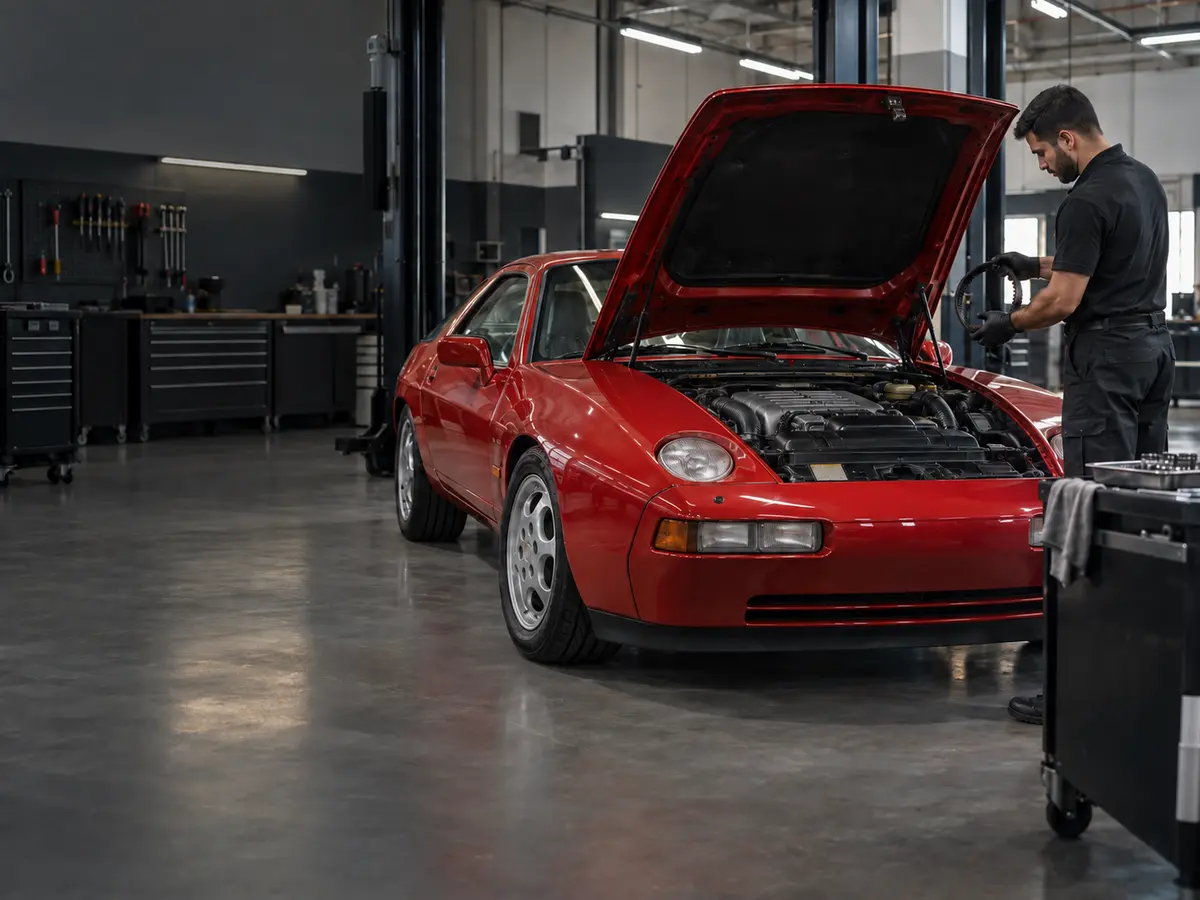
What does 928 timing-belt service cost?
A useful 928 timing-belt quote separates the belt work from the water pump, tensioner, rollers, seals and other front-engine repairs. The combined-service range below is a researched planning estimate, while the exact belt-only price requires the model year and agreed parts list.
| Service | Planning price | How to read it |
|---|---|---|
| Timing-belt service | Written quote | Year, engine version, belt kit, tensioner/roller condition, front seals and parts availability decide the total. |
| Timing belt + water pump | AED 5,250–9,450 incl. VAT | Research-based fitted range already published on our 928 water-pump page for combined overlapping work. |
| Additional front-engine repairs | Quoted separately | Oil seals, damaged fasteners, coolant-system repairs, extra rollers or other findings are not automatically included. |
Quote should state: belt brand/specification, tensioner and roller work, whether the water pump is included, coolant if the pump is replaced, seals or hardware included, labour, applicable VAT and the expected completion date.
Time to allow: plan around 1–2 working days once the correct parts are available. Additional front-engine repairs, seized hardware or parts sourcing on a classic 928 can extend the stay.
Choose the right 928 timing-belt job
These are planning scenarios, not customer case histories. The car’s model year, previous invoices and condition determine the actual work.
Belt history is documented
The quote can focus on the scheduled belt work and only the related components that are due, worn or leaking.
History is missing
An unknown belt age changes the risk discussion. We identify the 928 version and inspect the accessible drive components before finalizing the parts list.
Water pump is due too
The pump sits in the same timing-belt service area, so combining justified work can avoid paying for overlapping access again later.
What the 928 timing belt drives
The toothed belt synchronizes the crankshaft and camshafts. On the 928 it also runs through the front-engine drive with the water pump and oil pump, which is why belt tension and the condition of the surrounding components matter.
Later 928 engines can suffer serious valve-to-piston damage if valve timing is lost. Early 928 interference risk is discussed differently across technical references, so we do not apply one catastrophic-failure claim to every production year. The exact engine and model year should be identified first.
A belt can also be overdue without obvious noise, misfire or warning lights. Preventive replacement is therefore based on history and the correct maintenance guidance, not on waiting for symptoms.
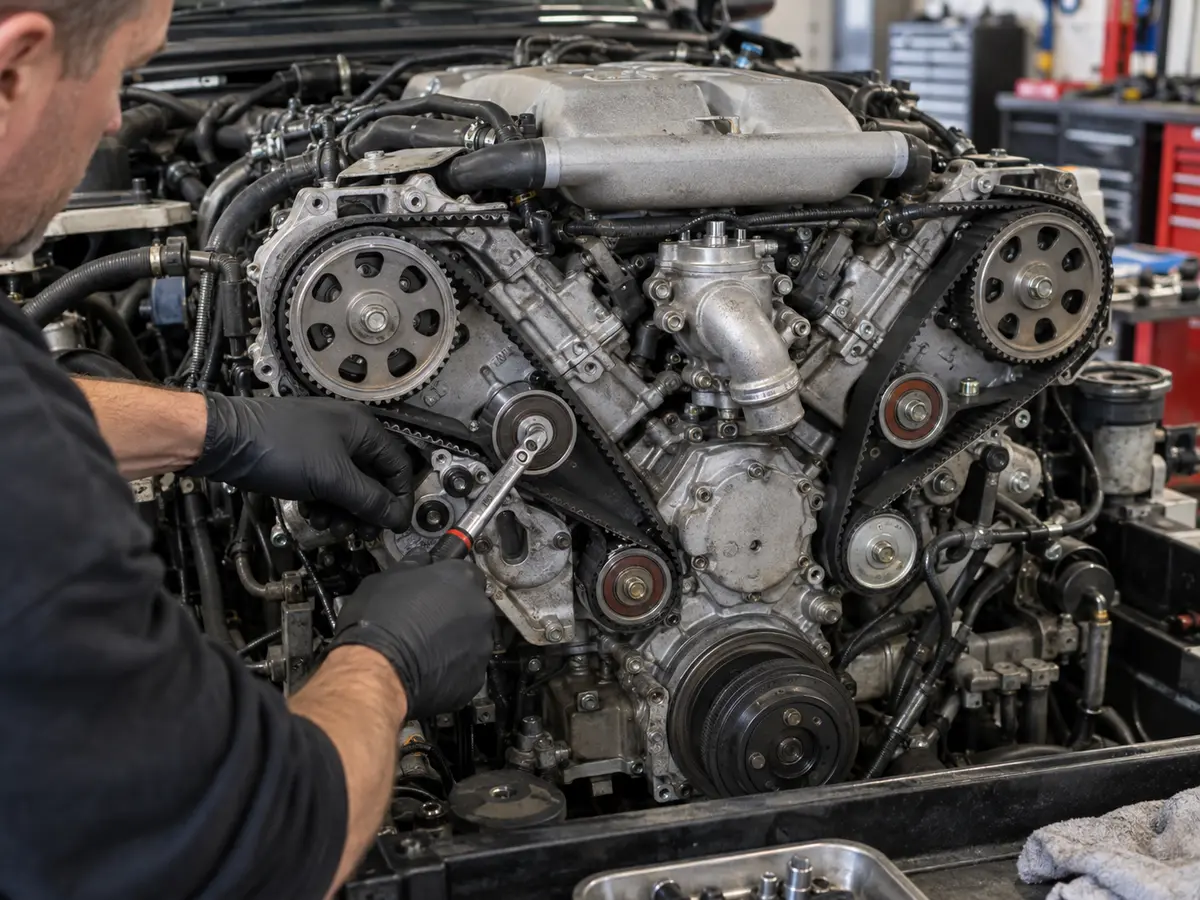
When to replace the 928 timing belt
Historical 928 technical references commonly cite a 60,000-mile factory replacement interval, while many 928 specialists use a more conservative 40,000–45,000-mile approach and also consider elapsed time. For a classic car, the correct decision should use the exact model year, service records and current belt-drive condition.
Known recent service
Use the dated invoice, mileage and parts list to establish when the belt, tensioner-related parts and water pump were last addressed. A vague “belt done” note is less useful than a documented parts list.
Unknown history
Do not assume an old belt is safe because the visible section looks clean. Age, tension, internal cord condition and the history of the tensioning system are not fully judged from a quick visual check.
When to check the belt sooner
A timing belt can be old without producing a clear warning. These signs justify inspection, but none of them proves the belt itself is the only problem.
Unknown or overdue service history
This is the strongest reason to investigate on a classic 928. Confirm the last belt date and mileage before assuming the maintenance baseline is current.
Belt-tension warning on later cars
Later 928s use a belt-tension warning system. A warning deserves prompt attention, but the belt tension, tensioner mechanism, sensor and wiring all need consideration before parts are blamed.
Noise or visible front-engine problems
Roller or pump bearing noise, coolant leakage, oil contamination or damaged covers can change the work required because those components operate around the same belt drive.
Engine stops and cranks abnormally
Do not keep cranking if a timing failure is suspected. Establish mechanical timing before repeated start attempts, especially on later interference engines.
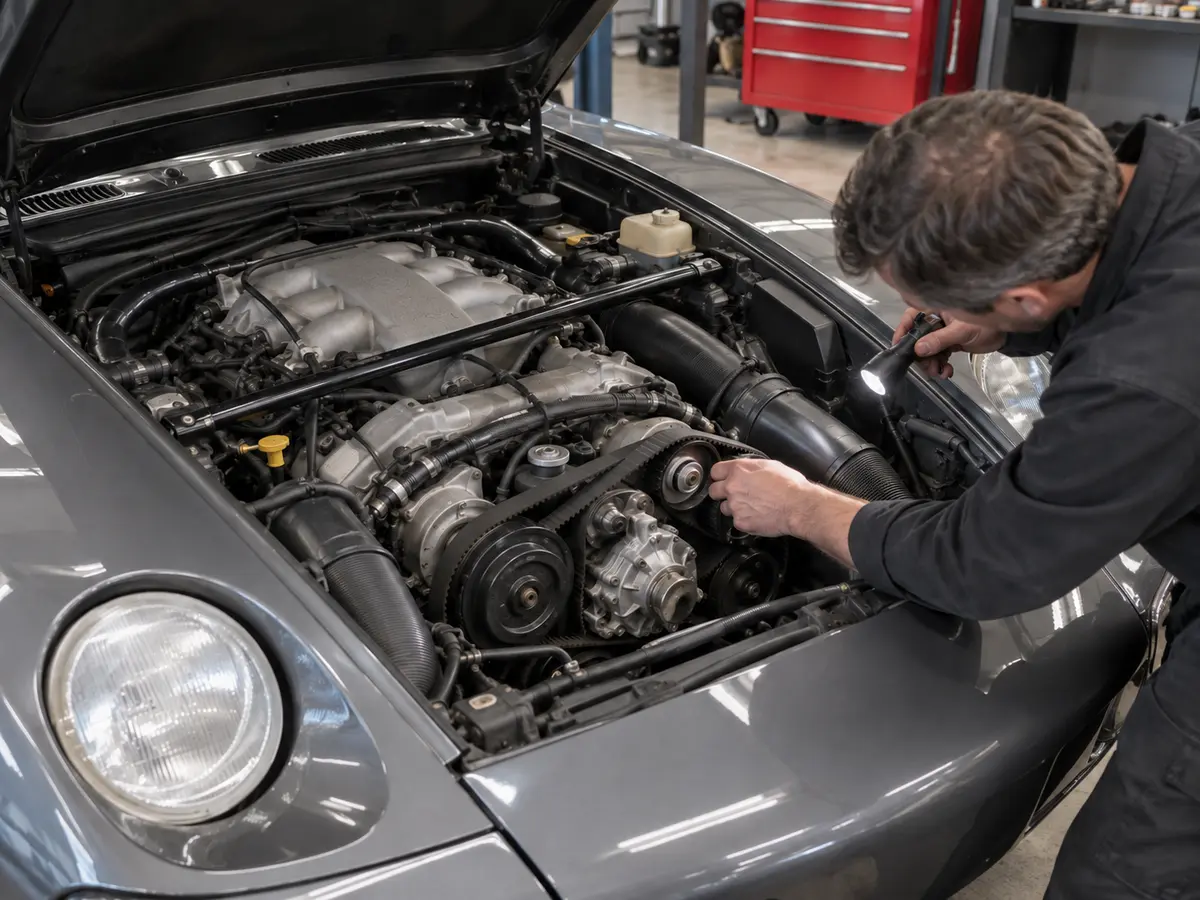
Replace the water pump too?
Not automatically, but the question should always be asked. The 928 water pump and timing-belt work overlap, so pump age, bearing condition, leakage and service history can make combined work sensible.
Keep a documented recent pump
If the pump is recent, correctly fitted and shows no leakage, noise or bearing concern, the quote can remain focused on the belt and the related parts that are actually due.
Combine work when justified
If pump history is old or unknown, or inspection finds leakage or bearing wear, doing both jobs together can use the overlapping access once. See our Porsche 928 water-pump guide for the current combined-service price range.
How 928 timing-belt service works
The exact access and alignment procedure vary with engine version, but the job should preserve timing accuracy and document the condition of the components opened during the work.
- Confirm the exact 928 and history
We record the year, engine version, mileage and last known belt/pump work before finalizing the parts list.
- Open the front-engine service area
Components are removed as required to access the covers, belt, tensioning system and related drive parts without treating the job as a generic modern timing-belt service.
- Inspect before reassembly
Rollers, tensioner-related components, water pump condition, visible front seals and hardware are checked. Any extra work is added to the quotation before proceeding.
- Install, tension and verify
The approved belt and related parts are installed, timing marks and belt tension are verified through the required rotation/check sequence, covers are refitted and final operation is checked.
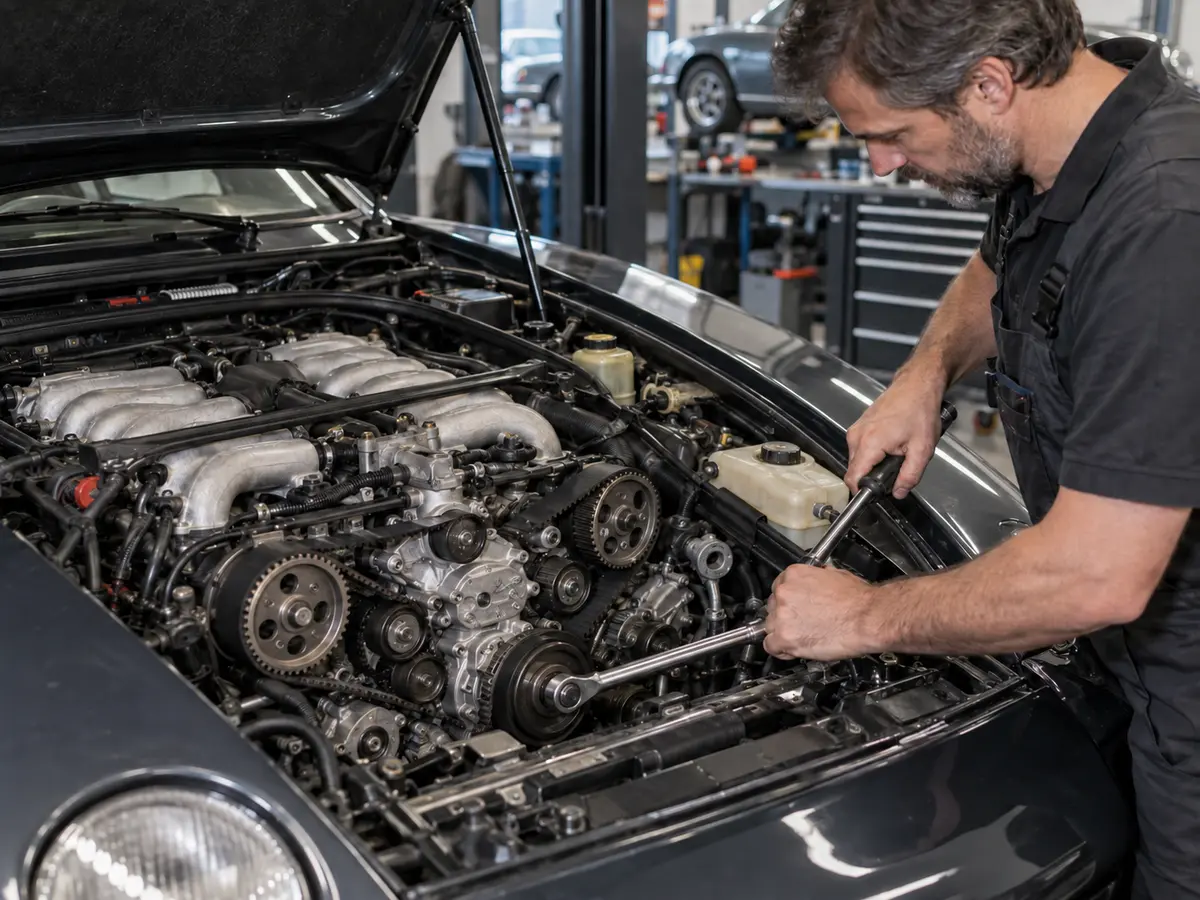
Compare the complete timing-belt quote
Two prices are not comparable until the included parts and overlapping work are clear.
| Ask the workshop | Why it matters |
|---|---|
| Which belt and kit are being fitted? | Parts availability and specification vary across 928 production years. |
| Are tensioner and rollers included? | A belt price can look cheaper if related drive components are excluded. |
| Is the water pump included? | The pump shares the service area, but it should not be silently added to every job. |
| Are seals, coolant and hardware included? | These can materially change the final total when extra work is approved. |
| Does the total include VAT? | The written quotation should state the tax treatment rather than leaving it implied. |
| What is the expected completion date? | Classic-car parts availability can matter as much as workshop labour time. |
For wider model maintenance planning, see our Porsche 928 service and repair guide.
Porsche 928 timing-belt FAQs
How often should the Porsche 928 timing belt be changed?
Historical 928 technical references commonly cite 60,000 miles, while many specialists use a shorter 40,000–45,000-mile interval and also consider age. Use the correct model-year guidance and documented service history rather than relying on one universal figure.
Can a 928 timing belt fail without warning?
Yes. A belt can be old or compromised without producing a reliable noise or driveability symptom. Preventive replacement is based on service history and the belt-drive condition, not on waiting for the engine to run badly.
Will a broken belt damage every Porsche 928 engine?
No single statement fits every production year. Later 928 engines can suffer valve-to-piston contact when timing is lost, while technical sources differ on the exact transition among early engines. The safe approach is to identify the engine and avoid testing failure by continued cranking.
Should the water pump be changed at the same time?
It depends on pump age, condition and history. Because the pump shares the timing-belt service area, combining justified pump work can avoid repeating access. A recent documented pump can remain in service if inspection supports it.
How long should I leave the 928 at the workshop?
Plan around 1–2 working days once the correct parts are available. Additional seals, pump work, difficult hardware or classic-car parts sourcing can extend the job.
What should I send for an accurate quote?
Send the model year, VIN if available, mileage, last timing-belt date and mileage, any water-pump history, and photos of previous invoices or parts lists. That is more useful than simply saying the belt was “done before.”
Clear parts and pricing before work
PorscheGarage.ae is operated by AMF Auto Services LLC in Al Quoz 4. Your written quote identifies the belt and related parts, labour, VAT treatment, approved additional work and expected completion time before the repair proceeds.
Send your 928 timing-belt history
Tell us the model year, mileage and the last known belt and water-pump service. We will confirm the parts basis, VAT treatment and expected workshop time before you approve the job.