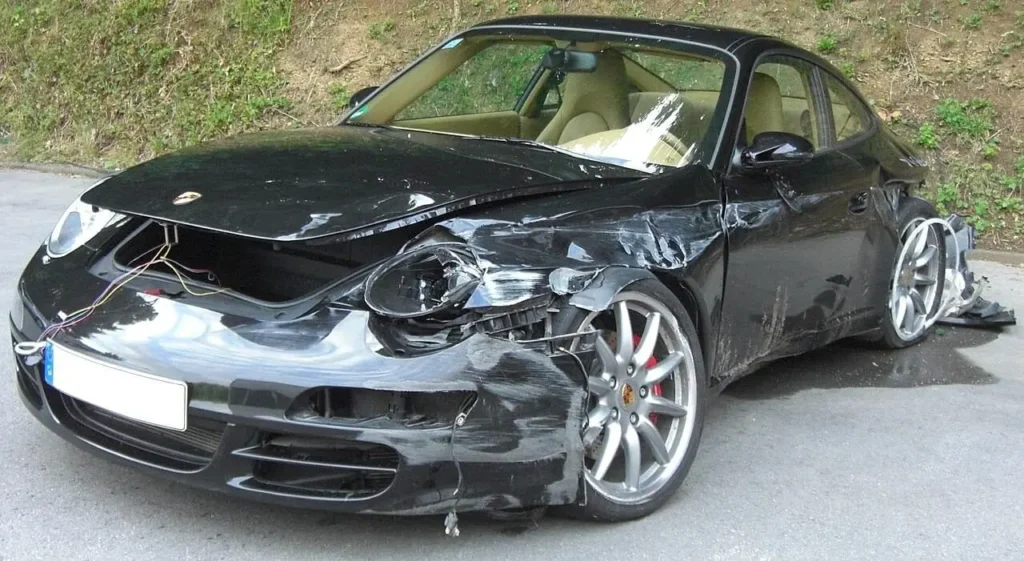
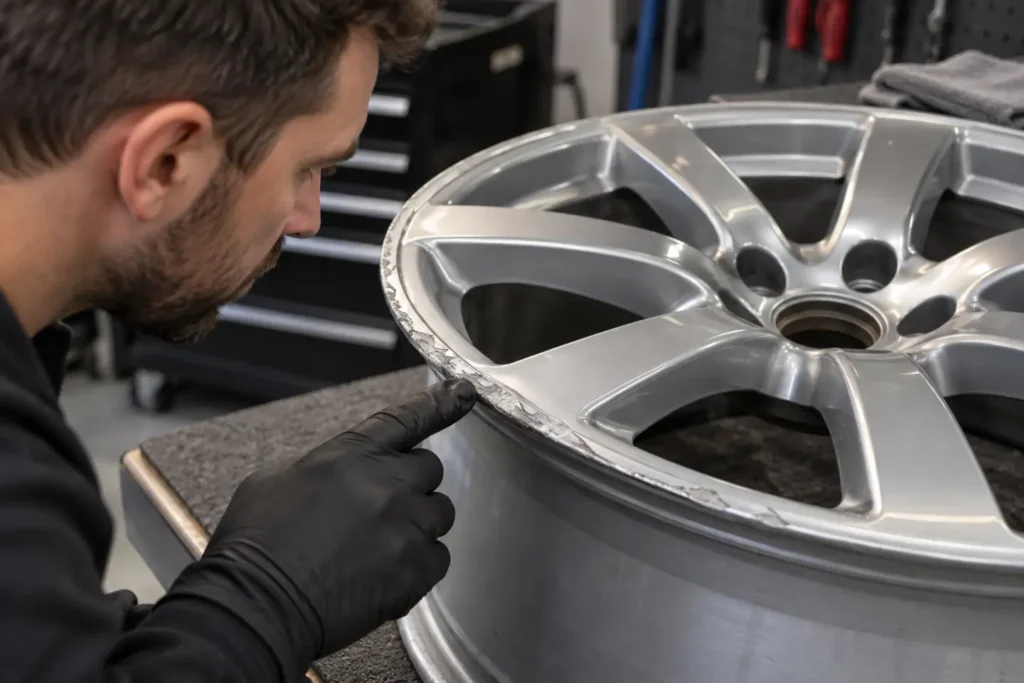
A scrape against a kerb can leave an ugly mark without ruining a wheel. A harder impact can damage the metal, sometimes on the inside where you cannot easily see it. The important question is whether the damage affects only the finish or the wheel itself.
A genuine Porsche wheel needs replacement when its base material is damaged. Superficial paint damage may be suitable for cosmetic treatment. Vibration or a slow leak needs investigation before a wheel is condemned, because the tyre, valve, mounting and other components can cause similar symptoms. Understanding those differences helps you decide what to do after an impact and what questions to ask before buying a replacement.
When to stop driving
Stop somewhere safe if a wheel appears cracked or visibly deformed, the tyre loses pressure rapidly, the car becomes unstable or a wheel seems loose. A tyre bulge, exposed reinforcement, severe cut or rubbing against the body also requires prompt attention. Arrange suitable recovery when continued driving could worsen the damage or compromise control.
Do not accelerate to see whether a vibration disappears. Avoid repeated inflation as a way of continuing a journey with unexplained rapid pressure loss. Follow the vehicle’s warning and handbook instructions, and tell the recovery provider about any damaged tyre, low ground clearance or centre-lock wheels.
A light scuff with no other symptom is a different situation, but its depth still matters. Look only where you can safely see with the car parked. Do not reach behind a hot wheel, remove fasteners or crawl beneath a vehicle supported by its emergency jack to inspect the inner barrel.
Paint damage or damaged metal
Wheel paint and clear coat provide the visible finish. The material underneath carries the load and locates the tyre. A mark can affect one or both, which is why the word scratch is not enough to decide repairability.
Porsche’s rim-repair position statement separates superficial paint damage from damage to the base material. It allows treatment of the former and requires replacement for the latter. A quotation for refinishing should therefore follow a condition assessment, rather than assuming that every kerb mark can be sanded and painted away.
A deep gouge is different from a paint transfer mark even when neither produces an obvious crack. Ask whether metal has been removed or deformed. The apparent length of a scratch is less useful than its depth, location and effect on the underlying wheel.
| What is found | What it means for the next step |
|---|---|
| Superficial paint scuff with sound material underneath | Cosmetic treatment may be appropriate |
| Crack, deformation or damage to the base material | Replacement is required under Porsche’s rim guidance |
| Rough-looking mark whose depth is unclear | Inspect before choosing paintwork or replacement |
| Pressure loss without an identified leak | Check the tyre, valve, sealing areas and wheel |
| Vibration without confirmed wheel damage | Assess the rotating assembly and other relevant causes |
The same assessment should identify whether the wheel is genuine Porsche, aftermarket or a specialist construction. Do not transfer a repair method from a different wheel design simply because both are described as alloy. Unfamiliar materials require the instructions for that particular product.
Where hidden damage can appear
The outer rim edge is easy to photograph after a parking scrape. The inner rim and barrel are less visible, yet an impact can affect them as well. A clean-looking wheel face does not reveal the condition of the entire wheel.
Spokes connect the outer structure to the centre. The mounting face and fastening seats also matter because the wheel must sit and clamp correctly on the hub. Damage in those areas deserves attention even when the tyre is retaining pressure and the painted face looks acceptable.
The bead-seat area is where the tyre seals against the wheel. A leak found there needs assessment of both surfaces and how the tyre is seated. It should not automatically be labelled a cracked rim or dismissed as a problem that any sealant will solve.
Professional access may require removing the wheel and tyre. That allows inspection of areas hidden by the tyre or vehicle, using suitable lighting and measurement where needed. An outside photograph is helpful for planning an inspection, but it cannot replace seeing those concealed surfaces.
Why a slow leak is not a verdict
A tyre that needs repeated topping up can leak through a puncture, valve, sensor sealing components, bead area or damaged wheel. Finding the source is more useful than guessing from the pressure warning alone. Several of those causes do not require a new metal wheel.
Tell the workshop how quickly pressure falls, whether one tyre is affected and whether the problem began after an impact or recent tyre work. Record actual readings when it is safe to do so. Do not assume a warning that clears after inflation means the cause has been repaired.
A TPMS sensor reports information about pressure or system operation, depending on the fitted arrangement. A sensor-related warning and a genuine air leak are different problems, although both can occur together. Replacing a sensor cannot repair an air leak elsewhere in the assembly.
If the tyre has been driven significantly underinflated, it also needs a condition assessment. Restoring pressure does not reverse internal damage caused while driving. The wheel and tyre decisions should be explained separately so a serviceable wheel is retained while an unsafe tyre is addressed.
Vibration, balance and wheel shape
Balancing corrects an uneven distribution of mass around the rotating wheel-and-tyre assembly. Small weights are positioned to compensate for that imbalance. It does not restore the shape of a deformed wheel or repair a damaged tyre.
Runout describes variation as a component rotates. Radial movement concerns its roundness, while lateral movement concerns side-to-side deviation. The technician needs to identify what is being measured and how the assembly is mounted before interpreting the result.
A wheel, tyre or mounting issue can influence the observed movement. For example, measuring only the outside of an assembled tyre does not isolate the metal wheel’s condition. Where necessary, the components are assessed separately using the applicable procedure and limits.
There is no useful universal runout number for every Porsche wheel, mounting arrangement and measurement point. Ask whether the result applies to the bare wheel or complete assembly and which specification was used. This is more informative than being told that a machine showed red.
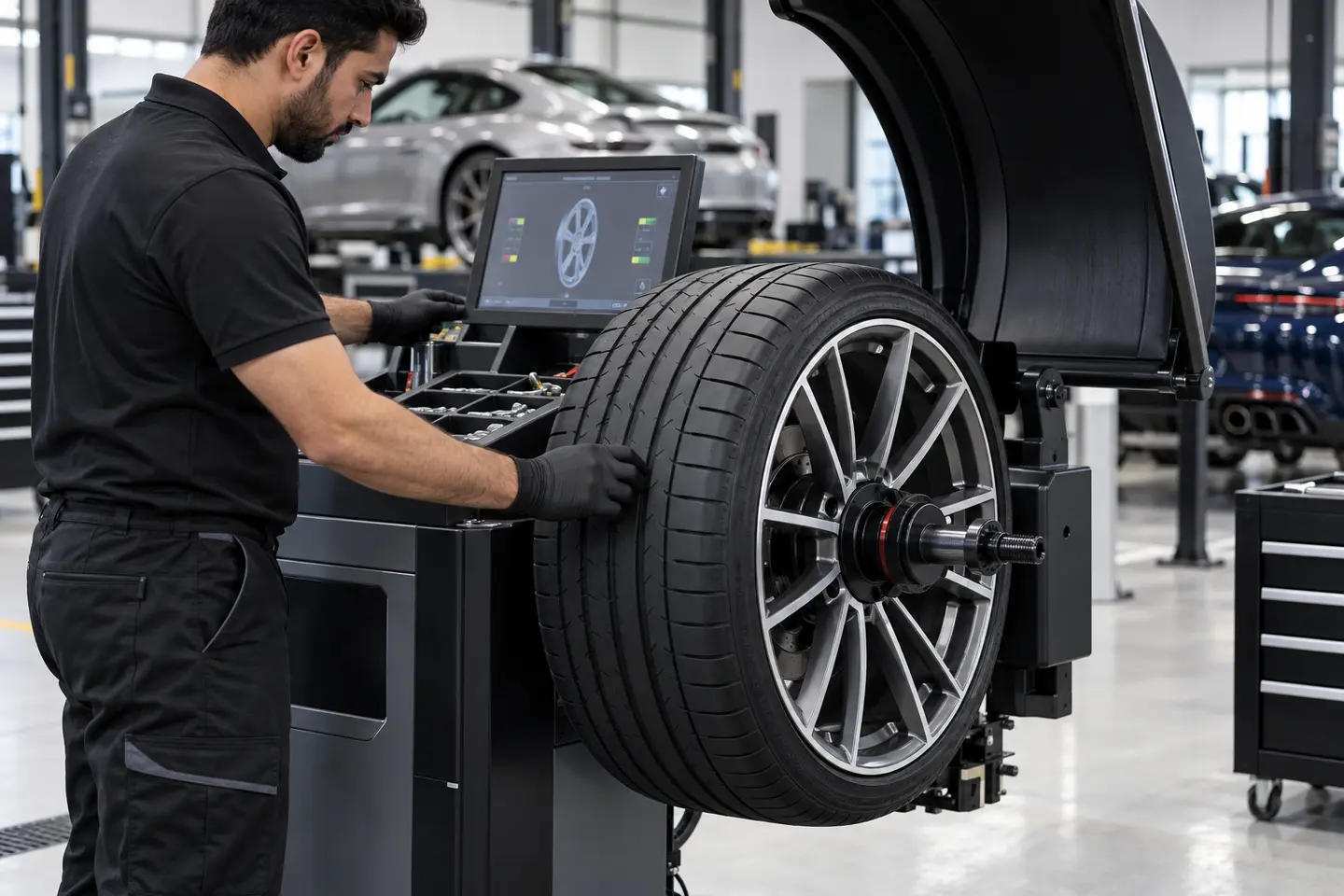
Road-force measurement adds another type of information. A diagnostic roller loads the tyre while the equipment assesses variation in the assembly. Hunter’s explanation of road-force testing describes how this can reveal ride-quality problems that ordinary weight balancing may miss.
The result can help investigate tyre uniformity, seating or wheel runout. It does not automatically mean the rim must be replaced. Likewise, a balanced assembly can still have a separate hub, brake or suspension problem. A useful report explains which finding accounts for the original vibration.
What an impact can affect
A pothole or kerb strike can involve more than the visible wheel. The tyre sidewall and bead, hub, bearing and nearby suspension may also need checking. Replacing the rim alone will not correct every possible consequence of the impact.
Describe any new steering pull, off-centre steering wheel, knocking or rubbing. Tell the workshop whether vibration occurs at a particular speed or mainly during braking. The sequence matters too, especially when one symptom appeared immediately and another developed later.
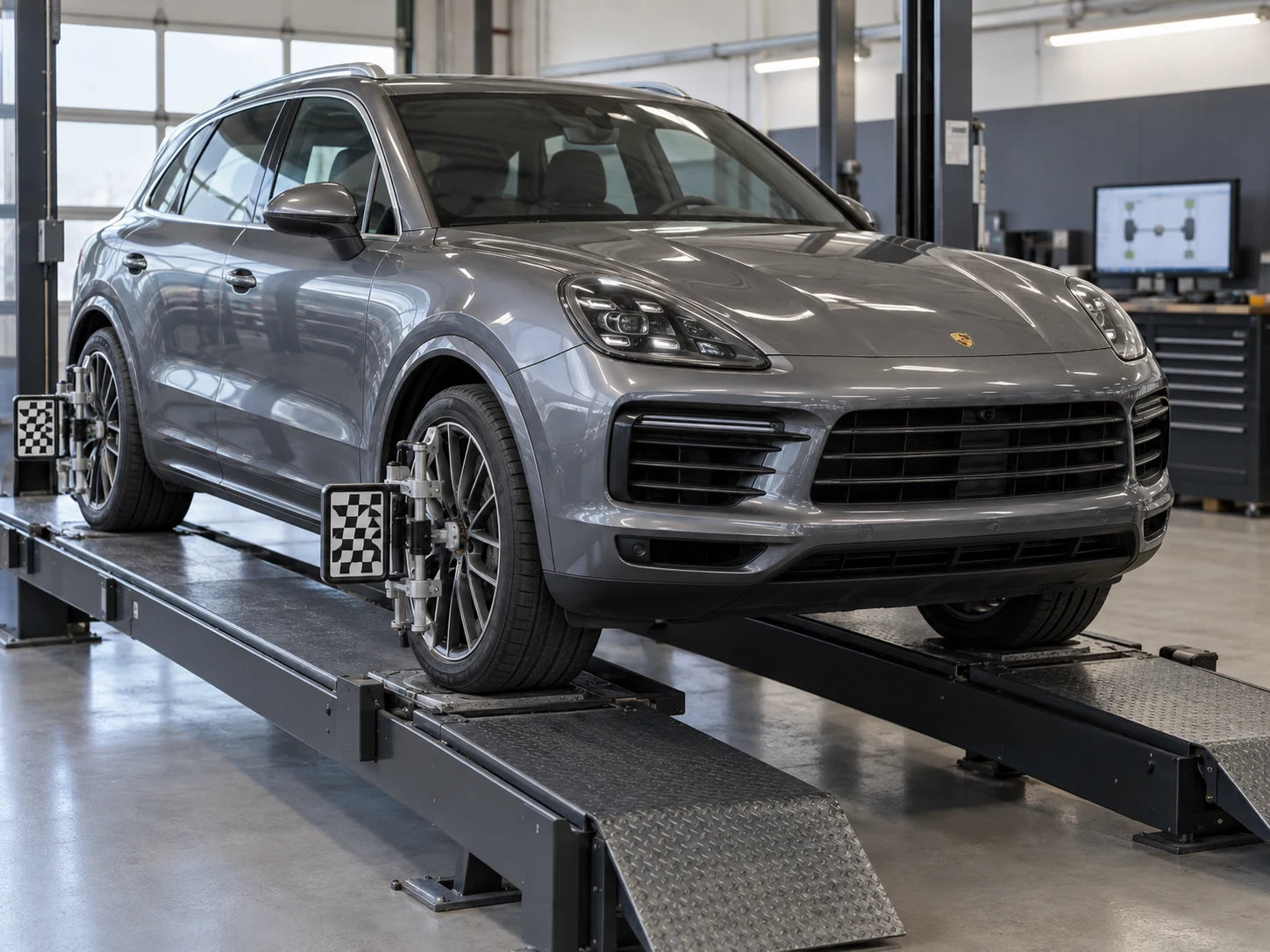
Alignment measures and adjusts wheel geometry where the vehicle permits it. It cannot remove a crack, repair a tyre or eliminate looseness in a suspension joint. Damaged or loose parts should be dealt with before relying on an alignment adjustment.
A straightforward replacement with the same correct wheel does not automatically require identical alignment work on every Porsche. Impact history, symptoms and the repair procedure determine the need. Ask what prompted the recommendation and whether any related damage was found, rather than treating alignment as proof that the wheel itself is sound.
Choosing a compatible replacement
Once replacement is justified, appearance is only one part of the choice. Two wheels can have the same spoke design and diameter yet differ in width, offset, load application or brake clearance. A familiar Porsche badge is not a fitment specification.
The starting information includes the model, model year, variant, axle position and fitted brake package. The part number and wheel markings help identify what is installed. Where previous owners have changed the wheels, the current fitment and the intended vehicle specification both need to be understood.
Wheel width affects the tyre combination and clearances. Offset describes the relationship between the mounting face and the wheel’s centre line, influencing where the wheel sits. Hub fit and the correct fastening interface also matter. Matching just the bolt pattern leaves those questions unanswered.
Porsche provides vehicle-specific owner manuals by supported model year or VIN. Use the relevant handbook and parts information when confirming wheel-and-tyre combinations. Do not copy a size or fastening instruction from a different generation because the model name sounds similar.
A spacer is not a universal solution for an incompatible wheel. It changes the installed arrangement and may affect clearance and fastening requirements. Any proposed change needs documented suitability for the vehicle and applicable approval, rather than a blanket assurance that it will fit.
Front and rear may differ
Many Porsche sports-car configurations use different front and rear wheel widths or tyre sizes. A wheel from the correct design family can still belong on the other axle. Keep the original position with the identification details when requesting a replacement.
Brake options can change the space required inside the wheel. A diameter that appears large enough does not establish spoke-to-caliper clearance. The approved combination needs to account for the actual brake package as well as the tyre and body clearances.
SUV, saloon and electric-vehicle applications also have their own load and fitment requirements. A wheel offered as suitable for Porsche should identify the relevant application, not rely on a list of model badges. Check the exact variant before placing the order.
If only one wheel is damaged, a complete set is not automatically necessary. A single compatible replacement can be appropriate when the other wheels remain serviceable. A visual finish difference is a separate cosmetic question and should not be presented as structural damage to the remaining wheels.
New, used or aftermarket
A new genuine wheel can preserve the intended design when the correct part is ordered. Confirm the finish and axle application as well as the part number. Different versions can look similar in a small online photograph.
A used genuine wheel needs both identification and condition checks. Ask about previous damage, welding, straightening and refinishing. Fresh paint can improve appearance without revealing what lies beneath it, so a clean finish is not enough to establish suitability.
For an aftermarket wheel, seek clear application information, load suitability, dimensions and the relevant manufacturer’s documentation. Price and reputation alone do not establish compatibility with a particular Porsche. The tyre combination and required fastening parts must also be suitable.
Before buying remotely, agree what happens if inspection finds hidden damage or the supplied specification is wrong. Ask for legible marking photographs and views of the inner and outer surfaces. A seller’s description such as fully refurbished should lead to questions about the work performed, not automatic acceptance.
Fastening and tyre transfer
Multi-bolt and centre-lock wheels use different fastening systems. Centre-lock equipment requires the exact vehicle procedure, suitable tooling and appropriate hardware inspection. Do not apply a generic torque range or assume a process seen on another GT model is interchangeable.
Removal and refitting are workshop tasks when the owner lacks the equipment or training required by the handbook. On either fastening system, the correct parts and mounting condition matter. An attractive replacement wheel is of no benefit if it cannot be installed correctly.
The existing tyre may be reusable only if its condition and specification remain suitable. Impact damage to a sidewall or bead can make transfer inappropriate. Inspecting the tyre separately avoids spending money on a new wheel while retaining the source of a safety problem or vibration.
Valve and TPMS components also need attention during the transfer. Ask which sealing parts are being renewed and whether sensor work is required for this application. These are separate from the decision to replace the wheel and should be described clearly in the quotation.
What should change the quote
Compare quotations only after the wheel specification and required work are identified. Wheel supply, tyre transfer or replacement, valve components, balancing and any justified alignment are different items. A low part-only figure is not the same as a complete fitted total.
The quote should state whether 5% VAT is included or added and identify any additional inspection or related repair. New genuine, used genuine and aftermarket choices should be labelled clearly. Their prices cannot be compared meaningfully without knowing the specification and condition behind each offer.
Availability can affect timing more than fitting itself. Avoid planning around a universal same-day promise when a particular finish, axle specification or specialist wheel must be sourced. Confirm the expected arrival and collection arrangements once the part has been identified.
Check the result at handover
Ask which damage was found and which component was replaced. Check the wheel description against the agreed specification and retain the part and repair details. If another concern was discovered, it should be explained separately from the original cosmetic mark or impact complaint.
Tyre pressures, fitted tyre selection and TPMS warning status should be checked using the instructions for that car. Some applications require a selection or learning process. If that process remains incomplete, the handover should explain what is outstanding rather than presenting a cleared warning as the whole check.
Finally, establish whether the original vibration, pull or pressure-loss complaint was reassessed. A new wheel should resolve the problem attributed to that wheel, but another confirmed fault may require its own work. Report any recurring symptom promptly instead of assuming it is an unavoidable feature of a replacement.